Abdulsalami Calls for Removal of Military Laws in Nigeria's Constitution
Abdulsalami Abubakar urges the Nigerian government to remove military laws from the Constitution to strengthen democracy. He shared his views in his autobiography.
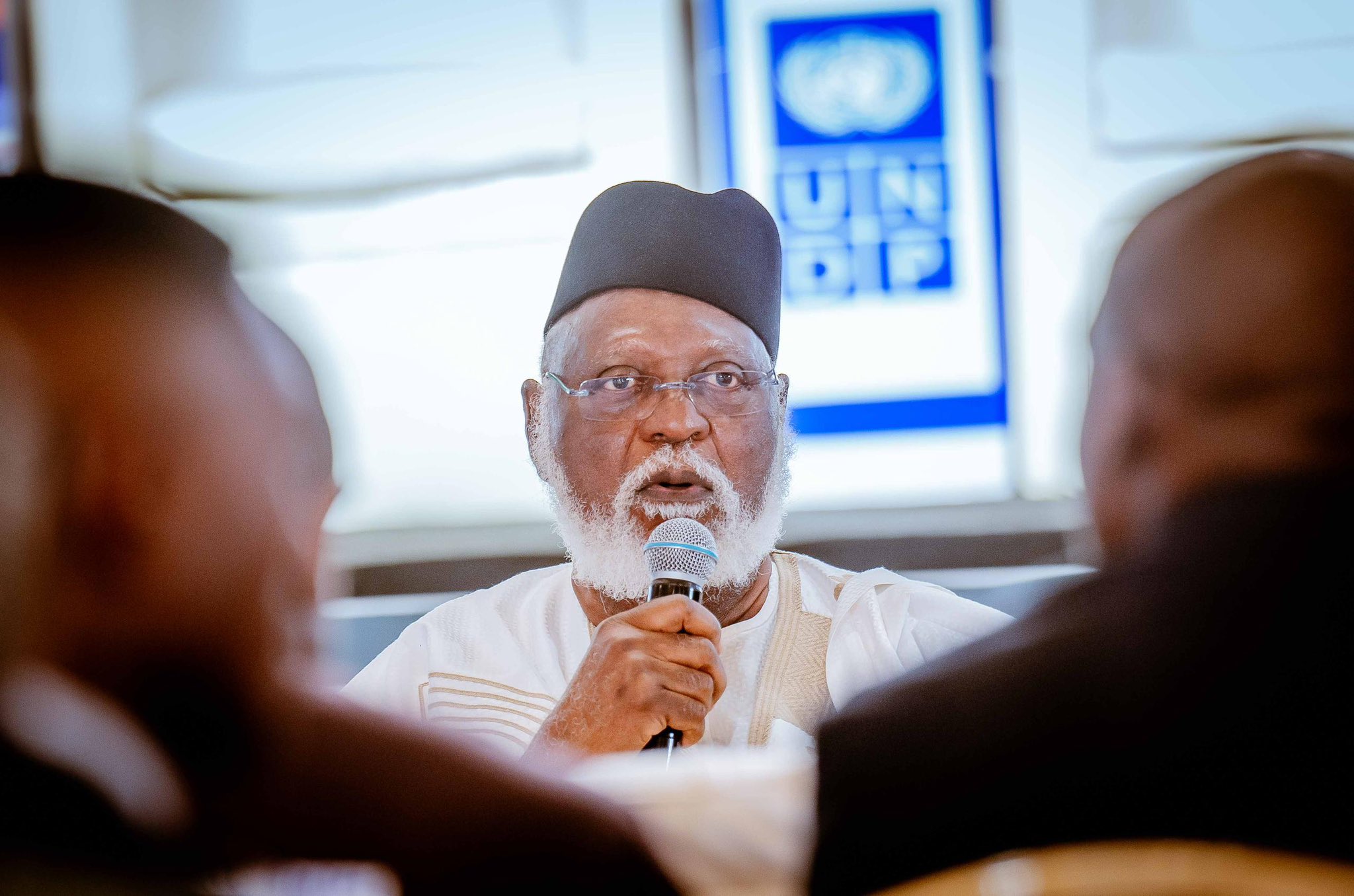
A former Nigerian leader, Abdulsalami Abubakar, has asked for the removal of military laws in Nigeria's Constitution to strengthen democracy in the country.
Abdulsalami, a retired army general, oversaw the creation of the 1999 Constitution. He admitted that some military laws were included in the document. He urged the government to change or remove these laws through democratic methods to ensure they meet democratic standards.
The former head of state made this statement in his autobiography, "Call of Duty," which he launched last Saturday in Abuja.
"Democracy is always changing. Every day, new laws are made to reflect the needs of the people. If some say it is a 'military' constitution because it has military laws, we are now in a democracy. Any changes should be made democratically and according to the proper processes. There is no perfect constitution in the world," he said.
Abdulsalami became Nigeria’s leader in June 1998 after Sani Abacha's death. Abacha had ruled the country from 1993 until his death in 1998.
Less than a year into his term, Abdulsalami successfully managed a transition that handed power to former President Olusegun Obasanjo on 29 May 1999. This transition marked the start of Nigeria’s current democratic era, which has lasted for over twenty years without interruption.
After leaving public office, Abdulsalami became a respected elder statesman and diplomat. He has worked in various peace-building roles across Africa, including for the Economic Community of West African States.
He currently chairs Nigeria’s National Peace Committee. This committee works to create peace agreements among political leaders during elections and promotes peaceful behavior before, during, and after elections.
Some Nigerians have criticized parts of the 1999 Constitution, which has been in place since the country returned to democracy that year. The criticisms arise from rapid technological, social, and political changes in Nigeria.
Since 1999, the National Assembly has changed the Constitution five times, but some proposed changes were rejected at the state level.
Large amounts of money have also been spent on this process, with the federal legislature budgeting separately for it.
The Constitution is now under review again at the National Assembly. The Constitution Review Committee, led by Deputy Senate President Barau Jibrin, has promised to finish its work by the end of 2026.
Some provisions that critics say were "smuggled" into the Constitution include the Land Use Act, which gives control of land to state governors, and the National Youth Service Corps (NYSC), which requires graduates under 30 to serve for one year.
In his autobiography, Abdulsalami argued that those criticizing these provisions have not made a strong enough case against them.
"I would not see this as a disaster that should cancel out the other parts of the Constitution. People are just trying to create problems. Many criticisms are misplaced, like the claim it was never put to a referendum.
"Historically, Nigerian Constitutions, including those praised as the 'best' by critics, were never subjected to any referendum. This argument is only used to discredit the 1999 Constitution. It is clear when some people who helped create the 1979 Constitution join the attack on the 1999 Constitution," he said.
Mr Abdulsalami agreed that the Constitution needs changes to better reflect what Nigerians want.
"I accept that there are changes needed in the 1999 Constitution to make it more relevant and reflective of what Nigerians desire. I have no issues with that. A constitution is a living document. It can be changed and updated," the former leader said.
The 1999 Constitution took many ideas from the 1979 Constitution and the draft 1995 Constitution. Abdulsalami signed Decree No. 24 of 1999 on 5 May 1999 to bring the Constitution into effect, although it did not become active until 29 May.
The Constitution kept the presidential system used during the Second Republic and maintained Nigeria’s federal structure. This divides powers between the federal and state governments through Exclusive and Concurrent Legislative Lists.
In his autobiography, Abdulsalami acknowledged that some critics see the Constitution as a military document because it was created during military rule and was issued by decree.
He rejected that view, insisting that the document was prepared by a Constitutional Drafting Committee (CDC), not by the military.
"Some facts are mixed up to attack the credibility and validity of the 1999 Constitution. It is wrong to say the military wrote it. The 1979 Constitution and the draft 1995 Constitution, which the 1999 Constitution borrowed from, were not written by the military, even if they were made under military rule.
"They were written by some of the best minds in the country. I want to make this clear because many Nigerians are unaware of the history and keep repeating this false claim," he added.
Abdulsalami said he would have preferred a completely new constitution back then, but the situation in Nigeria did not allow for that.
"I think most criticisms are unfair and not well thought out. As I explained, Nigeria's situation did not give us many options when creating a new constitution. Plus, the costs and logistics of setting up another constitutional conference were additional challenges," he said.

Comments
No comments yet.