Did Nigeria really spend $61 billion to help South Africa fight apartheid?
A recent claim suggests Nigeria spent $61 billion aiding South Africa during apartheid. This article examines the validity of that statement.
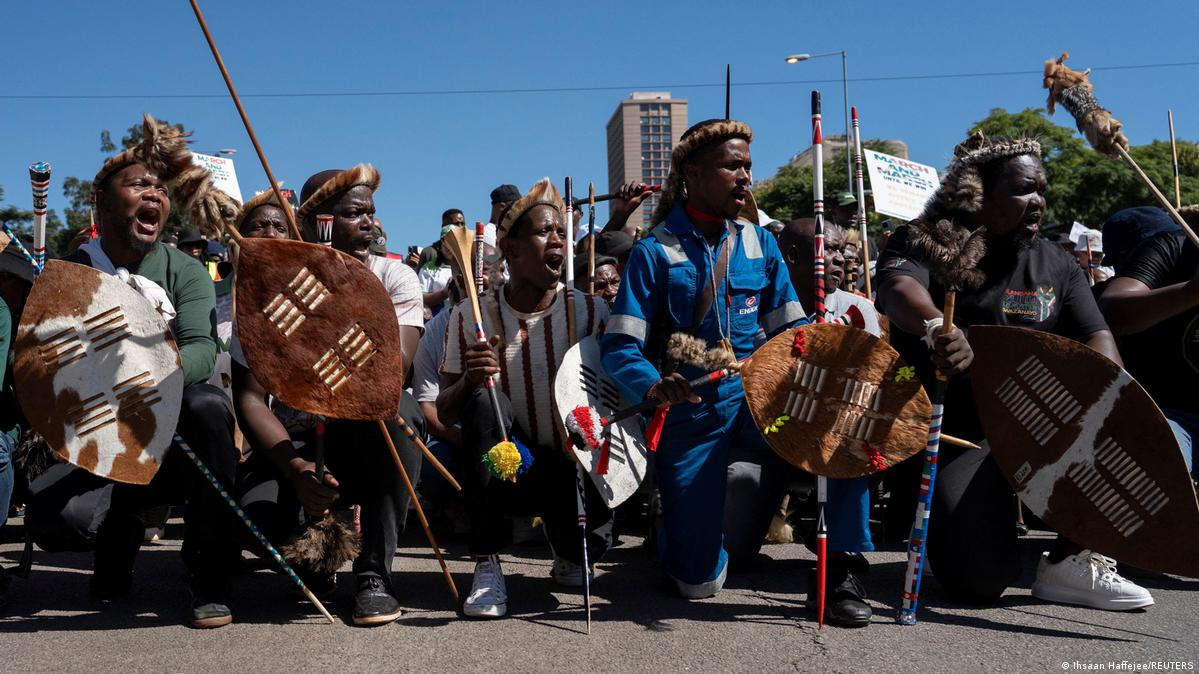
Claim: An X user claims that Nigeria spent around $61 billion helping South Africa in its fight against apartheid.
Verdict: Mostly True! Records and academic sources back up the claim that Nigeria contributed about $61 billion to support South Africa’s struggle against apartheid.
Full Text
Recent xenophobic attacks on Nigerians in South Africa have led to the repatriation of over 250 Nigerians. This situation has renewed discussions on social media about Nigeria’s financial aid to South Africa’s anti-apartheid movement.
On June 23, an X user, @MrJamesKe, claimed that Nigeria spent about $61 billion to support South Africa’s fight against apartheid. He emphasized that this is a reason why “History matters.”
As of June 26, the post had garnered 400,000 views, 150 likes, and 200 reposts. The claim sparked various reactions, with many users questioning if Nigeria could afford to fund South Africa’s liberation.
One user, @MaMhizzy, commented, “The big liars of drug nation Nigeria need to be studied. So Nigeria borrowed $61 billion from Mandela in the 1960s when Nigeria’s GDP was about $4 billion?” Another user, @Tygerzs, asked, “Nigeria’s GDP was $56.7 billion in 1993. Where did they get $61 billion from?”
PREMIUM TIMES also found the claim shared in a Facebook video by The MERC Podcast. By June 26, the video had over 850,000 views, 35,000 reactions, and more than 5,000 comments. PREMIUM TIMES noticed that this claim often comes up during times of tension between Nigeria and South Africa. Because it has resurfaced now, PREMIUM TIMES decided to investigate the claim.
Verification
PREMIUM TIMES traced the widely cited $61 billion estimate to a publication by the South African Institute of International Affairs (SAIIA), titled “Giants of Africa Limp Along, South Africa and Nigeria.” This publication describes Nigeria as a key player in the anti-apartheid struggle. It highlights Nigeria’s role in setting up the United Nations Special Committee against Apartheid, the financial aid from ordinary Nigerians, and support for the Frontline States.
The publication estimates that by the end of apartheid in 1994, Nigeria had contributed around $61 billion to the anti-apartheid cause. This amount does not refer to a single cash payment. It shows Nigeria’s total financial, economic, and diplomatic support over many years.
Former South African President Nelson Mandela also recognized Nigeria’s contributions. In a video from his 1990 visit to Nigeria published on the official YouTube channel of the Lagos State government, Mandela thanked Nigeria for its support in the liberation struggle, saying Nigeria “has been among the most generous donors” to the anti-apartheid movement. He also acknowledged Nigeria’s scholarships for South African students and the deployment of teachers and doctors.
More details about these contributions are highlighted in a 2020 study published in the journal Cogent Arts & Humanities on Taylor & Francis Online. The journal states that Nigeria started supporting the African National Congress (ANC) and the Pan Africanist Congress (PAC) in 1961. By 1970, Nigeria was giving $5 million every year to both groups.
The journal also states that Nigeria set up the Southern Africa Relief Fund (SARF) in 1976, known as the “Mandela Tax.” Within six months, the fund raised about $10.5 million, with contributions from students, civil servants, and public officials. It further notes that Nigeria’s oil embargo against apartheid South Africa is estimated to have cost the country about $41 billion in lost oil revenue.
In 2012, former President Olusegun Obasanjo confirmed that Nigerian civil servants donated part of their salaries to the South Africa Relief Fund.
Conclusion
Historical records back the estimate that Nigeria contributed about $61 billion to South Africa’s anti-apartheid struggle. But this figure reflects Nigeria’s total financial, economic, and diplomatic support over many years, not just a one-time cash donation.


Comments
No comments yet.