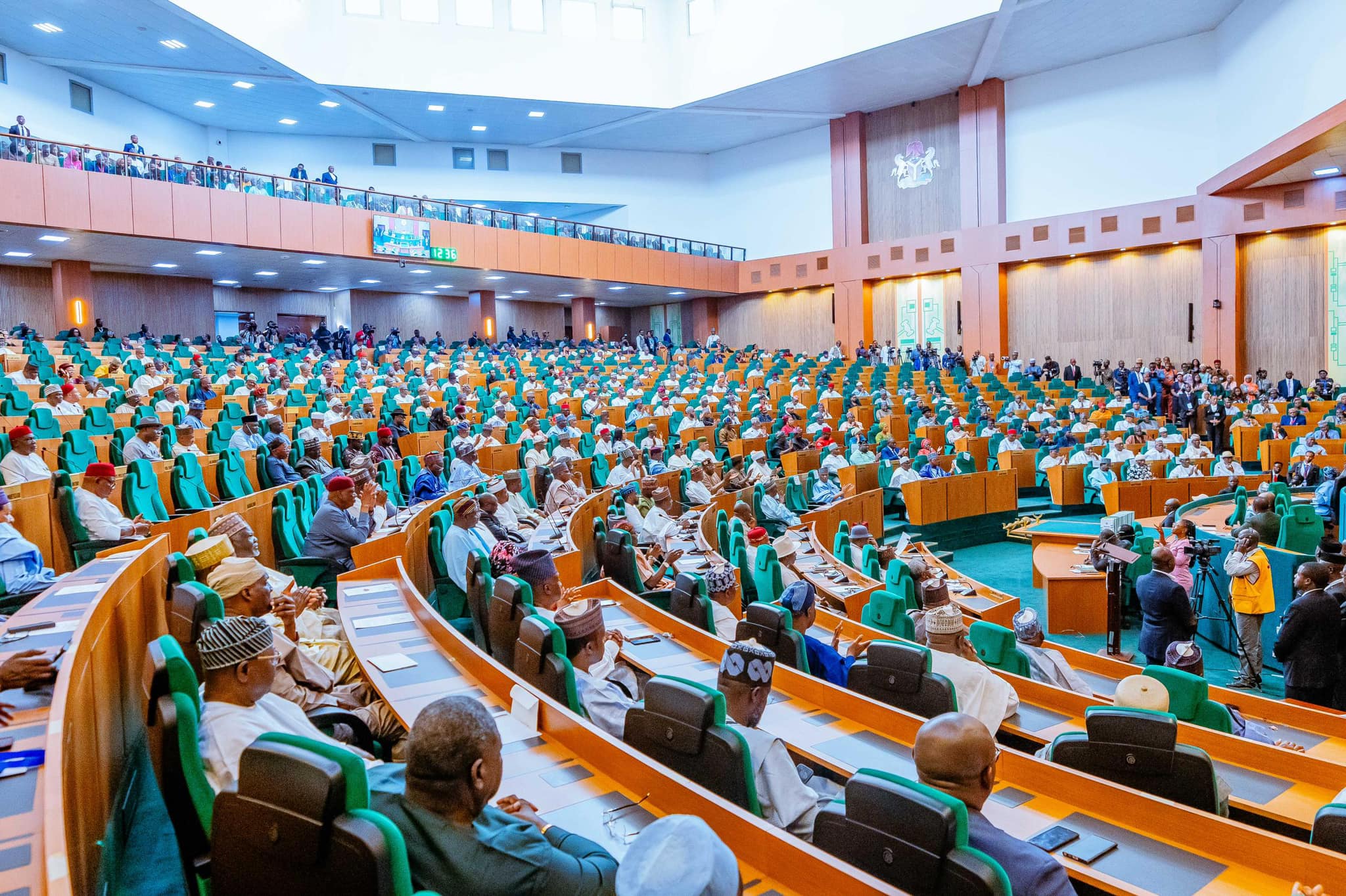
It was a busy week for the House of Representatives. They passed some bills, motions, and held investigative hearings before taking a long recess. A dramatic event occurred when the Minority Caucus walked out during the passage of the state police bill. Here are the key activities from the lawmakers.
Lawmakers pass state police bill
The House approved the Constitution Alteration (State Police) Bill, 2026. This bill aims to set up a constitutional framework for state police services in Nigeria.
The passage followed the review and approval of the House Committee on Constitution Review, led by Deputy Speaker Benjamin Kalu.
This bill is meant to provide the legal basis for establishing state police, with further laws expected to give detailed guidelines for how these police will operate.
Mr Kalu spoke about the proposed changes. He said the bill won't solve all concerns about state police by itself. Instead, it will create the legal foundation for more detailed implementation laws.
After that, the House moved into the Committee of the Whole to discuss the bill.
Speaker Abbas Tajudeen, who was in charge of the Committee, shared details on how members voted. He said 211 members present in the chamber were from the All Progressives Congress, while 65 were from other parties.
He added that 35 members took part virtually through the National Assembly's electronic platform and supported the bill.
Mr Tajudeen noted that a total of 311 members either signed in or participated virtually during the session. He pointed out that the constitutional requirement for passing the bill is two-thirds of the 360-member House, which means 240 members must agree.
The bill included 26 clauses, an explanatory memorandum, and a long title. After discussion, the House passed the bill, but it was not without controversy.
Minority caucus walks out
The minority caucus walked out of the chamber to protest the way the state police bill was passed.
This happened right after the House approved the constitutional amendment bill.
Minority Leader Fred Agbedi (PDP, Bayelsa) spoke to journalists after the walkout. He said the caucus is not against state police. Instead, they protested what they called a violation of the Constitution and the House's own rules.
Mr Agbedi said that a constitutional alteration bill should be discussed clause by clause, with lawmakers voting on each part as the rules state.
He mentioned Order 13.15(a) of the House Standing Orders, which says a clause is considered passed if two-thirds of members support it during clause-by-clause discussions.
He argued that the procedure used by the House did not allow lawmakers to vote on each section of the bill or suggest changes. He added that the caucus had already informed the speaker about areas they wanted to amend, and Mr Tajudeen had recognized some of their concerns.
House steps down unfortified edible oil prohibition bill
The House also decided to step down a bill that proposed banning the production, importation, distribution, sale, and consumption of unbranded and unfortified edible oil in Nigeria.
This bill, sponsored by Chike Okafor (APC, Imo), was up for its second reading but faced strong pushback from lawmakers. They were concerned that it could hurt rural producers and interfere with existing regulatory agencies.
Mr Okafor raised worries about health issues linked to unbranded and unfortified edible oil. He pointed out the rise in heart diseases and other health problems related to poor-quality oil.
He claimed that 67 percent of Nigerians use unbranded edible oil, while only 31 percent of the oil available is fortified.
However, many lawmakers argued that a blanket ban could severely affect millions of small-scale and rural oil producers. Mr Okafor responded, saying the bill was not meant to undermine NAFDAC or target local production.
He explained that the bill aimed to improve the current regulatory system and its enforcement. He also acknowledged the concerns about potential overlaps with other laws.
The House later decided to step down the bill for more discussions and to align it with existing laws and regulations.
House to investigate losses from xenophobic attacks in South Africa
The House agreed to investigate the human and economic losses faced by Nigerians during ongoing xenophobic attacks in South Africa.
This decision came after a motion sponsored by Babajimi Benson (APC, Lagos). He stated that Nigerians had suffered killings, business destruction, forced displacement, and other violence during these attacks.
He argued that despite years of protests and condemnations, Nigeria had not assessed the casualties and economic damage faced by its citizens.
Even with the long-standing relationship between Nigeria and South Africa, Mr Benson mentioned that Nigerians living there had been facing violence for nearly twenty years.
He called for a thorough legislative inquiry to document the human, economic, and social impact of these attacks.
Supporting the motion, Paschal Agbodike (APC, Anambra) urged the federal government to think about compensating Nigerians who returned home after losing their businesses and properties during these events.
The House then tasked its Committees on Diaspora and Foreign Affairs to look into the casualties, losses, and damages suffered by Nigerians during past and recent xenophobic attacks in South Africa.
Fake agency probe continues
The House also continued its investigation into the controversial Presidential Foreign Investment Promotion Council (PFIPC).
An ad hoc committee led by Yusuf Gagdi is looking into the legality and operations of the council. Lawmakers suspect it might have been set up and operated outside the laws for federal agencies.
During one of the sessions, the Central Bank of Nigeria (CBN) informed the committee that two foreign currency accounts opened for the PFIPC had not been activated.
A CBN official explained that the bank opened dollar and pound sterling accounts for the council after getting a formal order from the Accountant-General's Office in July 2025.
The official noted that the CBN only opens accounts for federal bodies after receiving the right authorization. They confirmed the authenticity of the request before opening the accounts and notifying the office, which was supposed to inform the council.
However, the PFIPC did not complete the necessary documentation to activate the accounts. The committee learned that the council failed to provide authorized signatories, signature cards, and other required documents, including the introduction of its chief executive.
As a result, the accounts stayed inactive. The House is expected to keep investigating as the committee looks into how the PFIPC was created and what it has been doing.


Drop your comment
No comments yet — be the first to drop the gist 👇