How Nigeria Can Improve Nutrition and Security Through Better Coordination
This article explores how Nigeria's nutrition financing initiative links to national security. It emphasizes the need for joined-up solutions.

The good news about the nutrition financing initiative is not just that it tackles a ₦500 billion funding shortfall. It shows that Nigeria's problems are connected and need joined-up solutions. If nutrition is too vital to be left only to the health sector, then security is too important to be handled only by the security sector.
Many people who read newsletters know the drill. You get the latest edition in your email. You check the headline, maybe skim the first few lines, and promise to read it later. Then it ends up among the many unread emails in that forgotten part of your inbox.
I think many newsletters spend more time being stored away than actually read. But sometimes, a headline grabs your attention. It hints at more going on than what is obvious.
That happened to me one Sunday morning when I saw the latest edition of StakeBridge Media in my inbox. The headline read, "Nigeria Moves Nutrition Policy From Donor Aid To Domestic Finance."
As someone who has followed StakeBridge Media for a while and even reviewed it publicly, I expected a deep analysis. What surprised me was how an article on nutrition financing caused me to think about national security.
The report, written by Enam Obiosio, was mainly about nutrition. It looked at how the Nutrition 774 Initiative Strategic Board, led by Vice President Kashim Shettima, decided to shift nutrition efforts from relying on donor funds to finding sustainable local financing.
While that is an important step, it was not what caught my eye. What I found striking was a deeper point made in the article. Many of Nigeria's ongoing challenges are not just about money, policies, or politics.
They are about how we coordinate our actions.
And this point is crucial for how we view national security.
The StakeBridge report explains how the Nutrition 774 Initiative is trying to change nutrition from being a donor-reliant program into a national governance priority funded domestically. The use of things like the Presidential Nutrition Intervention Fund and the Sugar Sweetened Beverage Levy shows a shift in thinking. But the most telling line in the article is: "Malnutrition is not merely a food problem. It is an institutional coordination problem."
Read that again.
Nutrition is not just about food. It involves finance, agriculture, education, water and sanitation, laws, local government abilities, accountability, private sector involvement, and community actions. Most importantly, all these factors need to work together.
The article highlights that nutrition is not just the health sector's job. Agriculture, Finance, Budget and Economic Planning, Education, Water Resources, Women Affairs, Humanitarian Affairs, and Social Protection all share responsibilities.
Agriculture affects food supply. Budget officials control funding. Education shapes how people behave. Water and sanitation impact health. Social protection helps families be more resilient. If one area fails, it can hurt nutrition.
This is the framework for solutions.
That thought led me to another idea. Nigeria's security issues are not just security problems. They are also about coordination. And not just between security agencies.
For years, talks about insecurity have focused on military action, intelligence work, policing, and law enforcement. All these are necessary. No serious country can tackle violent threats without strong security bodies.
But insecurity often doesn't come from just one source.
Banditry doesn't start with bandits. Extremism doesn't begin with extremists. Kidnapping doesn't start with kidnappers. Before any weapon is drawn, institutions often have failed, shrunk, or weakened.
The factors that lead to insecurity usually build up from issues like poor education, youth unemployment, weak local governance, limited job opportunities, climate challenges, population displacement, corruption, and breakdowns in trust between citizens and institutions.
These issues may seem separate. But they often reinforce each other.
Just like nutrition needs many institutions to work together, security needs Defence, Interior, Police, Intelligence, Justice, Education, Labour, state governments, local governments, and communities to work in harmony.
This is where the work of National Security Adviser Nuhu Ribadu is important. Not because one office can fix every issue, but because the new approach emphasizes that security outcomes depend on better coordination than before.
Recently, there has been a focus on blending intelligence, cooperation between agencies, improving border management, using technology, and working with non-state groups to tackle complex threats. What makes this shift significant is that it is no longer just seen as a bureaucratic need. It is now viewed as a strategic approach.

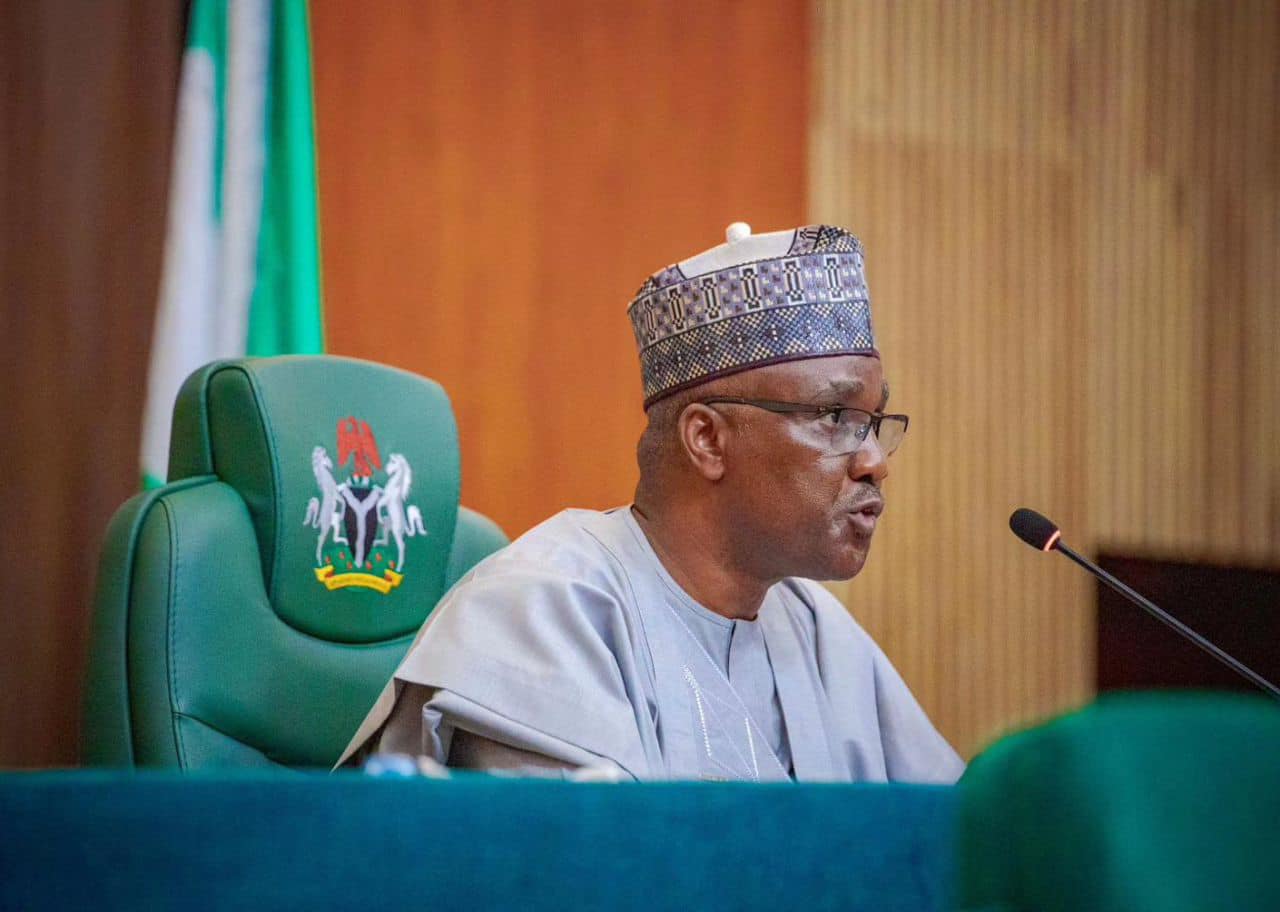
In a recent discussion about the Fourth United Kingdom, Nigeria Security and Defence Partnership Dialogue in Abuja, Chido Onumah, special adviser on Strategic Communication and Civil Society Liaison to the National Security Adviser, talked about a security partnership that goes beyond typical defence work. It includes sharing intelligence, building resilience against cyber threats, coordinating counter-terrorism efforts, disrupting terrorist funding, strategic communication, and broader efforts for regional stability. This perspective is important because it shows a wider understanding of what security work involves today.
The reasoning is simple. Terrorism, violent extremism, cybercrime, and organized crime do not fit neatly into bureaucratic boxes. They cross over those lines.
Security agencies may have useful information, but that information loses value when it stays trapped within institutional barriers.
Military actions may bring short-term victories, but those victories become hard to maintain without good policing, justice, financial management, and community involvement.
Border security may need personnel on the ground, but it also requires technology, data systems, regional cooperation, and planning for the economy.
Ribadu himself made a similar point at the same dialogue in Abuja when he said that future security will be shaped not just by traditional threats but also by technology, information, and data. In other words, lasting security cannot be achieved through force alone. Prevention, resilience, intelligence, social unity, and cooperation among institutions are all essential.
Coordination is not a luxury. It is the main strategy.
This is not a tale of complete change. There are still gaps in coordination. The disconnect between state and federal levels remains. Local government capabilities are often weak. Data sharing is still not enough. Education results are troubling. Youth unemployment continues to stir frustration. Climate issues worsen the fight for resources. Justice delivery is often slow. Misinformation erodes public trust. Corruption takes away resources from essential services.
The nutrition report itself points out a funding gap of about ₦500 billion. To close that gap, we need financing, accountability, laws, and discipline in implementation.
The same idea applies to security. A strong security framework needs capable institutions, effective oversight, and a long-term commitment.
Sadly, there are no shortcuts.
The key takeaway from this comparison is that every functioning institution is a security institution. A school that keeps children learning is a security institution. A hospital that maintains community health is a security institution. A nutrition program that supports child development is also a security institution. The same goes for an anti-corruption system that makes sure resources get to where they are needed. A justice system that resolves issues quickly is also a security institution.
Why? Because insecurity often arises where systems fail at the same time.
A malnourished child may struggle in school and become economically vulnerable. A community cut off from markets becomes poorer and more open to crime. A young person without job opportunities is more likely to join criminal groups. Weak governance creates gaps that violent actors exploit. Poor information sharing allows threats to spread across areas. Corruption erodes public trust and weakens institutions.
Force can suppress threats. But society must eliminate the conditions that create them. And society operates through institutions. All of them.
The lesson from the Nutrition 774 Initiative is not just about nutrition. It's a lesson on governance, ownership, and what can happen when institutions start working together instead of apart.
For too long, Nigeria has treated many problems as isolated issues needing separate solutions. But experience shows that the country’s biggest advancements will come from understanding how everything connects.
A healthier child is likely to grow into a productive citizen. A better-educated citizen is less vulnerable to manipulation by criminal groups. A transparent institution builds trust. A local government that works well reinforces resilience. An effective justice system increases public confidence.
Every success boosts another. Each institution supports another. That is how nations build lasting security. By aligning institutions, incentives, resources, and citizens around common national goals.
The good news about the nutrition financing initiative is not just that it tackles a ₦500 billion funding gap. It shows that Nigeria's problems are connected, and their solutions must connect too.
If nutrition is too vital to be left only to the health sector, then security is too important to be managed only by the security sector.
In nutrition and security, the guiding principle should be the same: Nigeria's future will depend on institutions learning to work together towards a shared goal.




Comments
No comments yet.