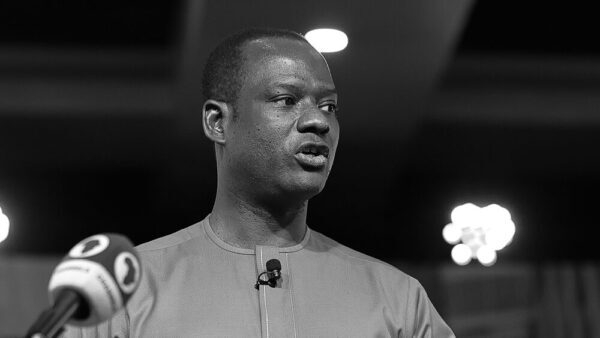
The Minister of Finance and Coordinating Minister of the Economy, Taiwo Oyedele, said that savings from removing fuel and foreign exchange subsidies mainly went towards paying off debts, increasing workers’ salaries, student loans, and other key government responsibilities.
While speaking at the 7th African Emerging Markets Forum, organized by the Central Bank of Nigeria in Abuja on Thursday, Mr Oyedele acknowledged public worries about the use of subsidy savings. He called the concern valid and promised to provide clearer information soon.
He mentioned that the combined effect of the fuel and foreign exchange subsidy was about 5 percent of Nigeria’s gross domestic product, but the savings were not set aside.
"But saving money was not the primary objective. It was eliminating the distortion and the corruption in the system, which is more fundamental.
"But where has the money gone to? In a few days, you will see the detailed analysis because we believe that we owe a duty to explain what we do to the Nigerian people. That’s what transparency looks like," he said.
The minister explained that even though the reforms created fiscal savings, the government faced higher costs right away, including debt servicing and increased wages for public workers.
Debt Servicing
He said that before the reforms, Nigeria financed part of its spending by printing money, which caused inflation but lowered immediate borrowing needs.
He added that some of the savings from the subsidy removal were used to pay debts, including money that was printed before the reforms started.
"Many Nigerians will conclude that the reforms are not working for them. Some would even say it’s a bad reform. What we do not normally compare is what would have been if the reforms were not carried out.
"Before the reforms, we were printing money to spend, the interest rates were about eight percent, and the minimum wage was N30,000. If you just think about those three, those are big numbers.
"If you stop printing, the spending doesn’t disappear. You need to finance the money you were printing before. That was part of where the savings went," the minister said.
Mr Oyedele explained that the reforms caused higher inflation, which led to rising interest rates and increased debt servicing costs for the government.
"So instead of paying eight percent on our debts, we were paying as high as 24 percent. When you need to service debts, you do not debate whether you need to pay. You cannot negotiate it. You pay, and you pay on time," he said.
Wage Increase, Student Loans
Mr Oyedele said the government also allocated significant resources to implement the new national minimum wage and support higher education through the Nigerian Education Loan Fund (NELFUND).
Regarding the NELFUND programme, he said over 1.5 million students now receive funds for both their tuition and monthly stipends. This allows parents to use money they would have spent on school fees for other important household needs.
"Minimum wage went up from N30,000 to N70,000. That’s almost double the wage bill of the government.
"A million households, the parents, no longer have to save, borrow, and be stressed just to pay the tuition. Now they can deploy those resources into their small businesses and to take care of other important basic needs.
Detailed Account
The minister stated that the government would soon give Nigerians a detailed account of both the savings made from the reforms and how the money has been used.
"So what we need to do is we’ll provide a detailed explanation of how much we saved and how the money has been spent," he added.
Mr Oyedele emphasized that removing fuel subsidies and liberalizing the foreign exchange market aimed mainly at correcting long-standing economic issues, not just cutting government spending.
Earlier in his speech, he noted that President Bola Tinubu’s administration focused on long-term economic goals instead of short-term political gains by making changes that previous governments had postponed.
He stated that the administration took over an economy weakened by structural issues that discouraged investment, reduced productivity, and hurt competitiveness.
He argued that delaying the reforms would have caused even greater economic problems for the country.

Drop your comment
No comments yet — be the first to drop the gist 👇