Nigeria's Early Childhood Development Faces Serious Funding Issues, Report
A report reveals that Nigeria's early childhood services are severely underfunded, affecting millions of children in crisis. The lack of specific budget lines hampers accountability.
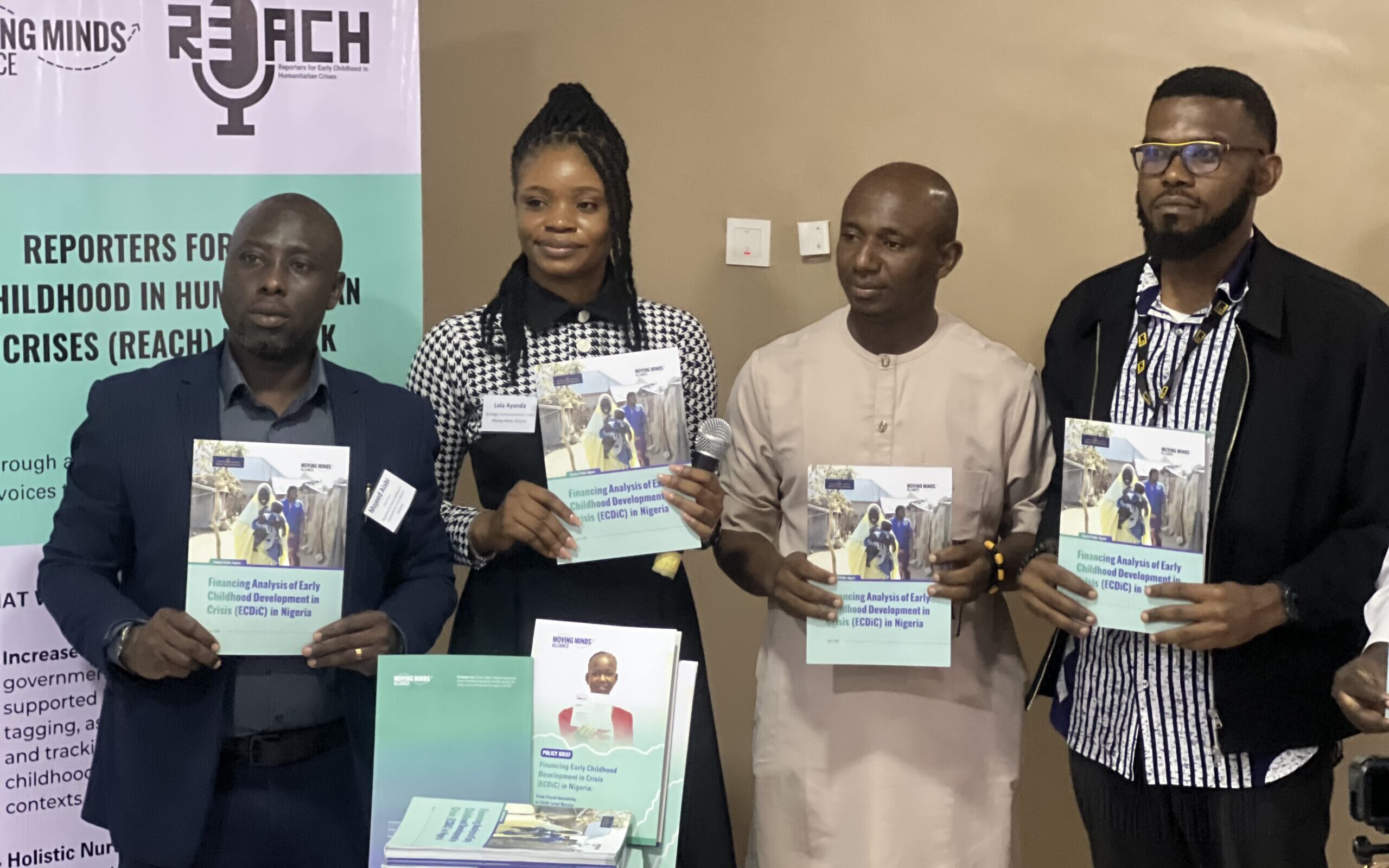
A new report by the Moving Minds Alliance shows that millions of Nigerian children affected by conflict, displacement, and economic struggles are mostly ignored in government budgets. This leaves vital early childhood services badly underfunded despite growing humanitarian needs.
The report, titled "Financing Early Childhood Development in Crisis (ECDiC) in Nigeria: From Fiscal Invisibility to Child-Level Results", was launched at a workshop for journalists on Early Childhood Development in Crisis Contexts in Abuja on Wednesday.
It revealed that Nigeria does not have a specific budget line for children in crisis.
The report states that less than five percent of Nigeria’s education budget goes to early childhood or emergency learning. It also shows that only 1.5 percent of the health budget is used for early childhood services.
The report points out that the lack of a specific budget line makes it hard to track and hold accountable how funds are used.
"Across all sectors, ECD in Crisis gets a tiny share," it said.
The report found that while important sectors like Education and Health have received more funds over the years, money for ECDiC remains "fiscally invisible". This means there is no specific identification to ensure accountability and proper tracking.
"Recognising that ECDiC is not financed through a single budget line, the analysis adopts a multi-sectoral public finance lens to examine how resources flow through health, nutrition, and other social factors, including education, social protection, and humanitarian systems," the report added.
"As a result, financing for young children in emergency is poorly protected during budget execution and highly exposed to delays, inflation, and changes during fiscal stress," the report continued.
The report
The report looked at how Nigeria financed Early Childhood Development in Crisis (ECDiC) from 2020 to 2025.
Lola Ayanda, the Communications Manager of the Moving Minds Alliance, mentioned that the report was created with support from Whole Child Advisors.

"It is the most thorough analysis to date of how Nigeria funds, and fails to fund, early childhood development for children facing conflict, displacement, climate shocks, and economic crisis," Ms Ayanda stated.
During the presentation, Arome Agenyi, the Coordinator of the Nigeria Early Childhood Development in Crisis Coalition, explained that Nigeria’s Human Capital Index is 0.36. This means a child born in Nigeria today is expected to reach less than 40 percent of their potential productivity due to ongoing issues in health, nutrition, and education.
"Behind every successful adult is an early childhood story. The question is not whether children are developing; they are," he said.
"The question is whether they are developing to their full potential. The stories journalists choose to tell today can shape the policies, investments, and public actions that will impact millions of Nigerian children, especially those in crisis situations across Nigeria."
Mojeed Alabi, the Global Co-Chair of the Reporters for Early Childhood in Humanitarian Crisis Network, also spoke. He said that children living through conflict, displacement, and economic hardship often become invisible in public policy because they are also ignored in public finance.
"When children become fiscally invisible, they also risk becoming politically invisible. The launch of the REACH Network in Nigeria is a promise by journalists to change that story through ongoing, evidence-based reporting," he stated.
Methodology
The report examined Nigeria’s annual budget from 2020 to 2025 using mixed-method public finance analysis.
It looked at how ECDIC is financed in the budgets, the allocations, and whether they can reach young children in crisis situations.
The report relied on identifying ECDiC-relevant programs and spending categories within sector budgets that likely support early childhood outcomes, especially in emergency and crisis-affected areas.
"Because specific spending on children aged 0-8 (ECDiC) does not exist as a dedicated budget line, the analysis uses budget-tagging proxies and execution reports from partners like UNICEF and OCHA to estimate actual service delivery."





Comments
No comments yet.