Two Journalists Arrested in Mali for Criticising Government
Two journalists in Mali were arrested for speaking out against the military government's actions on press freedom. Calls for their release are growing.
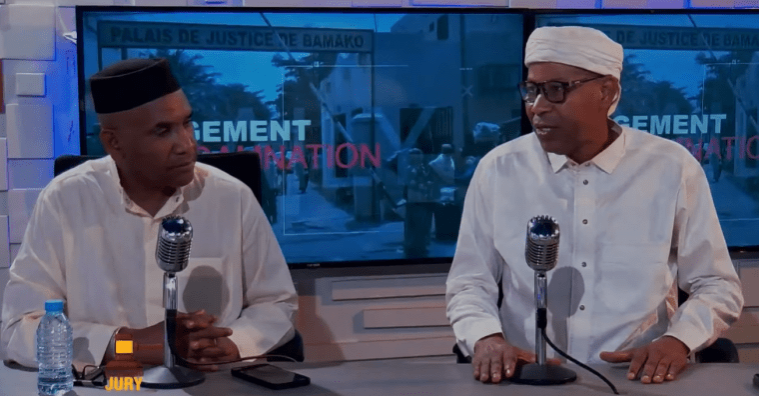
Malian authorities have arrested two well-known journalists for speaking out against the military government's record on press freedom and its failures against insurgents. The Committee to Protect Journalists is urging the government to free Abdrahamane Keïta and Chahana Takiou, who were detained last week, along with another journalist, Youssouf Sissoko.
“Malian authorities must stop their frenzied arrests of journalists, drop the charges against Abdrahamane Keïta and Chahana Takiou, and release them, as well as fellow journalist Youssouf Sissoko,” said Moussa Ngom, CPJ’s Francophone Africa representative. “It is ironic that Malian authorities used the cybercrime law to arrest Chahana Takiou for speaking out about its misuse against the press. They have only proven that his comments were 100 percent accurate.”
The cybercrime unit was established in 2022. It has the power to use eight legal texts to go after online offenses. The broad language of the 2019 cybercrimes law removed the protections journalists had under the 2000 press law, which had lighter penalties. Now, journalists can face the same heavy punishments as ordinary citizens.
On 8 June, the National Cybercrime Unit ordered the arrest of Chahana Takiou, who is the publishing director of the biweekly 22 Septembre newspaper. This arrest followed his comments at a media forum where he spoke against the two-year sentence given to journalist Youssouf Sissoko in March. Sissoko was punished for “undermining the state’s credibility” through a newspaper commentary about Niger’s president that went viral on social media.
“He should have been tried under the press law, but since the cybercrime law came into effect, judges have been superbly ignoring it,” Mr Takiou told a prosecutor during a panel discussion.
Mr Takiou has been held in prison in Bamako while waiting for his trial on 27 July. He is facing charges under the cybercrime law for “undermining the state’s reputation through the judicial system.”
On 9 June, Abdrahamane Keïta, the director of Le Témoin newspaper, was also detained by the cybercrime unit. His arrest followed his comments on the popular TV show “Grand Jury.” He claimed that Al-Qaeda linked JNIM insurgents control Mali’s northern city of Kidal.
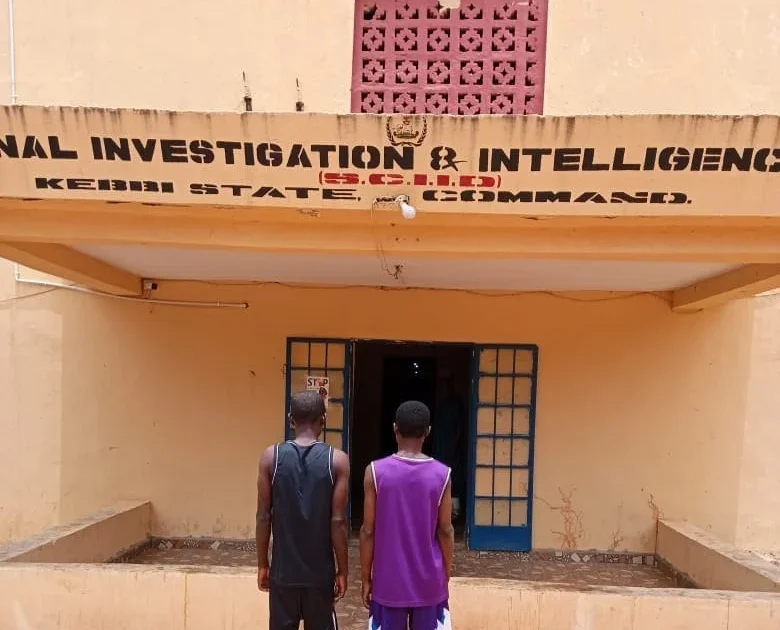
In April, JNIM and Mali’s separatist Azawad Liberation Front (FLA) launched coordinated attacks on multiple towns. They took Kidal from the Malian army and its Russian allies, and killed the defense minister. This showed the growing strength of the militants.
Mr Keïta will go to trial on 17 August. He is charged with “a crime of a regionalist nature that tends to undermine national unity and the credibility of the state” and for publishing false information, according to Mali’s largest press group, the Press House.
Article 54 of the cybercrime law allows the cybercrime unit to prosecute journalists under regular criminal laws, which can lead to several years in prison. This applies to offenses that happen online, but the term “press on the Internet” is not defined.
Mohamed Timbiné, the first deputy prosecutor of the cybercrime unit, spoke to local media this month. He said that newspaper journalists whose work is shared on social media can be charged with cybercrimes.
“Someone who defames in a newspaper, for example … if the publication is not on social networks, effectively it is the law of 2000 that applies. But if afterwards, these same writings end up on social networks and it has consequences on social networks, naturally, it is the 2019 law on cybercrime that applies, even if the person is a journalist, because this law applies to everyone without exception,” he explained.
The cybercrime unit did not respond to CPJ’s requests for comments.
Comments
No comments yet.