Why Nigerian Journalists Are Leaving the Profession
Journalists in Nigeria face financial struggles that drive many to leave the profession. This article highlights the experiences of those who have made this tough choice.
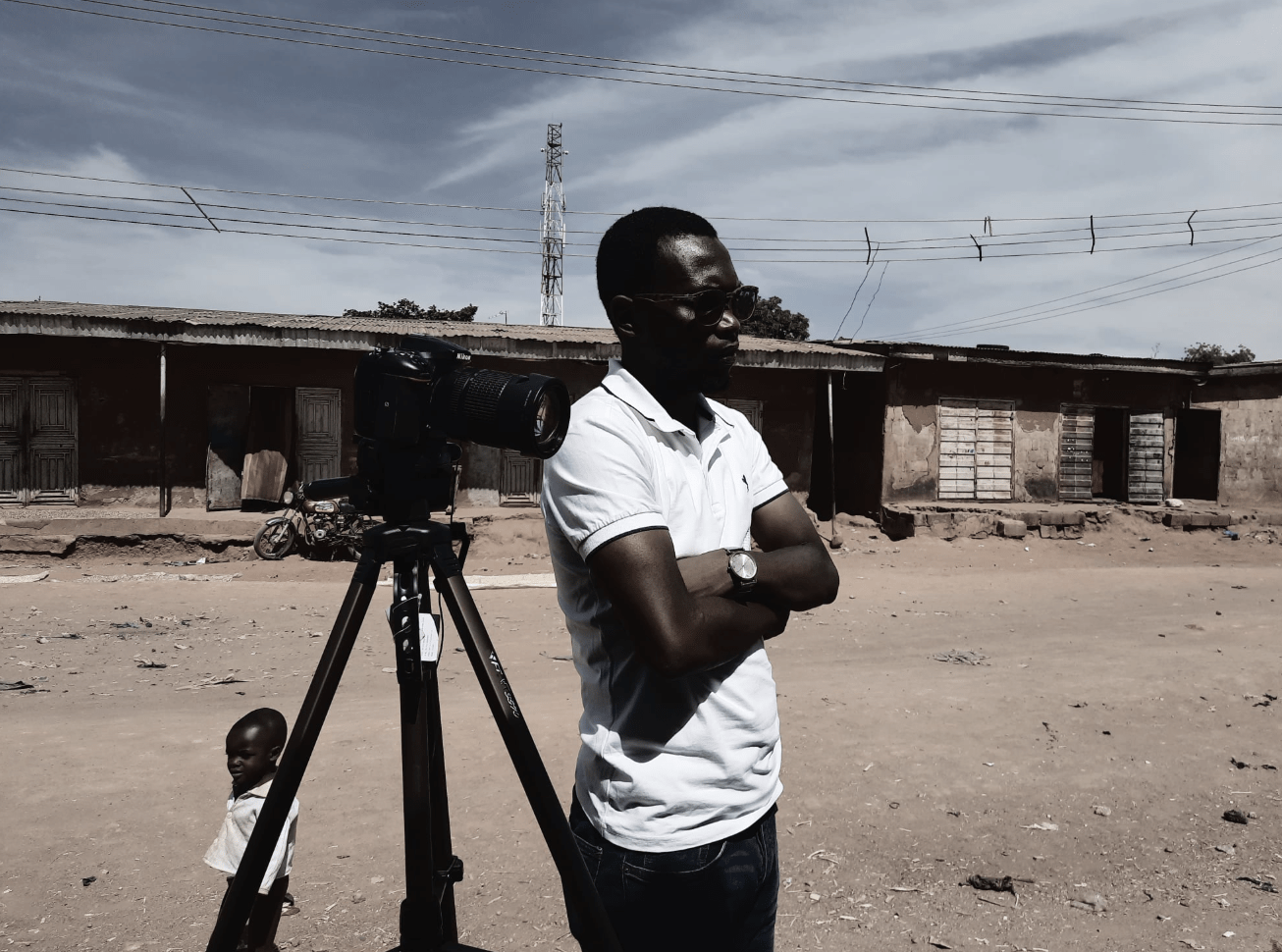
On the day he found out he was a finalist for the 2019 Thomson Reuters Young Journalist Award, Amos Abba thought he would have a great career ahead.
His work on water pollution caused by a big company, illegal actions of loan sharks, and wrong airstrikes by the Nigerian military that killed civilians made him a well-respected journalist. But now, he is no longer a full-time journalist in Nigeria.
“I was just exhausted,” Mr Abba said. “If I had depended on my take-home for the month, it was usually not sustainable. I had to look for other sources of livelihood to sustain my living. For me, that was the biggest challenge.”
From the start, the signs were clear. After graduating in 2016, Mr Abba began his journalism career doing unpaid freelance work for a major Nigerian newspaper, a job he kept until 2018.
“I was doing menial jobs. Whatever I got from it, I would use it to pursue my stories. At the time, it was just love for the craft; the money was the last thing on my mind,” he said.
In 2019, Mr Abba got a full-time job after a short internship, but the financial issues continued because of low pay. In 2022, he left to study for a master’s degree in the United States and has not returned to full-time journalism in Nigeria.
In 2020, a year after Mr Abba’s nomination, Kabir Adejumo won the Thomson Reuters Young Journalist Award. He won for his brave investigative report about how border guards on the Nigeria-Benin Republic border allowed people to cross despite COVID-19 rules.
A few months later, Mr Adejumo switched to another newsroom that paid better. “I left because I felt like I wanted a bigger challenge and I wanted better pay,” he said.
The mix of low pay, job risks, and other issues forced Adejumo to leave full-time journalism barely five years later.
The problem of low pay causing journalists like Mr Abba and Mr Adejumo to leave is well known in Nigerian journalism. Journalists often complain about their low wages, while media managers talk about falling revenues. Regulators sometimes mention the problem. But the full extent and effect of this issue on important reporting in Nigeria are not widely reported.
In the last ten years, Nigeria has seen a big talent drain in several areas like health and education. Journalists have reported this crisis, but they seldom focus on the major talent loss in Nigerian media.
The size of this problem is clear from survey data. Of the 50 former full-time journalists surveyed, 64 percent said low pay was the main reason they left.

Reasons journalists leave full-time practice
Salary survey platform, Paylab, estimates that Nigerian journalists earn a monthly minimum of N172,461 ($126.55) and an average of N347,760 ($255.17). These dollar rates are based on the Central Bank of Nigeria’s rate of N1,362.84 to one dollar, as of June 9, 2026.
But these numbers do not reflect reality for many journalists. Many earn well below the N70,000 ($51.36) national minimum wage set by the Nigerian government.
One 28-year-old broadcaster earns N50,000 ($36.69) a month, which barely lasts a few days. “I survive through careful budgeting, taking on small freelance media tasks like voice-overs, event anchoring, and other side engagements,” said the journalist who works in a radio station in Nigeria’s South-west.
Another 30-year-old colleague, who also earns N50,000, has no plans to leave because journalism gives him “purpose beyond the paycheck.”
Low wages affect journalists across Nigeria, but it hits the broadcast sector hardest, especially in Northern radio stations, where pay is often less than half the minimum wage.
Two journalists at different radio stations in Nigeria’s North-west shared their frustration about earning N30,000 ($22) and N40,000 ($29.35) respectively. Yet, the 28 and 33-year-olds feel lucky that their small salaries come regularly. This is not the case for some others.
While these four journalists in their prime chose to stay, many others have left. About 67 percent of journalists aged 18 to 34 only last about five years in their jobs, survey data show.

Age range and years of experience of survey respondents
A 2025 publication by the International Centre for Investigative Reporting (ICIR) showed the struggle of professional journalists who work every day but find it hard to pay rent.
To make ends meet, former journalists who answered the survey turned to different income sources. 38 percent started side businesses, 36 percent freelanced, and 32 percent provided public relations consulting. Most worryingly, 14 percent admitted to accepting money, known as “brown envelope,” to survive.

Side hustle for financially struggling journalists
Lekan Otufodunrin, the executive director of Media Career Services, helps young journalists and supports them early in their careers. To help with journalists’ stress about low pay, he shares long-term success stories to show that journalism can lead to other career paths.
“People need to be convinced by real examples, and each time we do that, their anxiety is not as bad as it used to be,” Otufodunrin said.
To tackle this issue, the Nigeria Union of Journalists (NUJ) is pushing for a Media Enhancement Bill to improve journalists' labor rights and benefits.
“We have one or two [National Assembly] members we have identified, and they have agreed to sponsor the bill. We hope and pray that, at the end of the day, the bill will scale through,” says the union’s president, Alhassan Yahaya.
But the problem is bigger than the proposed solution. While it might be easier to implement in government-owned media, getting compliance in the private sector, which makes up the majority of Nigerian media, could be tough.
To overcome this challenge, the NUJ is suggesting talks. “They have their own union, so we are trying to see how we can sit down and discuss,” says Mr Yahaya. “Once we have what is implemented by the federal and state governments, we will examine it and see how they can adapt those policies so that they can improve the welfare of journalists in Nigeria.”
Not just about money
After studying at the University of Ibadan, Aishat Babatunde joined mainstream journalism in 2019. She built a strong portfolio at top media houses like Nigerian Tribune, Premium Times, and HumAngle.
But after only three years, she wanted more than journalism could provide. Personal struggles, newsroom politics, and financial issues led her to leave.
Today, she is pursuing a doctoral degree in comparative literature to follow her dream of working in book publishing. Ms Babatunde does not see herself returning to journalism. “That seems like a dream that is far gone right now,” she says.
Like Ms Babatunde, more Nigerian journalists have sought further education abroad over the last decade, with many eventually leaving the country and the profession.

Destination of journalists who quit full-time practice
While academia is a major exit route, political appointments are also a big draw. Recent high-profile moves include Ajuri Ngelale, who served as spokesperson to President Bola Tinubu, and Abdulaziz Abdulaziz, the 2018 Nigeria Investigative Reporter of the Year, known for his reporting that led to the resignation of Finance Minister Kemi Adeosun.
Femi Owolabi, the first Head of Investigations at The Cable Foundation, said his entry into politics was not always planned.
“I was invited to help develop a policy document for a gubernatorial candidate. I took a two-month leave from the newsroom for that,” he said. “After the candidate won, I was appointed as a policy advisor.”
Beyond the new opportunity, Mr Owolabi’s exit was driven by growing professional burnout. “We carried out several investigations and made recommendations, but nothing substantial was done by those in authority. That was always discouraging,” he said.
There was also the security risk tied to the job. Having survived a near-fatal experience covering the Boko Haram insurgency and a risky undercover mission, moving into politics offered a safer option.
Sometimes, the dangers come in the form of direct threats. For instance, when Kabir Adejumo reported how a pastor allegedly raped a teenager, he received threats from the accused despite solid evidence in his stories.
“At that point, the threats didn’t just test my professional resolve but also my personal courage,” he said.
Another time, he felt he was targeted for execution by bandits in a remote village in Zamfara State. “The very day after I left the community, that was when terrorists known as bandits attacked the community,” he said. “These are just some of the challenges we face in reporting critical stories.”
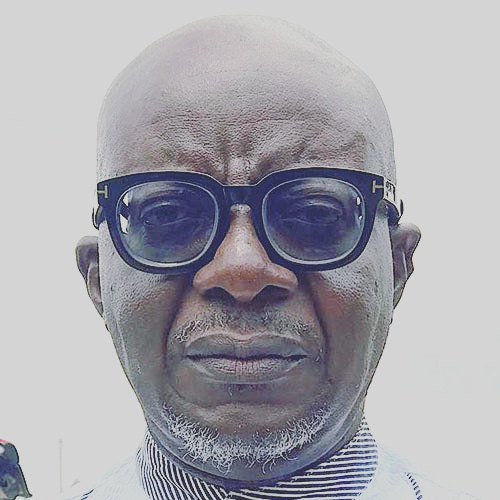
His fears are not exaggerated. Recent events in Nigerian journalism are frightening. Some journalists have been killed or have disappeared while doing their jobs. Others have been injured.
There was Pelumi Onifade, a 20-year-old journalism intern who was killed by police officers during the #EndSARS protests in 2020. Radio journalist Mohammed Adamu’s head was smashed open by police officers, allegedly on a politician’s order, while covering a public event. Dadiyata, a strong critic of the government, went missing and is presumed dead since 2019. This is just a few cases.
As of May 11, 2026, the Centre for Journalism Innovation and Development (CJID) reported 86 deaths and 1,326 attacks since tracking began in 1986, including assaults, threats, arrests, and imprisonment.
Many journalists have also been arrested, assaulted, and jailed under false charges due to a controversial Cybercrime Law.
This situation contributes to Nigeria’s low press freedom rating, currently at 112 out of 180 countries. Reporters Without Borders measures press freedom by looking at political context, legal frameworks, economic issues, cultural dynamics, and journalist safety in each country.

Nigeria’s 10-year press freedom data
Mr Otufodunrin suggests a three-part approach for keeping journalists safe. “The government should make the environment good enough. Journalists should know when not to put themselves in risky situations. [For newsrooms], before your reporters go out, let’s do an assessment, let’s know how we can give them a backup. Let’s know when to pull them back. It’s not just about getting the story,” he said.
Respondents to the survey for this article also mentioned lack of editorial independence, pressure to focus on stories that attract traffic, poor newsroom leadership, and bad working conditions as reasons for leaving full-time journalism.

Other reasons journalists left full-time practice
To lessen the impact of job risks, the NUJ is working on providing health and life insurance for journalists.
“Research shows that less than one percent of journalists in Nigeria have any form of insurance, especially life insurance. We are trying to see how we can launch new insurance premiums for journalists, especially health insurance, to achieve three goals: reduce out-of-pocket expenses, lower maternal mortality among women, and improve universal health coverage,” Mr Yahaya said.
In March, the union’s Federal Capital Territory (FCT) council enrolled 150 journalists in the FCT Health Insurance Scheme.
Newsrooms’ coping strategies
Since its start in 2010, the International Centre for Investigative Reporting (ICIR) has developed some of Nigeria’s best talent and hard-hitting journalism.
Journalists there have won or been nominated for many top awards like the Wole Soyinka Award for Investigative Reporting. Despite their success, the not-for-profit newsroom has struggled to keep talent.
Dayo Aiyetan, the executive director of ICIR, said the financial struggle is harder for outlets like his due to their tight funding model.
“ICIR gets donor funding mainly to promote investigative journalism in Nigeria. But we went further. We said if we are promoting investigative journalism in Nigeria, why not have our own newsroom? The truth is, there is no money to fund that newsroom. We use the non-profit’s savings to fund it.”
“Now, there are 28 people at ICIR; only eight are in the non-profit, while the other 20 are in the newsroom. That newsroom doesn’t earn anything, but we still have to pay salaries. Up to 65 percent of the salary we pay goes to that newsroom. So, how do we sustain? Because there is no profit, we cannot improve salaries. We are just now reviewing salaries.”
While he recognizes the need for better pay, Mr Aiyetan stressed that decisions about moving jobs should be based on passion.
“People with a passion for journalism have left or gone into other fields because if you’re entering journalism, you must know it’s not about the money,” he said, mentioning ICIR journalists who have stayed for years.
Regardless of the funding model, almost every media outlet in Nigeria is facing financial struggles that limit their operations, cause the loss of trained talent, or lead to their closure.
This issue is also seen in one newsroom whose data was analyzed for this report. Internal data from a leading Nigerian newsroom shows that about 44 percent of journalists who worked there as of March 2022 left the organization or the journalism field entirely within four years, by March 2026.
“With their constant exit, we don’t see many investigative stories anymore,” Tunde Akanni, a professor of journalism and communications at Lagos State University, said. “That presents a challenge to media development organizations to invest in training new journalists so the gap in investigative reporting doesn’t remain too long,” he added.
Media development organizations like the CJID help journalists and newsrooms. These efforts include training for campus and professional journalists, story grants, awards, mentorship, and support for journalists who faced attacks.
The CJID’s executive director, Akintunde Babatunde, said while these efforts help tackle part of the problem, newsrooms must do more to become financially stable and keep their talent.
“Newsrooms need to invest in good storytelling,” he said. “This way, they can make money. They will get more traffic, which they can use for ad deals or to turn those insights into subscriptions. Newsrooms should consider niche reporting that could develop into expertise in certain areas. A total package for subscribers will provide some kind of support for good journalism.”
What about foreign media?
While local outlets usually offer low pay, moving to foreign news organizations has become a lifeline for top talent seeking better financial stability. Big names like the BBC, Deutsche Welle, AFP, and Reuters have bureaus or hire full-time reporters and freelancers in Nigeria. But moving to a foreign outlet often involves trade-offs.
One journalist, who chose to remain anonymous to avoid backlash, said that while the pay and global audience were significant improvements, they sometimes felt their stories were treated as less important.
“In the local newsroom, the chance to tell the stories I cared about was nearly limitless. It was easier for me because I worked in a newsroom that focused on investigations and had the funding to support it. But I still wanted more. I wanted better tools, better mentoring, and more pay. Those were the local newsroom challenges that joining a global platform helped address.
“But with all the advantages of a global platform, I felt limited in terms of the stories I could report and how to report them. I felt these stories were treated as less important and received less attention,” the journalist, who has now left full-time practice, said.
Foreign outlets also pose a big challenge for local newsrooms as they attract top talent with higher pay. “They are killing us!” Mr Aiyetan exclaimed.
“We can’t compete with them in pay. They have huge resources, but I think they are selfish. They don't care about improving local journalism, and that’s why they poach. This is a problem for us in Africa, and we have to talk about it.”
He gave an example of a top talent whom the ICIR had invested in for years, who ended up at a foreign outlet. This journalist had turned down several high-paying offers due to loyalty but couldn’t resist when a big offer came.
“A foreign media organization came and offered them five times what they were earning. I said to them, ‘Are you crazy? Do you think I would tell you not to go?’”
Instead of stealing talent from local newsrooms, Mr Aiyetan suggested that foreign media work with local ones to produce journalism that benefits the public.
“There are credible local newsrooms they can collaborate with. If you say my newsroom isn’t up to your standards, why not help build their capacity and partner with them for projects instead of setting up independently and taking the same journalists to compete with us? That doesn’t help grow local journalism. I completely oppose it.”
Mr Akanni thinks it will be hard to strike such partnerships, as foreign outlets often have different goals from those of developing local newsrooms. “Their focus is not to improve our society; they are loyal to where they came from,” he said.
Once a journalist, always a journalist
Many scholars see journalism as a deeply emotional field where those who work in it feel a strong connection. This made reporting this story challenging.
Even those who have been out of full-time practice for years still see themselves as journalists. “I didn’t completely stop,” says Femi Owolabi, “I still contribute opinions and occasional reports from time to time.”
Ironically, most journalists would not return to full-time journalism in Nigeria, even if the issues that pushed them out were fixed.
When asked under what conditions she would think about returning to full-time journalism in Nigeria, Banjo Damilola, Nigeria’s 2020 Investigative Journalist of the Year, said, “Sustenance is important for me. I can’t return to any newsroom offering me N1 million. I have responsibilities that working in a local newsroom won’t just make sense,” she said.




Comments
No comments yet.