2027: A Look at Bauchi's Governorship Contest
The 2027 governorship race in Bauchi features five strong candidates with significant political backgrounds. Each candidate brings unique experience to the contest.
The 2027 governorship race in Bauchi State is set to be a five-way battle. The candidates are Yakubu Adamu from the Allied Peoples Movement (APM), Mohammed Abdullahi Abubakar from the All Progressives Congress (APC), Ibrahim Mohammed Kashim of the Nigerian Democratic Congress (NDC), Halliru Dauda Jika from the African Democratic Congress (ADC), and Senator Shehu Buba Umar from the People’s Redemption Party (PRP).
Looking at the backgrounds of these candidates, it is clear they are a strong group. This includes one former governor, two former senators, one former commissioner for finance, and one former secretary to the state government.
From their history, we can guess that none of these candidates will be easy to beat. They all have strong political followings in the state. Each has also experienced governance and public administration, meaning they should know what the people want. Most importantly, they all understand the challenges and opportunities facing Bauchi State.
Let’s break this down a bit more.
Mr M A Abubakar was the Governor of Bauchi State from 2015 to 2019 under the APC. He lost his re-election to the current Governor, Bala Abdulkadir Mohammed. Yakubu Adamu was the last Commissioner for Finance. He played a big role in changing the state from a quiet farming area into a developing state with better infrastructure, social services, human capital growth, and economic empowerment.
Mr Ibrahim Kashim was the Secretary to the State Government under Governor Bala Mohammed. As SSG, he coordinated government activities and often defended the governor’s administration. He frequently praised Mr Bala Mohammed’s leadership style and achievements. Senators Halliru Jika and Shehu Buba Umar have also traveled widely in the state as elected officials, so they know what the people want.
This all leads to a simple point. No matter who wins, Mr Bala Mohammed will not hand over to someone without experience. Each candidate has the right to seek the people’s mandate, and it is ultimately the voters who will choose the next governor.
That being said, there are important questions to consider.
Has the Bala Mohammed administration failed to meet the expectations of the people? Have there not been clear improvements in key areas of development in Bauchi State? Is the vision of the “My Bauchi Project” no longer relevant? More importantly, what new ideas do these aspiring governors have that would justify changing a development path that has been seen as successful?
These questions are even more pressing when one looks at the general agreement on the administration’s achievements. In sectors like road infrastructure, urban renewal, healthcare, education, agriculture, and social inclusion, progress is clear. No government is perfect, and critiques are normal, but the key issue is whether the state is better off today than it was in 2019. For many people, including some who previously criticized Mr Bala Mohammed, the answer seems to be yes.
If that is true, then another question arises: what is wrong with supporting a succession plan aimed at preserving what has already been achieved? Why is continuity seen as a bad thing when the outgoing governor is generally regarded as having done well?
This brings us to the positions of M A Abubakar and Ibrahim Kashim, which are tricky to understand.
Let’s look at M A Abubakar.
He was voted out by the people in 2019 and replaced by Mr Bala Mohammed. Since then, he has often acknowledged the successes of the current governor. In fact, before the 2023 election, he praised Mr Bala Mohammed’s work and showed appreciation for what the governor has done, despite being in a different political party.
This leads to an obvious question. If Governor Bala Mohammed’s performance deserves praise and the administration is seen as beneficial, then why oppose the continuation of that vision?
Politics allows for ambition, but logic requires consistency.
One cannot spend years applauding an administration and then suddenly argue against its continuation without explaining what has changed. If Mr Bala Mohammed’s policies were praised yesterday, what makes them unworthy today? If they were good enough to be celebrated across party lines, why encourage voters to reject them now?
The people of Bauchi deserve answers.
Now, let’s talk about Ibrahim Kashim.
Mr Kashim claims that Bauchi needs visionary leadership. But this contradicts many statements he made while serving as Secretary to the State Government.
He often called Bala Mohammed a visionary leader. He was also one of the strongest defenders of the administration’s policies and programs. He claimed to support a government that was transforming Bauchi State.
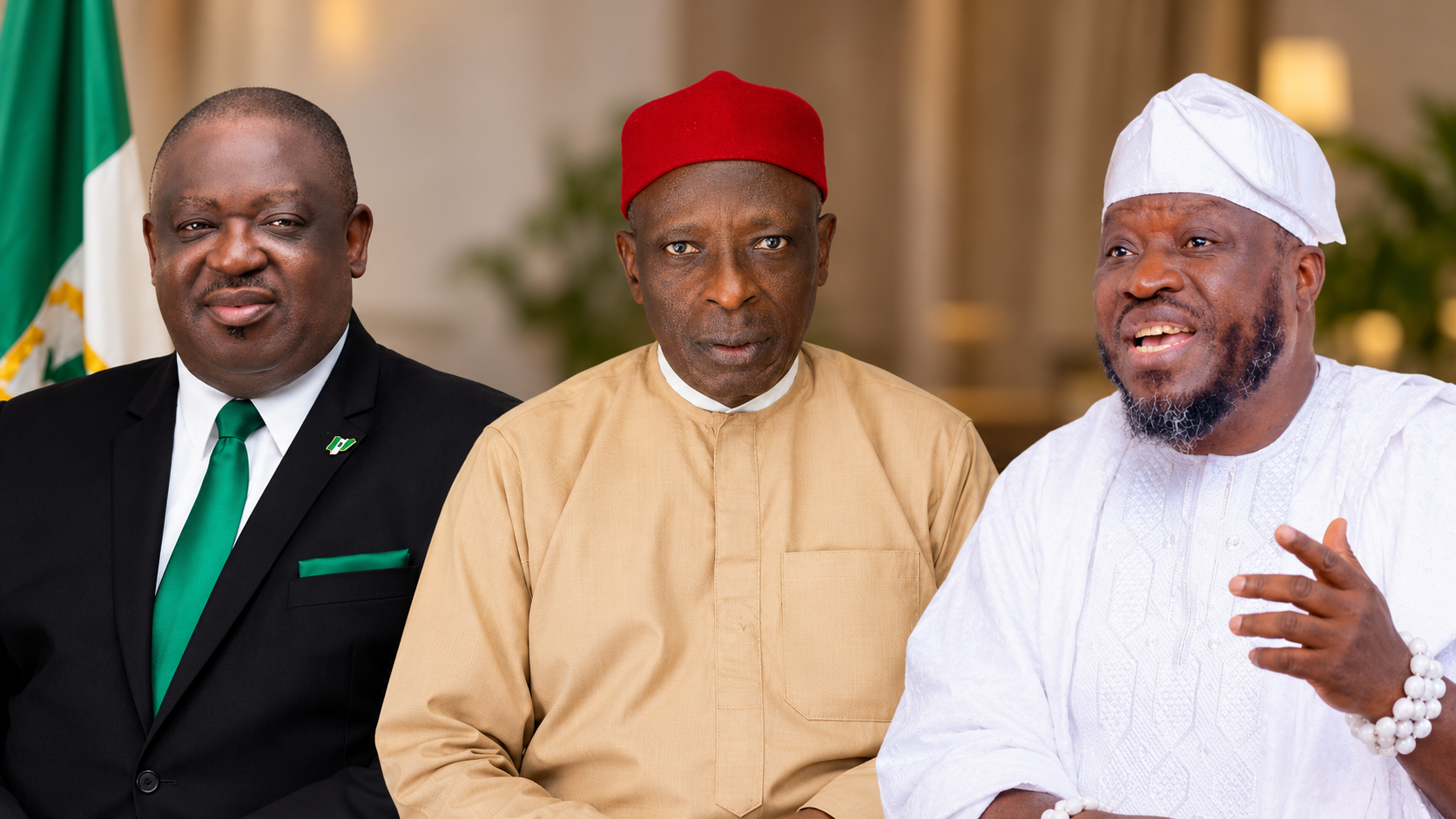
In fact, during an interview on “Solid Steps to a New Bauchi State” on True Vision TV and AIT, Mr Kashim praised the administration’s achievements and credited much of the progress to the governor’s leadership.
The examples he pointed to were strong.
Think of the extensive road construction and rural projects that brought Bauchi national attention. Look at the large urban renewal projects that changed the state capital and led to landmarks like the International Conference Centre, the remodeled Government House, and the first flyover in Bauchi State. Also, consider the advancements in agriculture, healthcare, education, and solid minerals development.
These successes did not happen by chance.
They were the result of a governing approach and development plan that Mr Kashim himself praised.
That is why his current argument raises tough questions. If Bauchi lacks visionary leadership, who provided the vision for these achievements? If the administration was truly transformative, why claim that the state needs what he calls visionary leadership now?
Did visionary leadership suddenly end when Kashim left office?
Or is he asking the public to believe he was the only one behind the developmental agenda, even though he wasn’t part of the original group that helped create the My Bauchi Project?
This idea is hard to believe and undermines the arguments he made in support of the government.
The truth is clear. Either Mr Bala Mohammed’s leadership was genuinely visionary, as Mr Kashim said, or it was not. If it was, then supporting continuity makes sense. If it was not, then Mr Kashim needs to explain why he publicly praised it for years.
This is why the discussion about succession should focus on more than personalities. It should center on the future of a development agenda that many acknowledge has produced real results.
No one is saying that Governor Bala Mohammed should choose a successor for the people of Bauchi State. That choice belongs to the voters. But it is also true that in democratic societies, people often listen to successful leaders about who should carry on their legacies. This does not mean blind loyalty; it shows that continuity can help when an administration has clearly improved a state.
If a governor has significantly upgraded infrastructure, improved social services, encouraged inclusion, promoted harmony among different groups, and raised the state’s national profile, it is not unusual for citizens to pay attention to who the governor prefers as a successor. After all, the leader who started a development vision is often the best person to choose who can continue it.
Overall, Mr Yakubu Adamu of the APM seems to be in a good position. He is seen as one of the key people linked with the implementation of the Bala Mohammed development agenda. Many voters see him not just as a politician but as someone who took part in the governance that brought hope to Bauchi State.
He will also benefit from the goodwill created by Bala Mohammed’s focus on inclusion, stakeholder involvement, and harmony among different groups. Many citizens do not want to risk these gains through unnecessary changes.
Maybe Bauchi’s ambitious politicians should learn from the late Premier of Northern Nigeria, Sir Ahmadu Bello. When offered a chance to lead at the national level, he chose to support Sir Abubakar Tafawa Balewa, believing he was a better fit for the role at that time. Whether or not one agrees with this comparison, the lesson remains: true leadership sometimes means putting the public interest first over personal ambition.
M A Abubakar and Ibrahim Kashim have every right to run for governor. Nobody can blame them for wanting to lead their state. But the real issue is not their right to contest. It is the inconsistency between their current views and the praise they gave to Governor Bala Mohammed’s leadership and achievements.
After celebrating the successes of the administration and associating themselves with its record, they now find themselves opposing a succession plan meant to maintain that record.
This contradiction is hard to explain.
That is why many observers believe that when it comes to who should succeed Bala Mohammed and protect the legacy of good governance he created, the joke is really on M A Abubakar and Ibrahim Kashim.





Comments
No comments yet.