Addressing Nigeria's Problems: A Call for Real Change
The Concerned Citizens have identified key issues in Nigeria but their solutions follow old patterns. A new approach is essential for real change.

The Concerned Citizens have done a good job by pointing out Nigeria's worsening situation. They have identified many real issues. But their suggested solutions are still stuck in the same old pattern that created these problems.
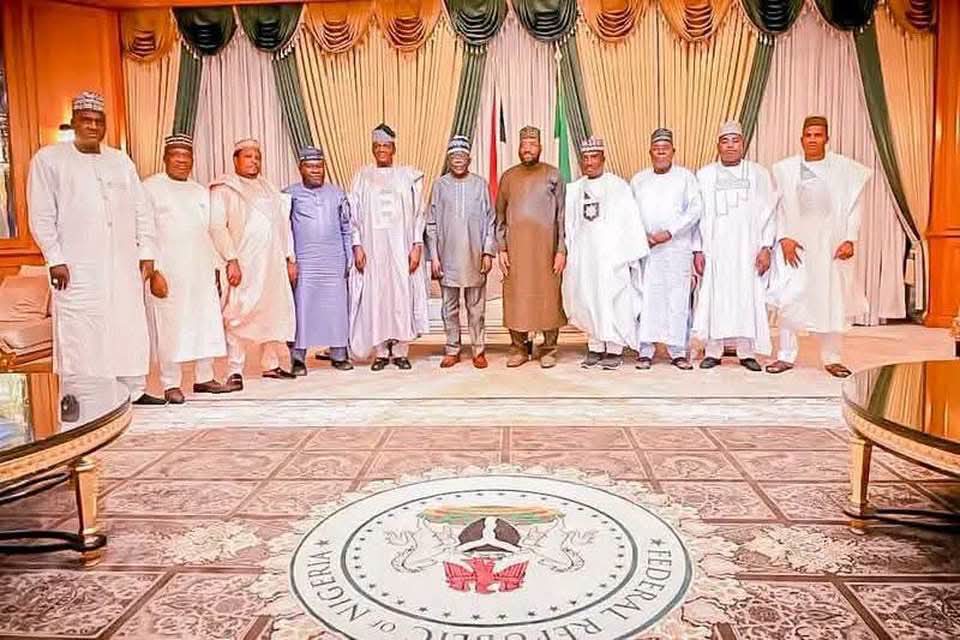
We saw a statement called "State of the Nation" released on June 8, 2026, by a group of well-known Northern Nigerians known as the Concerned Citizens.
The signers include: (1) Dr Husseini Abdu; (2) Ambassador Fatima Balla (OON); (3) Dr Usman Bugaje; (4) Professor Ibrahim Gambari (CON); (5) Dr Yahaya Hashim; (6) Professor Jibrin Ibrahim; (7) Professor Attahiru Muhammadu Jega (OFR); (8) Professor Mohammed Kuna; (9) Abubakar Balarabe Mahmoud (SAN, OON); (10) Mallam Kabiru Yusuf.
Their statement gives a thorough critique of Nigeria’s current state and ends with several recommendations aimed at reversing what they call a deepening national crisis.
We appreciate their effort. Serious national issues need serious discussions. But while we agree with much of what they have identified, we disagree strongly with their suggested solutions.
The statement’s critique can be summed up in two main points. First, it claims Nigeria is at a dangerous crossroads, marked by falling democratic accountability, weak institutions, and increasing threats to the separation of powers.
Second, it connects Nigeria’s issues to the wider problems in the Sahel region, where terrorism, military interventions, and weakening regional cooperation have hurt state authority and civilian safety.
These concerns are valid. But they are based on a wrong idea. The authors keep saying that Nigeria’s crisis threatens the country's "foundational constitutional principles." We do not agree.
Nigeria’s issue is not that its constitutional foundations are under threat. The real problem is that those foundations were never properly established in the first place.
The 1999 Constitution was not debated or adopted by the Nigerian people. It was imposed by military decree and claimed to be made in the name of citizens who had no real part in its creation. Its famous opening phrase, "We the People," is its biggest contradiction.
The people did not create it. The people did not approve it. The people did not ratify it. Still, the political system continues to draw its legitimacy from that claim.
This contradiction is at the center of Nigeria’s crisis. That is why the talk of constitutional morality feels empty when only applied in certain situations.
You cannot condemn unconstitutional changes of government elsewhere while ignoring the unresolved questions about constitutional legitimacy at home. The issue for Nigeria is not just about governance.
It is about political foundations. The recommendations from the Concerned Citizens fall into two main categories. The first calls for changes within the existing constitutional order: better accountability, stronger civic engagement, judicial independence, credible elections, professional oversight, and more responsiveness from public institutions.
The second calls for improved management of Nigeria’s external environment: working with the Alliance of Sahel States (AES), renewed cooperation with ECOWAS, regional diplomacy, and better security coordination. Both assume that the current constitutional structure is basically sound and just needs better management.
That is where we disagree. The recommendations see insecurity as a governance issue. We believe insecurity is really a political problem. The violence affecting parts of Nigeria cannot be understood just by looking at poverty, climate change, weak institutions, or regional instability.
These factors may add to insecurity, but they do not explain its political results. The common outcome is displacement. Communities are uprooted. Territories change. Local populations lose control over their ancestral lands.
Traditional institutions face pressure. Political balances shift. These are political results. That is why insecurity cannot be separated from issues of power, identity, territory, and state structure.
Nor can Nigeria’s problems be blamed solely on instability in the Sahel. Nigeria’s constitutional and political contradictions existed long before the current Sahel crisis.
The roots of today’s tensions go back to colonial times, the struggles over the constitution before independence, the regional crises of the First Republic, military takeovers, and the unresolved question of federalism.
The crisis in the Middle Belt today started because the ruling elite in the Northern Region wanted to suppress the people of the Middle Belt who were pushing for their own region. This led to the current insecurity that is now spreading south.
The splitting of Jos Local Government into two, ensuring a local government controlled by the Fulani, was not caused by "insecurity in the Sahel." Also, the free movement allowed for Fulanis across West Africa to settle anywhere in Nigeria did not come from "insecurity in the Sahel."
The problem is deeper than terrorism. It is a crisis of political structure.
The recommendations often call for accountability, rule of law, credible elections, and stronger institutions. These goals are good. But they do not exist in a vacuum. They come from a political system.
So, we must ask: What kind of political system brings accountability? What kind encourages democratic participation? What kind reduces the fight for state power?
Nigeria officially calls itself a Federation. Yet the central government controls security, policing, major revenues, political incentives, and much of the constitutional process.
As long as the center holds most of the power, every election becomes a fight for that control. Every policy discussion becomes a battle over access to centralized authority. Every institutional reform is at risk of political interference.
That is why calls for electoral reform, judicial reform, and administrative reform always come back to the same question: Is Nigeria truly Federal? Until we answer that question, reform efforts will remain limited.
The recommendations from the Concerned Citizens also reach out to civil society, the private sector, traditional rulers, religious leaders, and the judiciary. We have no problem with these appeals. But these institutions are products of the current constitutional order.
A judiciary gets its authority from the Constitution. A legislature gets its authority from the Constitution. The executive derives its authority from the Constitution. Even the role of traditional rulers is shaped by the Constitution.
When the foundation is in question, every institution built on it is affected. This does not mean these institutions should stop working. It means we must recognize their limitations.
The real question is not how to improve every institution within the current setup. The real question is whether the setup itself reflects the agreement of the people living under it. That is the question missing from the Concerned Citizens’ recommendations.
We believe Nigeria’s crisis cannot be fixed just by making changes to institutions. It needs a new constitutional foundation. The country needs a Constitution that comes from the people themselves.
Such a constitution cannot come from elite discussions alone. It cannot come from just another committee. It cannot come from another constitutional amendment. It must come from the people who make up Nigeria.
That is why Nationality Referendums are essential. The people of Nigeria, not just political parties, elected officials, or government agencies, must decide the constitutional basis of their union.
Only then can questions of federalism, security, representation, resource control, traditional authority, and democratic governance be settled on a solid foundation.
The Concerned Citizens have done a good job by highlighting Nigeria’s worsening situation. They have pointed out many real problems. But their solutions are still stuck in the same framework that created these issues.
The crisis is not just about accountability. It is not just about governance. It is not just about insecurity. It is a crisis of constitutional legitimacy. Until we face that issue, Nigeria will keep treating symptoms while ignoring the real problem.
The solution is not just another adjustment to the current system. The solution is a new constitutional foundation, approved by the people of Nigeria through Nationality Referendums. That is where the conversation should start. And that is where it must end.


Comments
No comments yet.