Atiku criticizes new ₦50,000 exam fees for WAEC and NECO
Atiku Abubakar has condemned the Federal Government's plan to impose a ₦50,000 fee for WAEC and NECO exams, stating it will hinder access to education for many children.
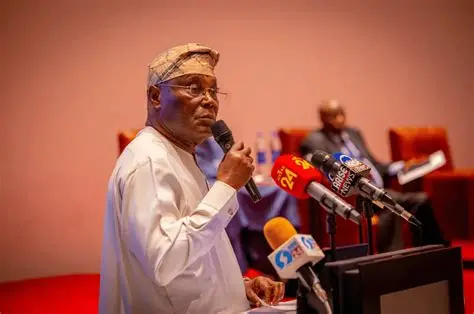
Ex-Vice President Atiku Abubakar has slammed the Federal Government for its plan to charge a uniform ₦50,000 fee for candidates taking the West African Senior School Certificate Examination and the National Examinations Council exams starting in 2027. He warns that this move will prevent millions of children from getting an education.
Atiku also spoke against the recent hike in fees for Federal Unity Colleges. He described these actions as insensitive and not in line with the government's duty to make education available to every Nigerian child.
In a statement on Sunday from his Senior Special Assistant on Public Communication, Phrank Shaibu, Atiku said the Tinubu government is adding financial stress to families already struggling with high inflation, rising food prices, transportation costs, electricity bills, and widespread unemployment.
“At a time when Nigerian families face record inflation, soaring food prices, rising transportation costs, crippling electricity tariffs, stagnant incomes, and high unemployment, the Tinubu administration has chosen to make education even more expensive,” Atiku said.
He believes education is the best way to break the cycle of poverty. He warned that raising school costs will increase inequality.
“A government that truly cares about its people does not create financial barriers to education. It removes them. Education is a right for every Nigerian child, not just for the wealthy. It is the foundation for building prosperous nations,” he stated.
Atiku pointed out that the new exam fees and higher charges for Unity Schools are especially concerning because Nigeria already has one of the largest numbers of out-of-school children in the world.
He said estimates show that between 10.5 million and 15 million Nigerian children and young people are out of school.
“Nigeria has the sad title of having one of the largest populations of out-of-school children globally. Any government facing such a crisis should be investing heavily to bring these children back into school. Instead, this administration is choosing policies that will only increase those numbers,” he said.
Atiku warned that the higher exam fees will mostly hurt children from poor and middle-income families, many of whom already struggle to balance basic needs with paying for school.
“The effects of these policies go beyond school gates. Every child who cannot afford education today risks becoming tomorrow's victim of unemployment, poverty, child labor, crime, drug abuse, or insecurity. Nations do not grow by making education more expensive; they grow by making it more accessible,” he added.
He also mentioned that the proposed ₦50,000 fee for WAEC and NECO exams would create another hurdle for poor students trying to enter university.
“It is a filter that will limit access to university for many qualified but financially challenged Nigerian students. For many kids from low-income families, the path to university ends even before admission, due to the cost of qualifying exams that shape their future,” he said.
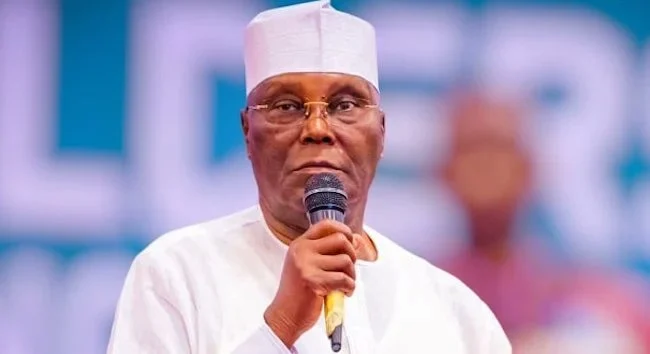
Atiku highlighted the problem of limited admission capacity in Nigerian universities.
He noted that over two million candidates seek admission into public universities each year, but only 500,000 to 700,000 can be admitted due to poor infrastructure.
“Instead of fixing this issue by expanding infrastructure and increasing admission slots, the government is making it even harder with higher Unity School fees and the new ₦50,000 exam fee. This is a cruel double punishment,” he said.
The former Vice President also questioned the focus on the Nigerian Education Loan Fund, saying that loans cannot fix the problems that stop children from finishing secondary school or taking qualifying exams.
“A university loan means little to a child who cannot afford secondary education or the exams needed for university admission. A government cannot claim to be improving access to higher education while putting up financial barriers that stop millions of young Nigerians from reaching university,” he noted.
Atiku insisted that real education reform should focus on making education affordable at the basic and secondary levels, building more university infrastructure, and ensuring that poverty does not limit access to education.
“No nation has ever taxed its way to educational success. Countries aiming for economic greatness invest more in education during tough times because they realize that human capital drives sustainable development,” he said.
He called on President Bola Tinubu to reverse the Unity School fee increase and cancel the proposed ₦50,000 exam fee for WAEC and NECO. He also suggested bringing together stakeholders to discuss sustainable funding for public education.
Atiku urged the Federal Government to invest more in public schools, hire more teachers, increase university capacity, and ensure that no Nigerian child is denied education due to financial struggles.
This statement came as discussions grow about the rising costs of education and the challenges of living expenses.
While the Federal Government has introduced NELFUND to help with access to higher education, critics say that affordability issues start much earlier, especially in secondary school where students need to pass qualifying exams for university admission.
The plan to implement a uniform ₦50,000 fee for WAEC and NECO candidates from 2027 has sparked a lot of public reaction, with many stakeholders asking for clarification from the relevant authorities.

Comments
No comments yet.