Concerns Arise Over Voter Register Ahead of 2027 Elections
The discovery of AI-generated images in the preliminary voter register has raised concerns about the integrity of the upcoming 2027 elections in Nigeria.
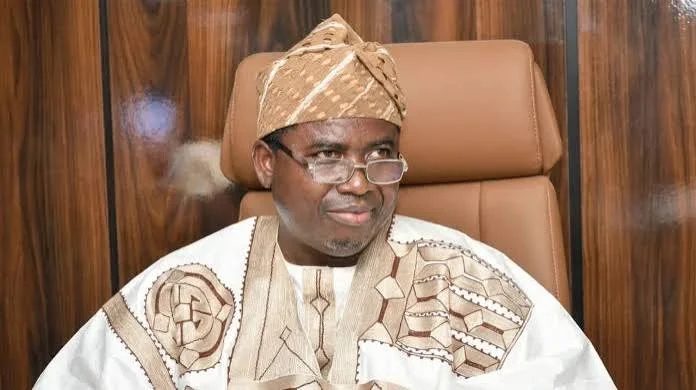
The discovery of AI-generated photos in the preliminary voters' register has sparked worries about the integrity of the 2027 general elections, Ismaeel UTHMAN reports.
Over the years, politicians have been accused of taking advantage of gaps in voter registration to manipulate elections. Some of these alleged practices include getting people to register in places where they do not live, helping political middlemen collect PVCs, and trying to control who gets voter cards.
These activities raise fears about the chances of proxy voting, even though voters must go through biometric accreditation and cast their votes in person.
The integrity of an election relies not just on what happens on election day but also on the accuracy and trustworthiness of the register that identifies eligible voters.
This is why finding AI-generated photos in INEC’s preliminary register ahead of the 2027 elections has caught a lot of attention.
According to INEC, the questionable records were first noticed during the nationwide display of the preliminary Register of Voters from October 9 to 15, 2026. The commission then uploaded the preliminary register to its website on October 26, which raised public concerns about irregularities in the voter database.
INEC’s Director of Information and Communication Technology, Dr Lawrence Bayode, stated that some registration officers used their login details to add questionable records to the database but could not explain why they did this.
Afterward, the commission announced that it had removed 1,609,553 invalid registrations during a nationwide cleanup, which also found 873 verified deceased voters. In total, 54 people from 10 states were identified as being involved in the registration irregularities.
The Importance of the Voter Register
Experts believe these irregularities raise a key question about the reliability of the voter register. This register is essential for determining who can vote. Its accuracy is vital for the credibility of the electoral process.
Political analysts argue that a register filled with fake names, duplicate entries, or ineligible voters could shake confidence in the number and identities of eligible voters. This could open doors for manipulation if issues are not fixed before election day.
Samson Itodo, Executive Director of Yiaga Africa, highlighted this concern by calling the voter register the foundation of electoral credibility. "The voter register is the foundation of every credible election. If citizens cannot trust the integrity of the register, their confidence in the entire electoral process is weakened," he said in an interview with Sunday PUNCH.
Peter Ahmed, the National Chairman of the Coalition of United Political Parties, also stressed the register's importance. "A voter register is the benchmark foundation for determining credible and reliable elections. If the voter register is faulty, the outcome of the election will be faulty," he said.
Debo Adeniran, Executive Chairman of the Centre for Anti-Corruption and Open Leadership, said INEC needs to create a clean and credible register that shows genuine and eligible voters. He is worried that the commission cannot assure Nigerians of election credibility if it cannot confirm the authenticity of the identities on which the voting process is based.
The need for an accurate register is also clear from weaknesses found by international observers during past elections. In its final report on Nigeria’s 2023 general elections, the European Union Election Observation Mission pointed out significant weaknesses in the voters’ register.
The observers noted that deceased and emigrated voters were still on the list, as well as voters who had not transferred their registration after moving. They also found cases of underage registration. These issues show that questions about the quality of the register have been around long before the latest discovery and are not just about the AI-generated photos.
Questions About INEC’s Integrity
INEC’s claim that some registration officers used their login details to add questionable records brings up worries about the commission’s internal controls, supervision of field officers, and the security of its registration database.
Itodo said this situation raises concerns about the integrity of the voter register, INEC’s internal controls, and the security of its registration system. He stressed that the effectiveness of systems like the ABIS depends on the people managing them.
He added that worries should not stop at the voter registration database since the credibility of other election technology systems, like the Bimodal Voter Accreditation System and the INEC Result Viewing Portal, also rely on the officials operating them.
Emmanuel Olowu, Executive Director of the Socio-Economic and Civic Rights Advocacy, echoed Itodo's concerns about INEC’s voter registration system and database security. "If authorized officers could introduce AI-generated photographs and questionable records, it suggests weaknesses in internal controls and monitoring mechanisms. INEC must explain how this happened and show that the wider database is secure. Nigerians deserve more than assurances; they deserve transparency and accountability," Olowu said.

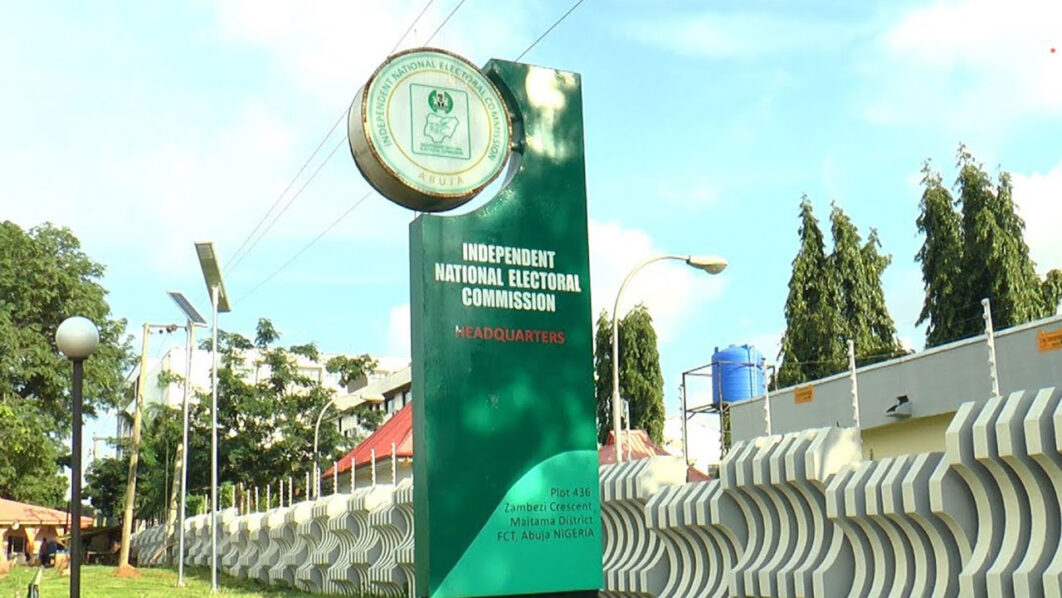
Ahmed also questioned the commission’s transparency and commitment to credible elections, insisting that those responsible for the irregularities must face consequences. "INEC is not transparent and has not been acting in the best direction that will show that they are sincere and committed to a credible election. They must sincerely prove to Nigeria beyond all reasonable doubt that they mean well and that they are committed to doing well by making sure that those who are behind the manipulation of data are brought to book," he said.
A Shadow Over 2027
With the 2027 general elections coming, the discovery has raised fears about whether the electoral process could be compromised. While finding questionable records does not prove a coordinated plot to manipulate the election, the chance that political interests could exploit such irregularities is a major concern.
Adeniran believes this situation has increased doubts about INEC’s ability to conduct credible and reliable elections in 2027. He argued that the commission’s credibility could be questioned if it cannot prove that the people listed in the register are real and eligible voters. Adeniran suggested that this could be part of a plan to manipulate the 2027 election, as those who added fake identities might want to influence the electoral process.
But Olowu warned against jumping to conclusions that the incident was part of a deliberate manipulation plot without solid evidence. "We cannot conclude that it is part of a deliberate plot without concrete evidence. However, we cannot rule out the possibility that such irregularities could be exploited for electoral manipulation. INEC must investigate who was responsible, who might benefit, and whether the actions were coordinated," he said.
Ahmed viewed the incident as part of a supposed plot to manipulate the 2027 elections. He questioned why INEC’s ICT department could not stop the introduction of questionable records despite the resources dedicated to INEC.
These varying opinions show the political sensitivity of the issue. While civil society representatives call for an evidence-based investigation, the accusation of a possible plot by political interests highlights how the discovery could deepen distrust among stakeholders ahead of the elections.
The Call for an Independent Audit
Civil society groups and other stakeholders have called for a broader examination of the voters’ register. They argue that just identifying and removing the affected entries may not be enough to prove the accuracy of the entire database.
Itodo and Olowu have pushed for an independent and thorough audit of the voter register, with protections for personal data. They believe such an audit would help clarify the extent of the irregularities and boost public confidence in the electoral process.
"Electoral credibility begins with an accurate and credible voters’ register. I therefore call for an independent forensic audit of the affected database, public disclosure of the findings, and adequate safeguards to protect legitimate voters from wrongful exclusion," Olowu said.
The demand for an independent audit aligns with the EU Election Observation Mission's recommendations after the 2023 elections. The observers noted that Nigeria had never conducted an independent audit of its voters’ register and suggested an external exercise involving physical checks, sample analysis, and an evaluation of biometric data quality.
This recommendation has taken on new importance after the latest discovery. While INEC’s internal biometric checks can find duplicate registrations and suspicious records, an independent audit would provide extra scrutiny and reveal if the problem is limited to the identified cases or shows bigger weaknesses in the database.
INEC’s own records also highlight the challenge of keeping an accurate voters’ register. In its report on the 2023 elections, the commission revealed it registered 12,298,944 new voters during the Continuous Voter Registration exercise. They then subjected these records to biometric deduplication and a cleanup that involved photos, fingerprints, and facial biometrics.
This process flagged 2,780,756 records as duplicate or multiple registrations, which were invalidated. As a result, the number of valid new registrations dropped to 9,518,188.
Political analysts say the finding of AI-generated photos in the preliminary voter register raises questions about whether INEC’s current verification mechanisms can stop questionable records from entering the database and if the commission can guarantee the register's accuracy before 2027.
For stakeholders calling for an independent audit, this would be a chance to assess the scope of the problem, evaluate the effectiveness of INEC’s safeguards, and see if legitimate voters risk wrongful exclusion. It would also give INEC a chance to show that it is ready to fix the weaknesses before they cause bigger issues during the elections.
However, INEC National Commissioner Mohammed Haruna urged Nigerians to trust and have confidence in the commission. He assured them that the electoral body would do everything possible to ensure a credible election. He promised that INEC would follow the matter of AI-generated photos to a logical conclusion.
"Nobody is manipulating. There are people who will attempt to influence this. That’s life. But, of course, our only responsibility is to make sure that they don’t succeed," Haruna said. "We have to be transparent. Transparency is one of the core values of INEC. When we investigate, we will find anybody who is guilty, and they will be prosecuted."
Get more stories like this on your home page
How this story developed
- Concerns Grow Over 2027 Elections After Court Ruling
Concerns Arise Over Voter Register Ahead of 2027 Elections (this story)


Comments
No comments yet.