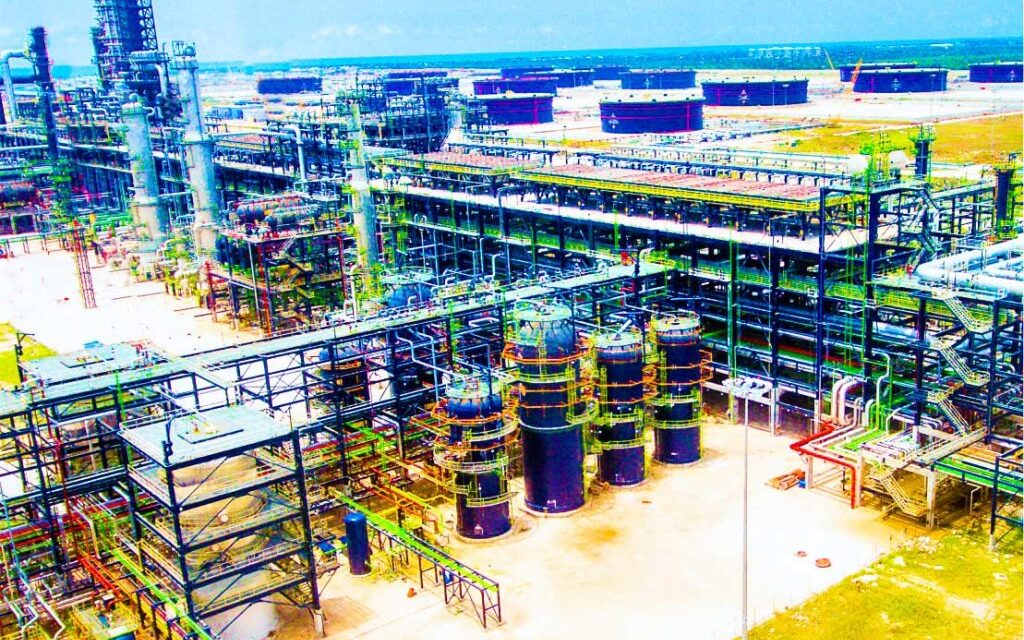
Dangote Petroleum Refinery and Petrochemicals FZE plans to increase its refining capacity to about 1.4 million barrels per day. This expansion depends on important operational tests, according to details from the company’s share sale prospectus.
The refinery hopes to double its capacity by 2030. But it may have trouble getting enough crude oil supplies to keep the new facility running smoothly, as noted in its initial public offering prospectus.
Currently, the refinery can process about 700,000 barrels per day. The expansion will add another 700,000 barrels per day of capacity.
On Monday, Dangote Refinery started its initial public offering (IPO). It offered 4.1 billion ordinary shares at N525 per share, aiming to raise around N2.15 trillion to fund its expansion.
The prospectus points out that getting enough crude oil on time is a major risk for the company. Disruptions could affect its ability to keep production at or near full capacity.
"The Issuer is dependent on the adequate and timely supply of crude oil, and disruptions to crude supply could affect Refinery operations," the refinery stated.
The company explained that its refining operations need a steady and reliable supply of crude oil. Any delays or shortages could hurt its ability to work efficiently.
Dependence on Local and Global Crude
The prospectus revealed that Dangote Refinery gets its crude from both local and international sources to meet its needs.
By 2025, about 60 percent of the crude the refinery uses comes from Nigeria. This includes contracts with NNPC Limited and spot purchases from local and international oil companies.
The company can access up to 350,000 barrels per day through the Domestic Crude Supply Obligation (DCSO) framework. But it mentioned that these volumes depend on availability.
The remaining crude needs are met through the international spot market and agreements with foreign suppliers. As of June 30, 2026, the refinery had processed 36 different crude types from Africa, South America, the US, and the Middle East. This shows the variety of crude sources available to the facility.
Though the company has many supply agreements, it warned that this does not guarantee a steady supply.
"Although the Issuer has entered into supply arrangements and may source crude from multiple suppliers, there can be no assurance that such arrangements will ensure uninterrupted supply of crude oil to the Refinery," Dangote Refinery said.
Challenges with Crude Supply
The refinery’s expansion plan includes boosting refining capacity and developing support infrastructure. This plan is set to take five years, with completion aimed for 2030 and costs estimated at about $14.3 billion.
The company plans to use money raised from its IPO to help fund the expansion. After costs are covered, it expects to have around N2.11 trillion left.
The rest of the expansion costs will come from profits and other financing sources, including loans and project financing.
This means getting enough crude supplies will be a key concern as the company invests more in increasing its processing capacity.
In the prospectus, the refinery warned that not having enough crude could hurt the business financially. It said that if it cannot get enough crude oil at good prices, or if supply issues cause production to fall short, the refinery could face lower output, higher costs, and slimmer profit margins.
"If the Issuer is unable to secure adequate volumes of crude oil at competitive prices, or if supply disruptions result in operations below design capacity, this could lead to reduced throughput, increased per-unit production costs and reduced refining margins," Dangote Refinery said.
It also mentioned other factors that could disrupt crude supply. These include suppliers not delivering what was agreed, problems in upstream production, export controls, and security issues in oil-producing areas.
Global Sourcing Risks
Dangote Refinery’s strategy to source internationally offers alternatives but also comes with risks.
The prospectus states that crude availability and prices can change based on decisions by NNPC, the Federal Government, OPEC, and other oil-producing nations.
The company may also face transport and shipping risks when importing crude. Security issues in the Gulf of Guinea and problems with major shipping routes can cause disruptions.
Meanwhile, the refinery’s CEO, David Bird, spoke at the listing ceremony on Monday. He said the company’s business model focuses on keeping costs low and staying strong during tough times while being reliable enough to take advantage of better market conditions.
"Our business model is to be low-cost and resilient during downturns, safe and reliable to harvest the upturns. And in our last six months of full capacity, full utilization at capacity has been a demonstration that we’ve been able to harvest the attractive margins of recent months," Mr Bird said.



Drop your comment
No comments yet — be the first to drop the gist 👇