ECOWAS Court throws out SERAP case against Nigeria's borrowing
The ECOWAS Court ruled against SERAP's claims that Nigeria's borrowing violates socio-economic rights, stating insufficient proof was provided.
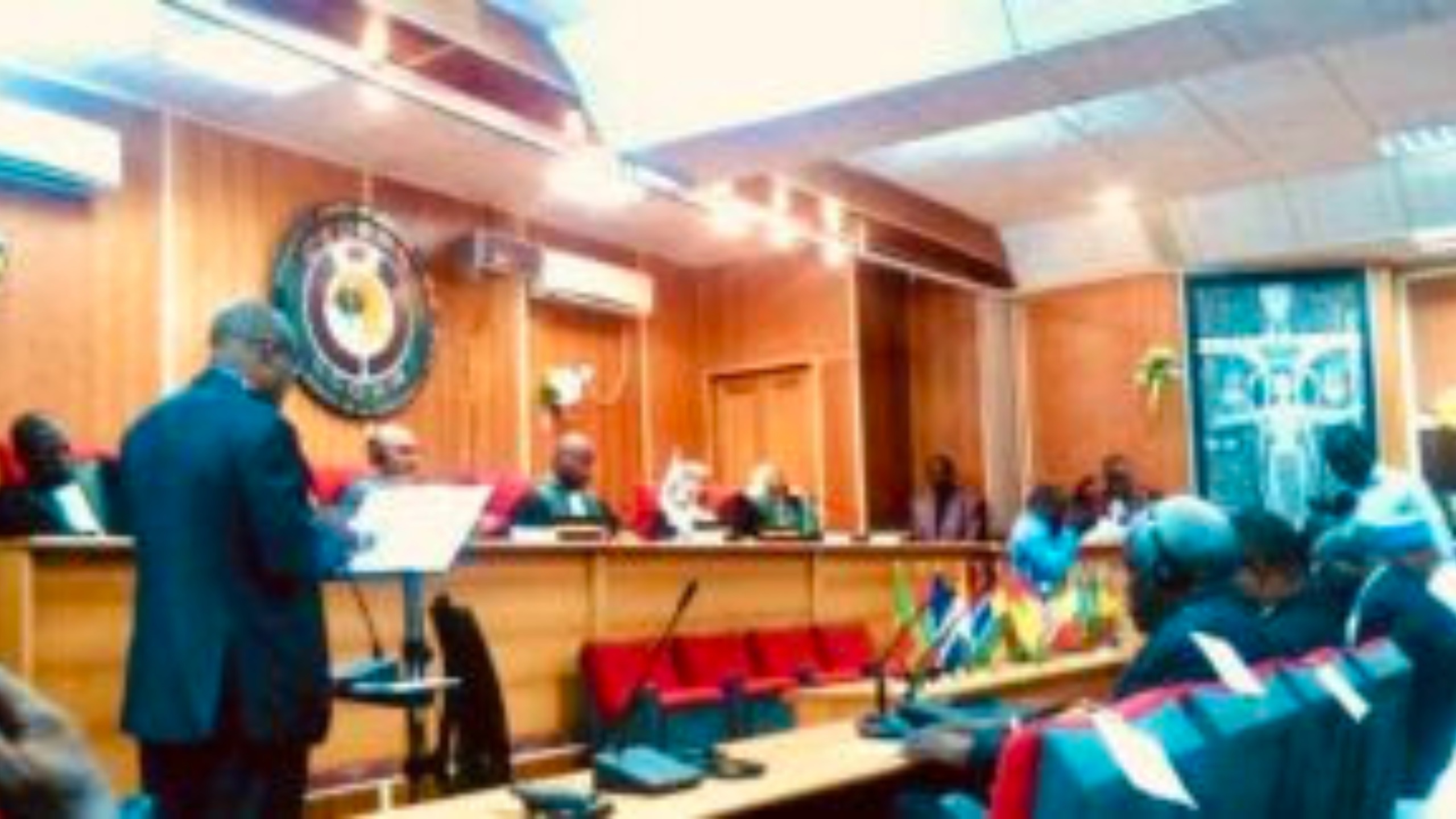
The Community Court of Justice, ECOWAS, has made its ruling in case No. ECW/CCJ/APP/05/22. This case was brought by the Incorporated Trustees of Socio-Economic Rights and Accountability Project (SERAP) against Nigeria’s public borrowing. The Court dismissed the case because SERAP did not provide enough proof to back its claims about Nigeria’s borrowing leading to violations of the socio-economic rights of Nigerians.
Background of the Case
SERAP, the applicant in this case, claimed that the Nigerian Government has been borrowing too much and that this has created a heavy public debt. They said this debt hinders the government’s ability to provide basic services like healthcare, education, and clean water.
SERAP argued that Nigeria's borrowing is hurting vulnerable and marginalized Nigerians. They claimed this amounts to violations of rights protected under the African Charter on Human and Peoples’ Rights and other international human rights agreements that Nigeria is part of.
SERAP asked the Court to declare that Nigeria's borrowing practices and their supposed economic effects violated the rights of Nigerians to health, education, and social development. The Federal Republic of Nigeria, the respondent, denied these claims and requested the Court to throw out the application.
What the Court Found
The Court confirmed it had the authority to hear the case under Article 9(4) of its Protocol. It noted that the application involved allegations of human rights violations under regional and international human rights laws. The Court stated that claims about how government economic policies affect human rights fall within its human rights role.
On whether the application could be accepted, the Court found that SERAP met the requirements of Article 10(d) of the Court's Protocol. It recognized SERAP as a public interest litigant and noted that the application sought relief for the benefit of the Nigerian public.
But on the main issues, the Court found that SERAP did not meet the proof needed in human rights cases. While they provided some statistics about Nigeria’s debts and spoke about the economic struggles faced by citizens, they did not specify which human rights were violated, explain the legal obligations of the Nigerian Government, or show how the borrowing policies led to these violations.

The Court also pointed out that SERAP did not provide clear evidence showing specific communities or groups that suffered the alleged violations due to Nigeria's borrowing practices.
Court Decision
The Court concluded that the application mainly included general economic and political complaints. These did not meet the legal and evidence standards needed to prove human rights violations.
The Court made the following decisions:
- Confirmed it had the authority to hear the application.
- Declared the application acceptable.
- Ruled that SERAP did not prove the alleged human rights violations from Nigeria’s borrowing policy.
- Dismissed the application entirely.
Judicial Panel
The ruling was delivered by a panel made up of:
- Hon Justice Sengu Mohamed Koroma, Presiding
- Hon Justice Gberi-Bè Ouattara, Member
- Hon Justice Edward Amoako Asante, Judge Rapporteur





Comments
No comments yet.