Makinde: Bride or Side Chick?
Seyi Makinde's discussions with Atiku Abubakar echo past political strategies. Their alliance aims to unite opposition votes against President Bola Tinubu for the 2027 elections.
Of course, you know a bride is a woman on her wedding day, while a side chick is a mistress or sidekick. Forty-seven years ago, during the 1979 elections, Alhaji Shehu Shagari of the National Party of Nigeria (NPN) won first place, beating Chief Obafemi Awolowo of the Unity Party of Nigeria. Dr Nnamdi Azikiwe, also known as Zik, called himself the beautiful bride at that time because both leading candidates needed his backing to control the legislature.
Zik eventually accepted the NPN's proposal. A power-sharing deal was made where the NPN and NPP shared control in both the executive and legislative branches of government.
The current talks between Oyo State Governor Seyi Makinde, who is with the Allied Peoples Movement (APM), and former Vice-President Atiku Abubakar, the presidential candidate for the African Democratic Congress (ADC), remind me of Zik’s beautiful bride strategy. But this time, Makinde seems ready to put on the wedding dress even before voting starts.
As part of a smart move to create a united opposition against current President Bola Tinubu ahead of the January 2027 elections, Makinde and Atiku are having serious discussions. They are also involved in broader talks facilitated by groups like the G-100.
This cooperation is based on cold electoral math rather than personal feelings. Makinde has stressed that any decision will be based on data.
Right now, opposition votes are scattered. Key opposition leaders are on different platforms. Atiku is in the ADC with Rotimi Amaechi as his running mate, Peter Obi is in the NDC with Rabiu Kwankwaso, and Makinde is in the APM, all running separately. The Atiku and Makinde groups understand that combining resources is crucial to challenge the ruling party's advantage.
This is a time for cold calculations. Atiku has never been strong in the Southwest, which is Tinubu’s area. As the most established opposition governor in the region, Makinde provides Atiku with a solid base, grassroots support, and a credible Yoruba voice.
Makinde has made it clear he will not work with President Tinubu, citing a previous broken agreement during the 2023 elections. The Oyo State governor is like a leper who can’t get cow milk but can spill a bucket of it.
By talking with both Atiku and Peter Obi while keeping his own presidential bid, Makinde boosts his bargaining power. He can either position himself as the consensus Southern candidate or as a key player seeking significant post-election rewards.
If you pay attention, you’ll notice the opposition is brewing something. Strategists for Tinubu’s opponents are considering whether to support a Southern candidate to meet zoning expectations or rely on Atiku’s established northern voter base.
In Nigerian politics, even though Atiku and Obi have larger followings, Makinde is not someone to overlook in negotiations. He holds the crucial fraction that could tip the scales between 24.5 percent and the 25 percent needed from two-thirds of Nigeria’s 36 states. So far, it seems only President Tinubu can achieve that spread.
In this scenario, we must ask: who will step down for whom? Is Makinde’s future more secure with Atiku or by working with Obi?
I see two paths for Makinde:
Makinde/Atiku (APM/ADC) Alliance
In this case, the Oyo State governor could merge his APM structure into Atiku’s ADC or negotiate a united front. It would need to be a gentlemen’s agreement because electoral laws and INEC guidelines do not allow mergers or candidate substitutions.
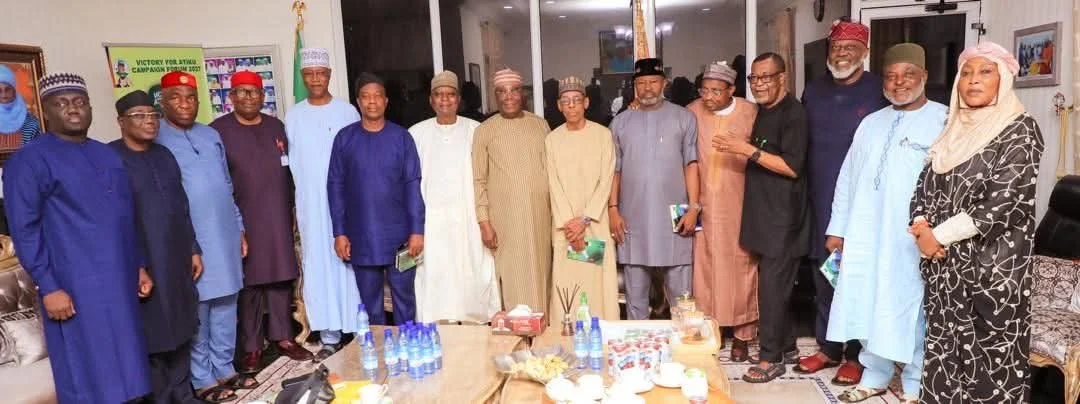
Atiku’s base is in the North, especially the Northeast, while Makinde is the only opposition governor in the South-West. Together, they can bridge the North and South.
In addition, Atiku has strong networks, party support, and campaign financing that can match the APC. If you think Makinde is not significant, remember Atiku needs a credible South-West candidate to contest against Tinubu.
Because of this, Makinde can ask for considerable influence after the elections from Atiku. But supporting a Northern candidate after a Southern presidency may upset Yoruba voters who feel the South should complete an eight-year rotation. Also, after opposing Atiku in 2023 on power rotation, a sudden change could be seen as opportunistic.
Makinde/Obi (APM/NDC) Alliance
If Makinde teams up with the “OK Movement” led by Peter Obi and Rabiu Kwankwaso in the NDC, this alliance keeps power in the South for 2027, 2031 before it rotates to Kwankwaso under the NDC agreement, making it easier for Makinde to convince South-West voters.
Research from mid-2026 shows that the Obi, Kwankaso ticket is popular among opposition groups, while the South-West has a lot of undecided voters (around 23%) that Makinde can influence.
The Oyo State governor has worked hard to present himself as a reformer ready to change Nigeria, not just another politician. He tells anyone who will listen that he has another job outside politics. His reputation in Oyo aligns with Obi’s message of cutting governance costs, avoiding the issues linked to traditional politicians.
Still, realistically, the NDC already has two major figures (Obi and Kwankwaso) with a pre-arranged power-sharing deal. This means Makinde will be a third partner instead of an equal player. Two is a team, but three makes it crowded!
Obi’s success depends on high voter turnout, especially from younger and urban voters. In low turnout situations or highly monetized grassroots contests, the NDC is more vulnerable to the APC than Atiku’s strong network. No one knows this better than the NDC’s strategists.
If Makinde supports Obi while Atiku remains in the race with the ADC, the Northern opposition vote will be split between Atiku and Kwankwaso, which could allow Tinubu to win. Also, incumbent Vice President Kashim Shettima is a stronger politician in 2026 than he was in 2023.
In conclusion, Makinde’s best chance lies in an alliance with Peter Obi, giving the NDC a real chance to win undecided voters in the southwest. But they must overcome Atiku’s separate candidacy in the North and Tinubu’s stronghold in the southwest.
If this happens, Makinde will be the bride of the OK ticket.
Otherwise, if he sides with Atiku, he could end up as the ADC’s side chick, not legally married but still enjoying the benefits of political connection.
Comments
No comments yet.