Nigeria creates over 27,000 jobs in data protection in three years
The Nigeria Data Protection Commission has created over 27,000 jobs in under three years. The goal is to reach 500,000 jobs in the data privacy sector.
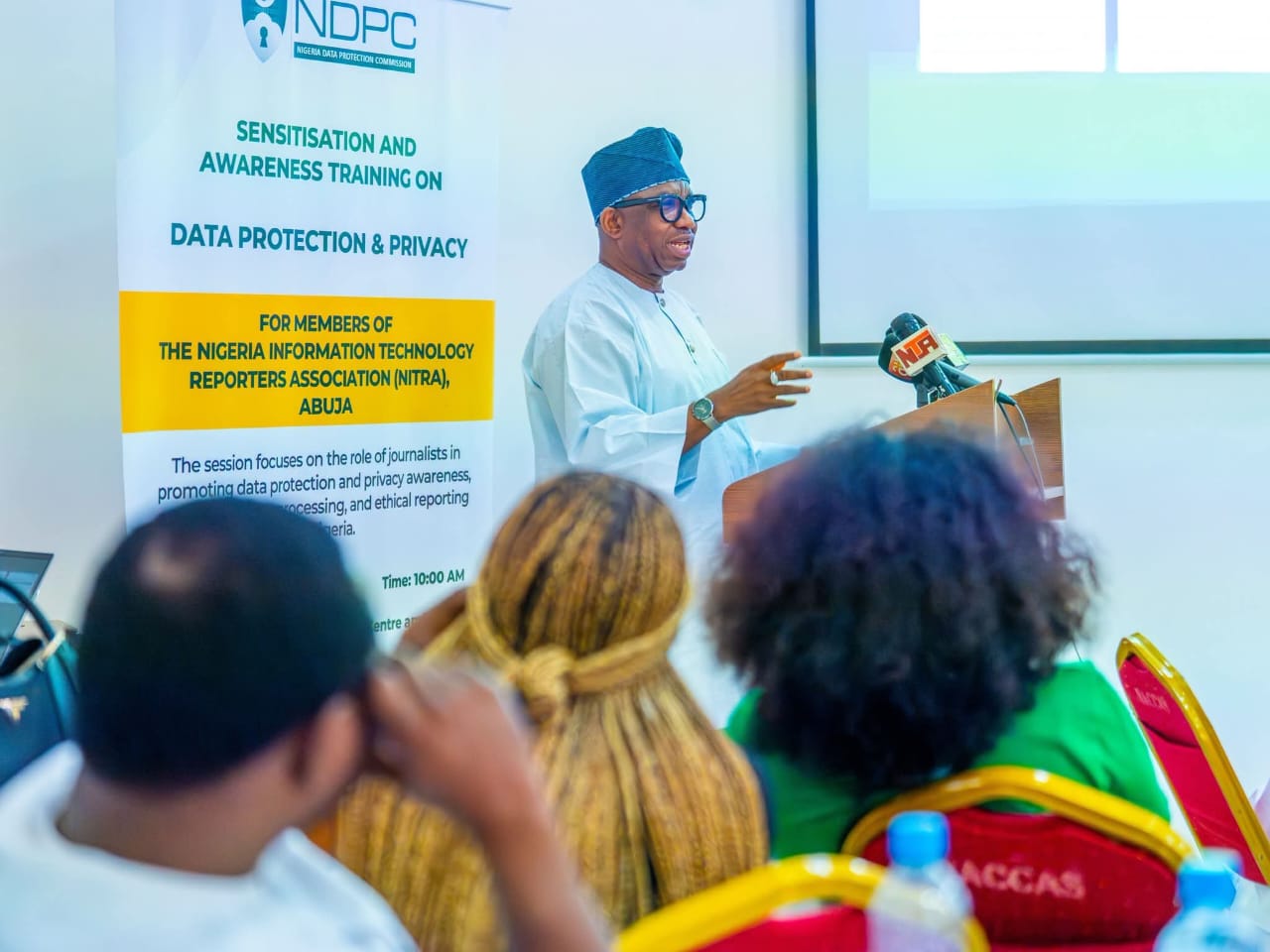
The Nigeria Data Protection Commission (NDPC) has announced that the country’s data protection and compliance sector has created more than 27,000 jobs in under three years.
The commission said this is part of President Bola Tinubu’s promise to create jobs for Nigerians through the digital economy.
Vincent Olatunji, the National Commissioner and Chief Executive Officer of the NDPC, believes the sector could generate over 500,000 jobs. He noted that the commission is working hard to surpass this goal.
Olatunji spoke on Friday during a training on data protection and privacy for journalists in Abuja.
“You will recall when Mr President was running his campaign during the 2023 elections he promised two million jobs for the digital economy sector.
“And for this ecosystem, which is a sub-sector of the digital economy sector, we are saying that over 500,000 jobs are available in the data privacy ecosystem. And we are already pushing towards achieving that. If within the ecosystem we are doing over 27,000 jobs in less than three years, that is massive. That is very huge. But the target is to get to about 500,000, and even more,” he said.
Nigeria still faces challenges with unemployment and a lack of good job opportunities, especially for its youth.
Even though the official unemployment rate has dropped under the National Bureau of Statistics’ new method, worries remain about job quality, availability, and security. A lot of employed Nigerians work in the informal sector.
The NBS, in its second-quarter 2024 Labour Force Survey, reported Nigeria’s unemployment rate at 4.3 percent, down from 5.3 percent in the first quarter of the same year. The survey also showed that 6.5 percent of young Nigerians aged 15 to 24 were unemployed during this period.
The country’s job problems are also seen in the high number of informal workers. According to the NBS’ 2023 annual labour force report, about 92.2 percent of employed Nigerians worked in informal jobs. This raises worries about stable jobs, social protection, and other employment benefits.
The digital economy has been seen as a way to expand job opportunities, especially for young Nigerians. This is because businesses and government agencies are using digital technologies and need special skills.
But the International Labour Organisation (ILO) has pointed out issues like skills mismatches, low productivity, and weaknesses in the economy that affect job growth in Nigeria.
Strengthening capacity for data protection officers

The NDPC commissioner also discussed the commission’s efforts to increase the number of certified data protection officers in Nigeria.
He mentioned that when the commission was set up in 2023, Nigeria had fewer than 1,000 data protection officers. That number has now grown to over 10,000 certified officers who help organisations with data protection.
“Section 32 of our law says that all data controllers and processors must engage the services of data protection officers. When we started, we had less than 1,000 data protection officers in all of this country. In the whole of the commission, I was the only certified data protection officer. But as we speak now at the commission, we have over 90 percent of our staff who are certified.
“And in Nigeria, we have over 10,000 certified data protection officers. What do they do? They support organisations. They create awareness. They oversee their data protection activities, and this is a very scarce skill. They are doing what they are looking for data protection officers,” he said.
Olatunji encouraged journalists at the training to think about careers in the data protection and compliance field.
Nigeria wins global privacy prize
Olatunji also shared that Nigeria won the Accountability Prize from the Global Privacy Assembly at its 48th annual conference in Brussels, Belgium.
He explained that the Global Privacy Assembly includes 145 countries with data protection laws and independent data protection authorities.
According to him, the assembly allows countries to share knowledge, conduct peer reviews, learn about new technologies, and assess global privacy developments.
Olatunji said Nigeria’s progress in data protection comes from its Public-Private Partnership (PPP) model. Under this model, the commission licenses Data Protection Compliance Organisations (DPCOs) to handle compliance tasks for the government.
“And one thing that is really working for us in Nigeria is the PPP model. That’s the Public-Private Partnership model, where we license DPCOs to carry out compliance on behalf of the government. And the whole world has seen that model as very unique and impactful, and to a large extent, that has really accounted for the traction that we have achieved in Nigeria.
“The whole world actually celebrated Nigeria, and that wouldn’t have happened without your (journalists) input. No matter what we are doing back home here, if you (journalists) don’t put them out there, nobody will see, nobody will know it. But they saw the work, and through your effort, they were able to identify what we have done. Nigeria was placed on that global map. So we thank all of you for what you have been doing so far,” he said.






Comments
No comments yet.