Nigeria’s Cocoa Exports to the US Rise to $142 Million in 2025
Nigeria's cocoa exports to the US rose to $142 million in 2025, showing a significant increase from the previous year. This growth highlights the importance of cocoa trade.
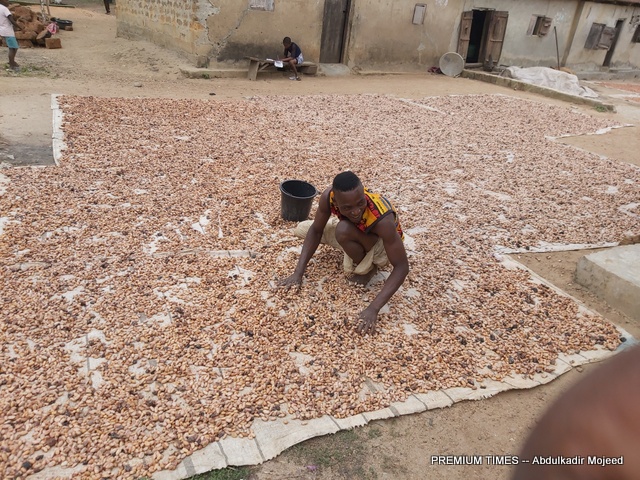
Nigeria’s cocoa exports to the United States jumped more than six times in 2025. They went up from $21.7 million in 2024 to $142 million, according to the US mission in Nigeria.
This number shows an increase of about 554.4 percent in just one year. It shows how valuable Nigeria’s cocoa trade with the US has become.
The US mission stated, “U.S. demand for Nigerian cocoa is booming. Cocoa bean exports to the United States jumped from $21.7 million in 2024 to $142 million in 2025.” This was shared in a post on their official Facebook page.
The mission added that this trading relationship also helps Nigeria with US agricultural exports. They noted that wheat makes up 67 percent of US agricultural exports to Nigeria.
They said, “This represents fair, two-way trade that works for farmers, businesses, and families on both sides of the Atlantic.”
This rise in exports happens as Nigeria works to revive its cocoa industry. The country aims to improve productivity and expand local processing to gain more value from cocoa.
Nigeria’s cocoa industry has faced challenges like old farms and urbanization. These issues have led to less farmland available in major producing states.
Many cocoa trees are between 20 and 40 years old. The average cocoa farmer is about 60 years old. These old farms and farmers have caused production to drop and made it hard to get young people involved in the business.
Smallholder farmers also struggle with high borrowing costs. They lack access to fertilizers and pesticides, and many seedlings are of poor quality. Access to affordable financing is also limited.
On top of this, global regulations, including the European Union Deforestation Regulation (EUDR), add pressure. Producers and exporters must show they can trace their cocoa and ensure it is not linked to deforestation.
Nigeria’s low capacity for processing cocoa is another big challenge. Historically, over 80 percent of Nigeria’s cocoa gets exported raw. This limits local value addition, industrial growth, and job creation.
But some local companies, like Johnvents in Ondo State, are trying to grow domestic processing and make chocolate and other cocoa products.
In another development, EIB Global and First City Monument Bank (FCMB) announced €85 million in financing to help private-sector businesses in Nigeria’s agricultural value chains. At least 70 percent of this money will go to cocoa and dairy.
Stakeholders and policymakers are pushing for a National Cocoa Management Board. This board would help restore quality control and standardization lost after the former board was dissolved in 1986.
These ideas are part of larger efforts to improve the cocoa sector under Nigeria’s National Agricultural Technology and Innovation Policy (NATIP) 2022, 2027. This policy aims to boost agricultural output and make the sector more competitive.
According to the National Bureau of Statistics (NBS), Nigeria’s agricultural exports have grown a lot. Cocoa beans make up a significant part of these earnings.
In the first quarter of 2026, Nigeria exported agricultural products worth ₦1.17 trillion. Cocoa beans alone accounted for ₦596.90 billion, along with other major exports like sesame seeds and cashew nuts.
Cocoa and its products also made up 41.11 percent of Nigeria’s non-oil export value in the first half of 2025.
Even with this rise in exports to the US, the country is still a small market for Nigerian cocoa. In the first quarter of 2025, the US was the fourth-largest destination for Nigeria’s cocoa exports, making up about 6.1 percent, behind countries like the Netherlands.
The boost in cocoa exports comes with changing trade conditions between Nigeria and the US. Nigeria’s total exports to the US dropped by 20.5 percent in the first nine months of 2025, while the US raised the tariff on Nigerian goods from 14 to 15 percent in August.
However, the US exempted certain goods, including cocoa, from its 10 percent reciprocal tariff.
Global cocoa prices also dropped sharply in 2025. Prices started at around $10,950 per tonne but fell to about $5,400 by November.
Nigeria’s cocoa production was expected to drop by 11 percent in the 2025/2026 season. This raises worries about whether export growth can continue.
While higher export values could boost Nigeria’s foreign earnings and non-oil revenue, this does not automatically mean farmers will earn more. Export earnings depend on international prices and demand, while farmers’ incomes relate to farm-gate prices and bean quality.


So, falling global prices and lower expected output could cut farmers’ earnings even if export values go up.
Agbo Bassey, the National Secretary of the Cocoa Farmers Association of Nigeria, spoke to PREMIUM TIMES on Wednesday. He advised the government to organize farmers into cooperatives. This way, they can sell in bulk and get better prices.
He also called for better investments in fermentation and drying centers to enhance bean quality. This would help farmers get better prices for high-quality cocoa.
“Pay on quality: fermentation and drying centres, with premiums for good beans,” he said.
Mr Bassey asked the government to provide farmers with reliable price information to help them understand global market trends.
He suggested replacing old cocoa trees with improved seedlings and providing better farming practices, affordable credit, and inputs that farmers can repay easily.
He also stressed the need for clear traceability records. This would help Nigerian farmers meet international buyers’ needs and access better markets.
“Process more cocoa in Nigeria, so more of the value stays here,” he said.
Mr Bassey also advised the government to find more markets for Nigeria’s cocoa exports. Relying on only a few markets can be risky.
“The tariff changes show how quickly conditions can shift, so Nigeria should sell to many countries,” he said.
Cocoa used to be one of Nigeria’s top agricultural exports and a main source of foreign exchange in the 1950s and 1960s. This changed when crude oil became the main driver of the economy.
Nigeria was once the second-largest cocoa producer in the world. From 1960 to 1969, agriculture made up 57 percent of Nigeria’s GDP and accounted for 64.5 percent of export earnings.
Cocoa revenue helped fund significant projects like Cocoa House in Ibadan, the first television station in sub-Saharan Africa, and Obafemi Awolowo University.
But from the 1970s to the late 2000s, agriculture’s role in the economy and export earnings dropped. Focus turned more to oil.
Urbanization and population growth have also cut down the land available for cocoa farming.
The Food and Agriculture Organization (FAO) says Nigeria’s average cocoa production fell from about 420,000 tonnes in the 1960s to 170,000 tonnes in 1999.
Production later rose to around 399,200 tonnes between 2000 and 2010 before falling to 302,066 tonnes in 2015 and 298,029 tonnes in 2016. This decline pushed Nigeria down to the fourth-largest cocoa producer in the world.
Production improved later, averaging about 333,000 tonnes in 2017 and 2018 and reaching 348,448 tonnes in 2019. It dipped slightly to 340,163 tonnes in 2020.
Nigeria still trails behind Ghana and Côte d’Ivoire, which produce about 1.2 million tonnes and two million tonnes of cocoa each year.
Estimates suggest Nigeria produced about 290,000 tonnes in 2021, 280,000 tonnes in 2022, 284,232 tonnes in 2023, and 350,000 tonnes in 2024 and 2025.
To turn around the long-term decline, Nigeria needs to invest in farms, improve access to finance, and ensure better quality control and local processing.
While the rise in US exports gives a chance to boost Nigeria’s non-oil earnings, real growth will depend on increased production, better farmer incomes, and keeping more of the cocoa value chain in Nigeria.




Comments
No comments yet.