Nigeria sees 64,000 new HIV cases in 2025, says WHO
The WHO reveals Nigeria had 64,000 new HIV cases in 2025, despite a 52 percent drop since 2010. The country aims to cut new infections by 90 percent by 2030.
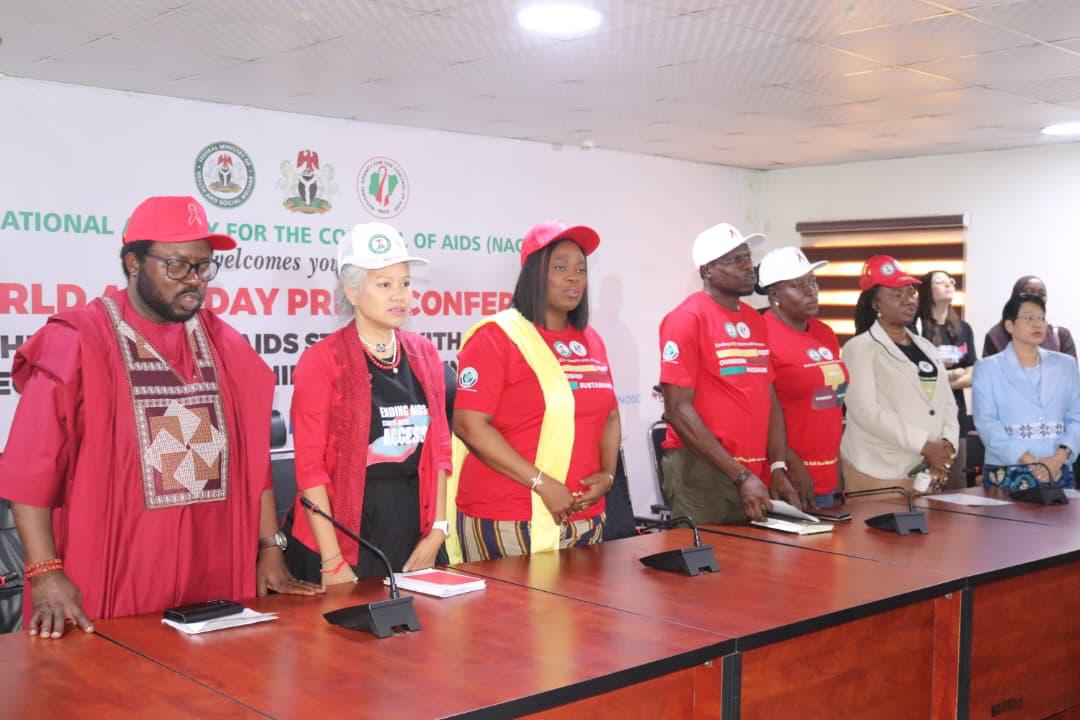
The World Health Organisation (WHO) has revealed that Nigeria had around 64,000 new HIV infections in 2025. This is despite a 52 percent drop in new infections from 2010 to 2025.
Akudo Ikpeazu, the WHO Regional Office for Africa’s Team Lead for HIV, Tuberculosis, Hepatitis and Sexually Transmitted Infections (STIs), shared this information on Tuesday. She spoke during the 2026 Nigeria HIV Prevention Conference, which was held online.
The three-day conference, themed "Building to Last: Re-imagining HIV Prevention Strategies in Nigeria," was organized by the Federal Ministry of Health and Social Welfare and the National Agency for the Control of AIDS (NACA).
"In Nigeria, new HIV infections declined by 52 percent between 2010 and 2025. Yet, about 64,000 people were newly infected in 2025," she said.
"Nigeria must now speed up prevention while changing the financial and institutional bases on which the response rests."
Ms Ikpeazu pointed out that Nigeria aims to cut new HIV infections by about 90 percent by 2030 compared to 2010 levels. She stated that to reach this goal, there needs to be more coverage of prevention services and less reliance on external funding.
She mentioned that Nigeria’s analysis of infection patterns shows that 89 percent of new adult HIV infections occur among the general population. This is compared to about 11 percent among key populations.
"Prevention must therefore reach far beyond the groups covered by many existing targeted programmes. This finding demands balanced access," she said.
She emphasized that key populations still face a larger burden of HIV. Thus, prevention services for these groups need to be protected and expanded. The urgent need to address the large prevention gap in the general population is also critical.
The WHO official called for stronger actions aimed at adolescents and young people. She noted that those at low risk today could be at risk as they grow older.
She suggested integrating HIV prevention into schools, primary healthcare facilities, and reproductive and maternal health services. She also recommended expanding access to condoms, lubricants, pre-exposure prophylaxis (PrEP), post-exposure prophylaxis (PEP), HIV self-testing, and other prevention services.
At the conference, Krittayawan Boonto, the UNAIDS Country Director in Nigeria, noted that despite the progress made since 2010, Nigeria still records between 60,000 and 65,000 new HIV infections every year.
Ms Boonto stated that to achieve epidemic control, the country needs to drop below 5,000 infections annually. "So we still have a long way to go," she said.
She praised Nigeria’s new national HIV prevention plan, especially its whole-of-society approach that extends prevention beyond traditional healthcare settings. She described this strategy as innovative and unique.
"It is something that I am seeing for the first time in Nigeria and not in any other country. So I would like to congratulate you for this foresight," she said.
Ms Boonto explained that this approach would include schools, marketplaces, places of worship, sports facilities, and digital platforms to equip people, especially youth, with the knowledge and resources to protect themselves from HIV.
Ms Ikpeazu also expressed concern about the ongoing transmission of HIV among children. She mentioned that around 10,000 new infections occur among children every year in Nigeria.

"Children must remain visible as well. New infections among children have held at about 10,000 a year, demanding stronger action against vertical transmission during pregnancy, childbirth, and through breastfeeding," she said.
She added that about 26 percent of pregnant women in Nigeria do not access antenatal care. This limits their access to essential services like HIV testing, treatment, and follow-up.
"But every door a pregnant woman walks through must be a door to prevention," she said.
Ms Ikpeazu explained that WHO validation of the elimination of mother-to-child transmission requires a transmission rate below five percent and no more than 50 new pediatric HIV infections per 100,000 live births.
It also needs 95 percent antenatal care coverage, 95 percent HIV testing coverage among pregnant women, and 95 percent treatment coverage among pregnant women living with HIV.
She encouraged states with high antenatal care coverage to strengthen their prevention services and seek recognition through established WHO regional mechanisms.
Esther Hindi, the National Coordinator of the Association of Women Living with HIV/AIDS in Nigeria (ASWHAN), called for more efforts to eliminate mother-to-child transmission of HIV.
Mrs Hindi stated that no child should be born with HIV when the knowledge, tools, and interventions to stop it are available.
"Every pregnant woman deserves access to quality, respectful, timely, and uninterrupted services, regardless of her circumstances," she said.
She also urged for expanded access to HIV testing, PrEP, condoms, treatment, and sexual and reproductive health services. She mentioned that stigma and discrimination still prevent people from accessing essential services.
In her welcome address, Temitope Ilori, the Director-General of NACA, said Nigeria has made strides in expanding access to HIV testing and treatment. But more focus must be placed on preventing new infections.
"We cannot treat our way out of the HIV epidemic; prevention must remain at the heart of our national response," she said.
Ms Ilori called for stronger community engagement, expanded prevention options, and the adoption of emerging biomedical technologies and digital solutions.
Adebobola Bashorun, the National Coordinator of Nigeria’s AIDS and STIs Control Programme (NASCP), urged for the expansion of HIV self-testing and PrEP services. He also advocated for the elimination of mother-to-child transmission of HIV, syphilis, and hepatitis.
“Reimagining HIV prevention means moving beyond traditional approaches and embracing smarter, more people-centred strategies,” he said.
The conference will feature 19 sessions that will focus on prevention strategies, service innovation, sustainable and nationally owned prevention systems, community leadership, human rights, and using research and data to improve prevention outcomes.






Comments
No comments yet.