Nigeria Struggles with Education, Health, and Jobs Despite Wealth, New Report
Nigeria is falling short in protecting basic rights, with a new report showing low scores in education, health, and jobs. Millions struggle to meet their needs.
Nigeria is still falling short in protecting the basic rights of its people. A new report shows poor scores in key areas like food, healthcare, housing, education, jobs, and civil rights. This report comes from the Human Rights Measurement Initiative (HRMI), an independent international non-profit group.
In its 2026 Rights Tracker report, HRMI reveals that Nigeria remains in the "very bad" category for many economic and social rights. This is true even though there have been some small improvements over the last twenty years.
One major finding is Nigeria's score of just 5.8 percent for the right to quality education. This is the second-lowest score in the world. HRMI says this score means Nigeria is only achieving 5.8 percent of what it could deliver in education, based on its income level.
These results come at a time when Nigeria faces ongoing problems in its education sector. The country still has one of the largest numbers of out-of-school children in the world. Poor infrastructure, lack of funding, and disruptions to schooling are hurting students' learning outcomes.
Living Conditions in Nigeria
The report also shows the tough living conditions many Nigerians face. Nigeria scored 58.6 percent for the right to food, 48.8 percent for health, 41 percent for housing, and 34.9 percent for the right to work. HRMI calls all these scores "very bad," meaning millions of Nigerians struggle to access basic needs and job opportunities.
The worst score was in the area of the right to work. HRMI says this reflects ongoing issues with decent job opportunities and economic inclusion.
HRMI Co-Executive Director Thalia Kehoe Rowden said, "The rights we measure are absolutely fundamental. Nigeria’s leaders will need to make significant changes to improve their people’s quality of life. Better lives for its people are within its grasp, if leaders choose to take action."
Despite some progress in health over the last twenty years, the report says improvements have been slow and uneven. Nigeria’s reproductive health score is 22 percent, much lower than the adult health score of 57.1 percent and the child health score of 67.2 percent.
This gap shows that advances in some healthcare areas have not led to better reproductive health services, which is still a big issue in the country. Nigeria's health sector deals with many challenges, including lack of funding, not enough medical staff, and many doctors and nurses leaving for better jobs abroad.
Concerns About Rights
The report also raises worries about civil and political rights. Nigeria scored 5.9 out of 10 on HRMI’s Safety from the State index. This measures protection against wrongful arrest, torture, forced disappearances, and other abuses by state authorities.
HRMI says this score shows that many Nigerians are still at risk of experiencing these violations. Human rights experts involved in the research pointed out that journalists, human rights activists, and people linked to political violence or terrorism face greater risks from state actions.
These findings add to worries raised by rights groups about shrinking civic space and how journalists, activists, and government critics are treated. In recent years, media and civil society groups have reported cases of arrests and harassment of people for speaking out or protesting.
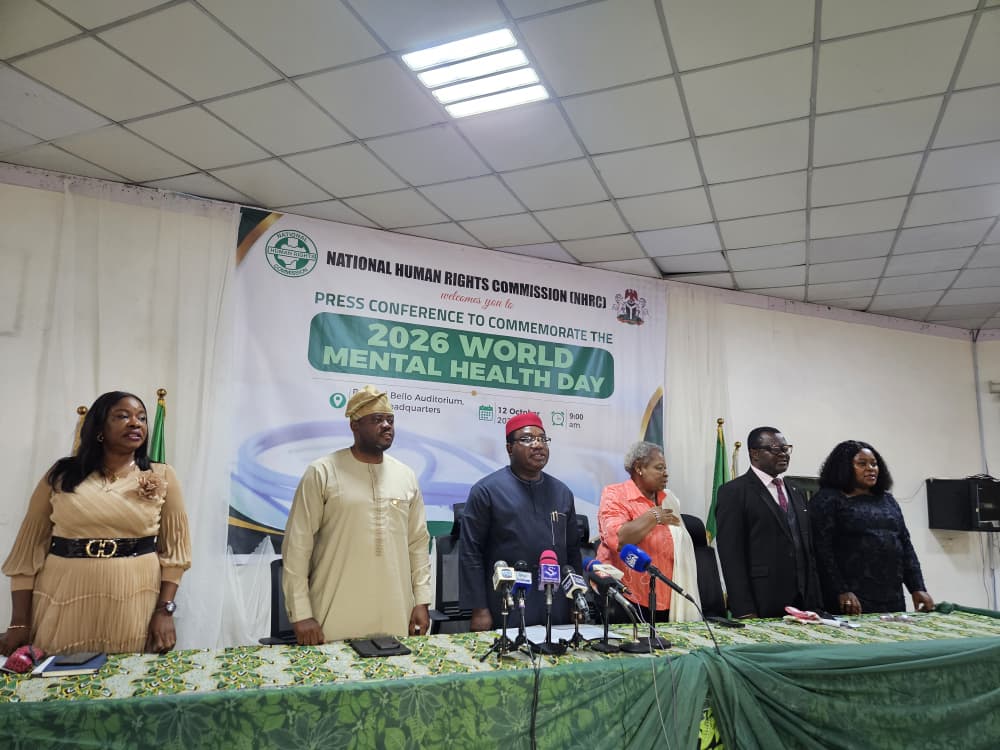
The National Human Rights Commission (NHRC) has also noted thousands of complaints about insecurity, unlawful detention, and gender-based violence throughout the country.
Little Progress in Freedoms
The report shows little progress in protecting political and civic freedoms. Nigeria scored 5.6 out of 10 on HRMI’s Empowerment Index, which looks at freedoms of expression, assembly, political participation, and religion.
HRMI mentioned that protections for these rights have not improved much since 2023. Experts interviewed for the report identified opposition political parties and their members as groups that may face rights violations. This includes the People’s Democratic Party (PDP), the African Democratic Congress (ADC), the National Democratic Party, and the Labour Party.
Rowden said the findings should be a wake-up call for policymakers. "The current situation unnecessarily deprives many people of their basic rights. Nigeria has the wealth available to ensure much better lives for many more of its people."
Overall, HRMI noted that Nigeria does worse than the average country in Sub-Saharan Africa when looking at quality of life against its income level. The report suggests that Nigeria’s human rights issues are not just because of economic problems but also due to poor policy and governance choices.
HRMI’s findings are similar to previous assessments of Nigeria, which show weak performance across various rights indicators, even though the country is one of Africa's largest economies. The Federal Government of Nigeria, led by President Bola Tinubu, has not responded to the report as of now.
HRMI’s Rights Tracker is a global tool that measures how governments perform on human rights using accepted methods. Its data is used by organizations like Amnesty International, the World Bank, and the United Nations. The report’s findings may spark new debates about the gap between Nigeria’s economic potential and the everyday lives of millions.


Comments
No comments yet.