Nigerians in the UK Celebrate Easier Passport Renewals
Nigerians in the UK are experiencing a revolution in passport renewals. The new system promises quick applications and delivery, bringing satisfaction instead of frustration.
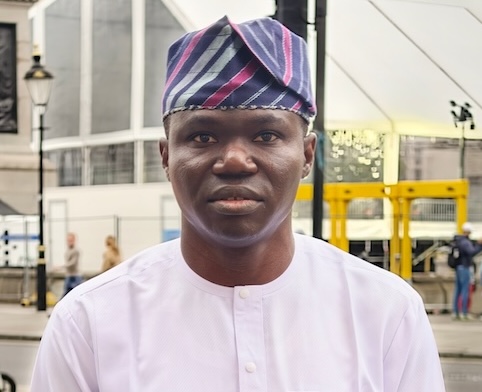
For many Nigerians living abroad, renewing a Nigerian passport used to be a task people dreaded almost as much as losing the passport itself.
It was a process filled with long waits, costly trips, uncertainty, and frustration. Many accepted it as one of those things that come with dealing with government services back home. The expectation was simple: get ready for delays, inconvenience, and endless follow-ups.
That is why I was initially doubtful when I started hearing claims that Nigerians in the United Kingdom could now renew their passports from home and get them delivered at their doorsteps within days.
It sounded too good to be true.
So I traveled through several cities in the UK and spoke with Nigerians who had firsthand experiences with the new contactless passport renewal system introduced by the Nigeria Immigration Service and the Ministry of Interior, led by Comptroller General Kemi Nanna Nandap and Minister Olubunmi Tunji-Ojo.
What I found was not just a few isolated success stories. From Birmingham to Coventry, Newport, Leeds, Essex, and London, the accounts were surprisingly similar. Nigerians who once spent months waiting for passports were now talking about applying from their living rooms and receiving new passports at their doorsteps within days.
For once, the talk was not about complaints. It was about satisfaction.
One person I spoke with was Timileyin Gbenga, a community leader based in Birmingham. He remembered his experience with the old system.
He told me that his last passport renewal took over six months from application to collection. He had to travel from Birmingham to London for biometrics and deal with long delays before he finally got the document.
When he recently helped a family member use the contactless system, however, the outcome was completely different.
He said the passport arrived in less than two weeks.
That difference shows how much things have changed.
For years, distance was one of the biggest challenges for Nigerians abroad. No matter if someone lived in Birmingham, Leeds, Cardiff, or Manchester, traveling to London was often a must. Transport costs, accommodation fees, and time off work were all part of the hidden costs of renewing a passport.
The contactless system seems to have removed much of that burden.
In Essex, Adeku Adeola Victoria described how she finished her passport renewal entirely from home.
She said she got her passport about a week after applying and was so impressed that she told a friend to drop plans to go to London and apply online instead. Her friend also got her passport within two weeks.
In Newport, South Wales, another Nigerian, Adiku Adeyemi, shared a similar tale about his wife's passport renewal. He said the document was delivered directly to their home just days after registration.
As I listened to these stories, one thing stood out: the excitement was not just about speed. It was about dignity and convenience.
Government services should not feel like endurance tests. Citizens should not have to give up workdays, spend hundreds of pounds on transport, or deal with unnecessary bureaucracy to get basic documents.
The real success of the reform is that it is making service delivery closer to what citizens expect in the digital age.
The most striking stories came from Coventry and Leeds.
Mr. Rufus Idowu, an automation engineer with Royal Mail and a community leader in Coventry, said some Nigerians got their passports within five days.
Comrade Adebayo Segun in Leeds told me he got his son’s passport in just four days, a timeline he called unprecedented in his experience with Nigerian government services.
Whether every application is finished within four or five days is not the main point. What matters is that such fast turnaround times are now possible.


For decades, passport delays have been one of the most common complaints among Nigerians abroad. Missed travel plans, expired documents, and endless uncertainty became normal.
The fact that many applicants now see processing times in days instead of months shows a big change.
Perhaps the most interesting view came from Dr. Adekunle Shonola, President of Nigerians in Coventry and a senior lecturer in Artificial Intelligence and Data Analytics at Coventry University.
As someone familiar with both British and Nigerian systems, he believes Nigeria is finally moving closer to international standards in passport administration.
He remembered the days when applicants traveled repeatedly between Coventry and London for biometrics and passport collection, often waiting over six months.
Today, he says, members of his community are getting passports within a week.
His view resonated with many others I met.
Again and again, people talked about not just efficiency but about modernization. They saw the reform as proof that government services can work when technology is used correctly.
Coventry resident Gbenga Ogunderu described the old process as “analog” and “backward,” contrasting it with a system that now lets people apply from home and get passports without stress.
His comment stayed with me: “This is 2026. We should be doing this.”
Indeed, we should.
Of course, no reform should be judged just by its launch phase. Keeping up the performance is often harder than making a change.
Many of those I talked to recognized this reality.
Dr. Shonola believes the next challenge is to ensure that the system becomes fully integrated and accessible to Nigerians everywhere, not just in the UK.
Engineer Idowu stressed sustainability, saying that consistency will decide if today’s success becomes a permanent part of public service delivery.
Their concerns are valid.
Nigeria has seen promising reforms before, only for the momentum to fade later. The real test of the contactless passport initiative will be if it stays efficient, reliable, and gets better over the years.
Yet after talking to Nigerians across the United Kingdom, one conclusion is hard to ignore.
The passport reform is doing something rare in Nigeria’s public sector: it is exceeding expectations.
In a country where citizens often approach government services with caution and doubt, that achievement should not be overlooked.
The stories I heard were not about political slogans or official promises. They were stories of everyday Nigerians whose lives have become a little easier because a public service finally works the way it should.
Sometimes, that is what real reform looks like.




Comments
No comments yet.