Senate Minority Leader Critiques State Police, Claims Governors Have Hidden Agendas
Abba Moro, the Senate Minority Leader, warns that state police proposals may serve governors' hidden agendas rather than improve security in Nigeria.
The Minority Leader of the Senate, Abba Moro, has criticized the idea of creating state police as a way to solve Nigeria's security issues.
Moro, who represents Benue South Senatorial District, said that governors pushing for state police are mainly looking out for their own interests rather than improving security for everyone.
He made these remarks while speaking to journalists at the National Assembly on Wednesday after a plenary session. This followed a motion he introduced about the urgent need to stop the killings in his district.
Moro expressed worry that many state governments might find it hard to pay for state police. He warned that the police could be misused, just like some state independent electoral commissions.
"How are we sure, like I used to say, that the state police will not be put to use the way the state independent electoral commission has been put in recent times, endangering our democracy? I think at the moment, those asking for state police are asking for it as an institution to put to whatever use they want, not necessarily as an institution to confront the menace of insecurity," he said.
Moro pointed to the situation in Benue State, claiming the government has not been consistent in paying a monthly stipend of ₦15,000 to local security groups and lacks the equipment needed to fight insecurity.
"In my state, we have those of you from Benue State, you know about the existence of Operation Zenda, which is a coming together of all the security forces to form one unit of operation. We also have in Benue State the volunteer guards, and from the part of the state that I come from, we have the homeland security.
"I stand to be corrected, but at the last time I checked, the ₦15,000 for personnel of the operation Vanguard in Benue State had not been paid, and they lack the necessary logistics and equipment to confront the menace of armed attacks," Mr Moro said.
The senator questioned how governors who cannot fund existing security groups will manage to pay for a state police force.
"The question that begs for an answer is this. If you are unable to equip these informal security outfits to pay a stipend of ₦15,000 every month to personnel of these outfits, where are you going to get the money to fund the state police?
"I just pray that in the face of this menace, all of us are alive going forward to see what the state police will do, because in these states that have been clamouring for state police, they have informal security outfits," he added.
State Police Bill
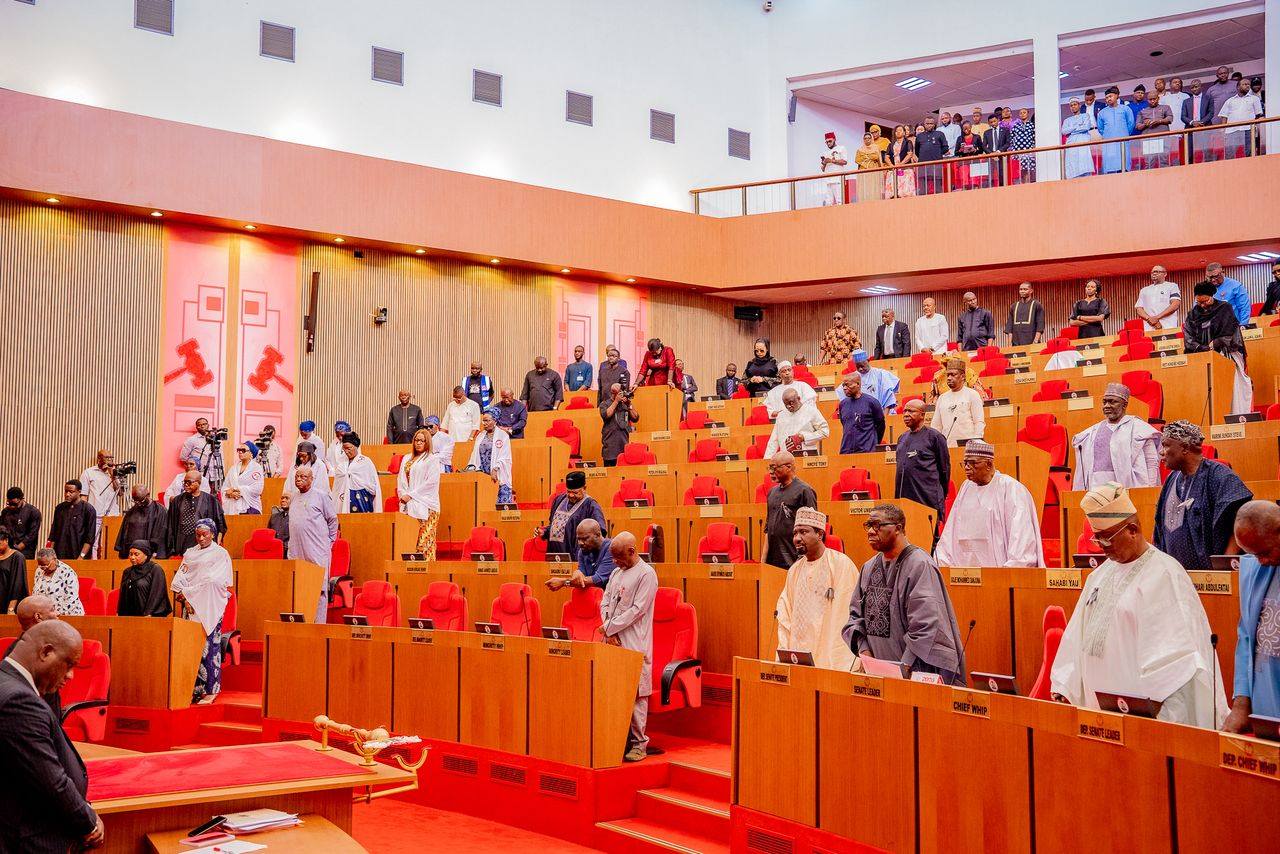
The Senate passed the state police bill in June after more than two-thirds of senators voted in favor during a manual voting process.
The House of Representatives, which had earlier approved its version of the bill, withdrew it on Tuesday and started looking at the Senate’s version.
After both chambers pass the bill, it will go to the 36 state Houses of Assembly. At least 24 state legislatures must agree to it before it can be sent to the president for approval.
The topic of state police has sparked many discussions. Supporters of the bill argue that having state police would bring security closer to the people, improve gathering of information, and strengthen local responses to crime.
Section 17 of the bill, which talks about appointments and management, says that while the Inspector-General of Police will lead the Federal Police Service, the State Police Service will be led by a Commissioner of Police chosen by the state governor, with approval from the state’s House of Assembly.
READ ALSO: Again, Senate rejects motion to probe ₦1.3bn allocation to fake agency in 2026 budget
Section 17(6) states that a state governor can give lawful written orders to the Commissioner of Police about keeping public safety and order.
These sections allow governors to have a lot of influence over state police. The state houses of assembly will provide oversight.
The bill also sets up a State Police Service Commission under Section 22, which will have the power to hire staff and manage promotions and discipline of officers in the state police.
The state government would also have a big responsibility for paying for and managing the state police. Even though the bill doesn't clearly say how governors will fund the police, the role given to state governments suggests that much of the money will come from them.
This setup gives governors a lot of power over the hiring and oversight of police commissioners in their states. If this goes ahead, the power now held in Abuja would be shared with state governments. This could have major effects on future elections.
Comments
No comments yet.