The Persecution of Olorisa Followers in Colonial Nigeria
Historian Ibrahim Anoba discusses the persecution of Olorisa followers during colonial times, revealing the injustices faced by traditional worshippers in Nigeria.

A Nigerian historian, Ibrahim Anoba, has shared how followers of the traditional Yoruba religion, known as Olorisa, faced serious persecution during colonial times. This persecution happened through laws, court actions, and the seizure of properties, which forced many Olorisa practitioners to leave their faith.
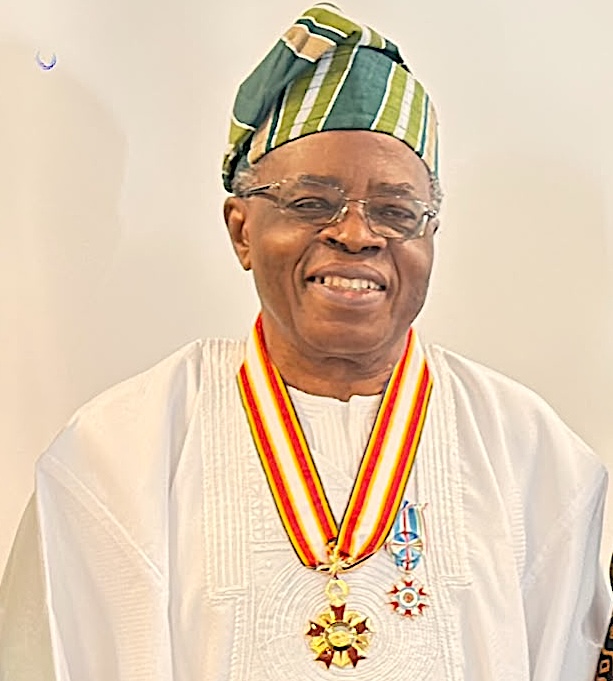
Mr Anoba, who wrote his doctoral dissertation on the history of Yoruba indigenous religion, challenges the common belief that Yoruba people willingly converted to Christianity and Islam in large numbers.
In his dissertation titled “Olórìṣà: Alternative Decolonisation, Spiritual Identities, and Recasting the African Postcolony”, Mr Anoba argues that colonial authorities and local leaders used legal and administrative tactics to suppress traditional religious practices, making them less appealing.
In an interview with PREMIUM TIMES, Mr Anoba called the treatment of indigenous religion followers one of the biggest religious injustices in Nigerian history.
He pointed out that discussions about religious persecution in Nigeria usually focus on violence against Christians and Muslims, ignoring the historical struggles of traditional worshippers.
“I think you can include this as one of the, if not the greatest injustice ever done to particular people in Nigeria, has been to the practitioners of indigenous religion,” he said.
“Today, we still have Christians in great numbers, we still have Muslims in great numbers. But imagine the intensity of the same violence committed against a religious people. So much so that they almost disappear today.”
Besides his dissertation, he has plans to turn his findings into a book.
Mr Anoba explained that his work is about the Olorisa people, not just their religion.
“A lot of people have written about Olorisa religion as a worship system of belief, but I am looking at Olorisa as a people and how they come about to be identified as Olorisa,” he said.
Mr Anoba used a mix of historical methods for his research. This included checking archives, oral histories, court records, newspapers, memoirs, and anthropological sources to recreate the history of the Olorisa.
For his research, Mr Anoba looked at colonial records and spoke with descendants of Olorisa followers from various Yoruba communities such as Oshogbo, Ogbomoso, Ife, and Ibadan.
He also accessed important documents, including court records from that time, at the archives of Obafemi Awolowo University (OAU), the National Archives in Ibadan, Abeokuta, and Enugu, and the National Archives of the United Kingdom at Kew Gardens.
Other materials were found at the Bancroft Library, University of California, Berkeley, and the Hoover Institution Archives at Stanford University.
Mr Anoba's research challenges the common ideas that Yoruba people converted to Islam and Christianity to gain education and jobs.
“That is what scholars have been saying since we started writing African history in a new way since the 1960s. But my own research is saying, well, that might be true, but that’s not entirely the story,” he said.
“I’m arguing that the Yoruba people left Olorisa religion in great numbers, in numbers unprecedented, starting in the late 19th century. Starting between 1890 and 1920.”
He discovered that the population of Olorisa in Yoruba land was above 90 percent in the late 1890s, even with Islam in the area for over 300 years and Christianity for over 60 years.

“But something remarkably happened that if you now go to the population census of Nigeria, starting from the 1920s, the population of Olorisa began to tank, began to reduce significantly by half, or even more than half,” he said.
According to Mr Anoba, after the Anglo-Aro war, the British colonial government noted that resistance from the Igbo people ended after they took control of the deity.
“When the British conquered and found that shrine of Ibini Obabi in Archukwu, that pretty much ended the war. So Britain now came back to Lagos and made a lot of adjustments. And one of the key things they did was to introduce a set of laws that, in simple terms, repressed indigenous religion, including Olorisa.”
Mr Anoba pointed out that court documents from 1903 to 1920 showed that “a massive number” of Olorisa followers faced trials, imprisonment, and loss of their properties in court.
“It was an era of intense persecution in the court for Olorisa people,” he said.
He argued that Olorisa followers were pushed away from their religion due to decades of court persecution and new laws that criminalized their practices and made them less appealing.
He added that this time also saw the introduction of new words like witchcraft and juju to describe traditional religious practices.
He explained that local Yoruba political leaders drove the persecution within colonial systems.
He said colonial courts became tools to suppress indigenous religious practices.
Local chiefs and kings often acted as judges, applying colonial laws against traditional worshippers and frequently charging practitioners with offenses related to witchcraft.
“After Britain (colonial government) introduced the laws and established the courts, they pretty much left everything alone… Our own people had a hand in that persecution,” he said.
The historian described this as “lawfare”, meaning using legal systems to weaken and marginalize a religious community.
Mr Anoba estimates that hundreds of religious traditions and deities disappeared during the colonial time.
He also said the fight against indigenous religion destroyed important historical items.
According to him, court records show that police sometimes seized ritual objects, sacred items, and historical materials from shrines and later destroyed them.
“When the police go and confiscate those properties, there is evidence in the court cases that they sometimes burn those things. They just burn them,” he said.





Comments
No comments yet.