Tinubu vows to fix power supply for factories and share quarterly updates
President Tinubu vows to ensure reliable electricity for factories and export zones. He will publish quarterly reports on electricity supply performance.
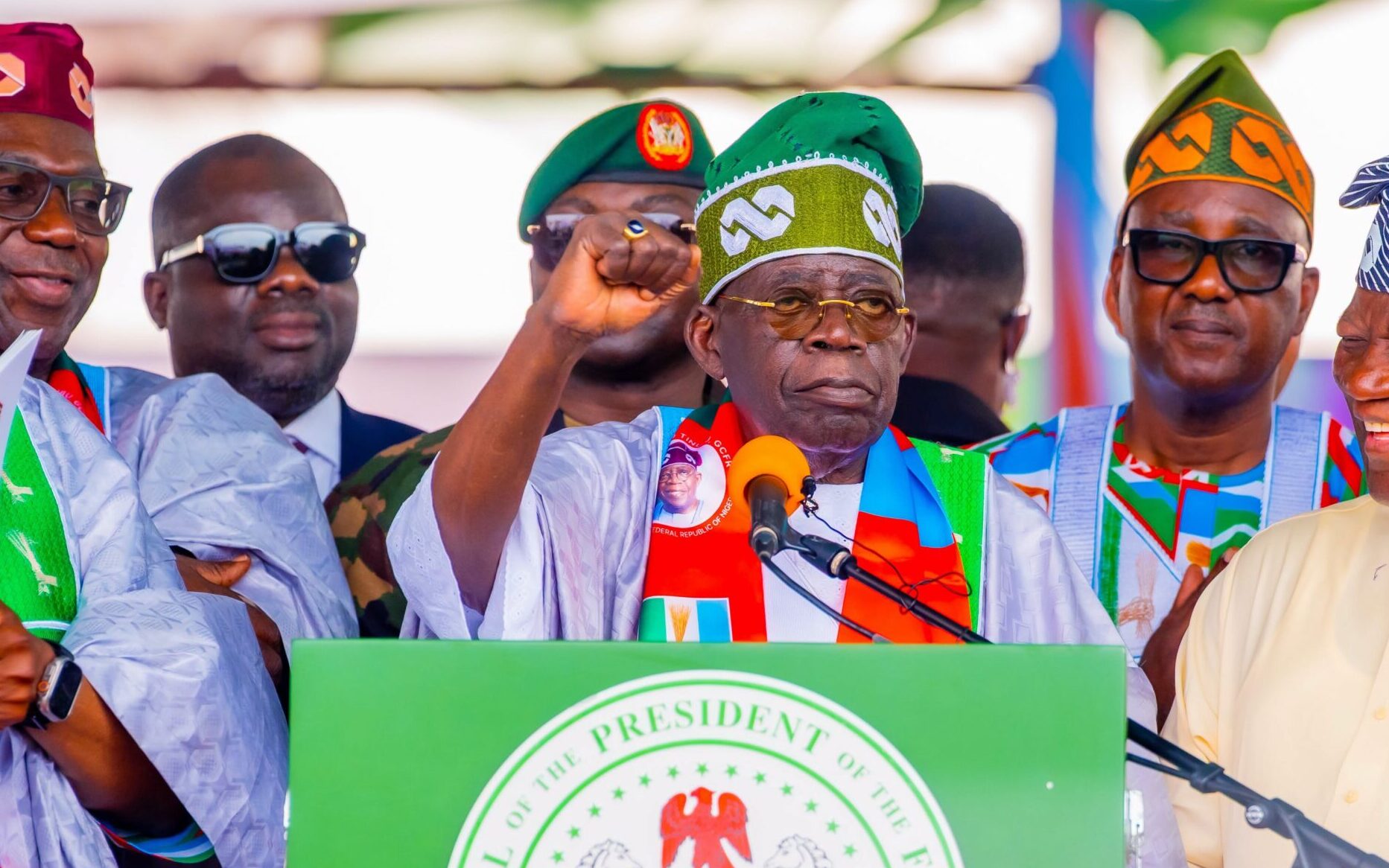
President Bola Tinubu has said he will ensure steady electricity supply to industrial areas and export zones if he is re-elected for another four years. He also promised to release quarterly reports on electricity provided to businesses.
These promises are part of the electricity reforms outlined in the All Progressives Congress (APC)’s 2027, 2031 manifesto, titled From Reforms to Prosperity, which was revealed on 10 November in Abuja.
Like other presidential candidates, Mr Tinubu has suggested boosting electricity generation, transmission, and distribution systems. He also wants to expand gas-to-power projects and improve the reliability of electricity for factories and businesses.
A key part of his plan is to publish quarterly reports that will show average electricity delivered to industries, reliable hours of supply, voltage quality, and downtime for manufacturing.
These reports could help measure how well the electricity sector is performing and hold the government accountable to its promises. But the trustworthiness of this commitment will rely on whether the administration follows through and makes the information available to the public.
Mr Tinubu made similar promises during his 2023 presidential campaign. Yet, Nigeria still faces ongoing issues with the national grid, while manufacturers and households complain about high electricity costs and unreliable supply. Some areas have also experienced long power outages.
In the new manifesto, Mr Tinubu insisted that electricity should not hold back factories, exports, investments, or household welfare.
Strengthening the Electricity Act and tackling challenges
The Electricity Act 2023 replaced the Electric Power Sector Reform Act 2005. It set up a new legal and regulatory framework for the Nigerian Electricity Supply Industry (NESI).
This Act gives state governments the power to create their own electricity laws and set up State Electricity Regulatory Authorities. These authorities will manage electricity generation, distribution, supply, trading, tariffs, and licensing in their areas.
The Nigerian Electricity Regulatory Commission (NERC) will continue to oversee electricity markets in states that do not have their own regulatory bodies.
In his manifesto, Mr Tinubu promised to improve cooperation between federal and state electricity markets. He also wants to promote competitive generation, encourage clear electricity supply contracts, and attract investment in distribution systems.
To solve ongoing problems in the gas-to-power process, the president proposed to execute profitable projects by addressing gas supply contracts, transport issues, payment security, and electricity dispatch challenges all at once. He believes this approach is better than merely increasing generation capacity without fixing the problems that keep existing plants from supplying power.
He also promised to strengthen the transmission network through the Presidential Power Initiative, automate the network, and invest in industrial feeders. He said these investments would align with electricity demand from factories, agro-processing zones, technology parks, and export facilities.
On electricity distribution, Mr Tinubu committed to providing meters to homes and businesses. He wants to enforce different service obligations, cut technical and commercial losses, and manage legacy debts transparently.
He also promised to support vulnerable electricity consumers through clear government assistance backed by budget allocations.
Expanding CNG infrastructure
Besides electricity generation and distribution, Mr Tinubu proposed to expand the infrastructure for Compressed Natural Gas (CNG)-powered vehicles. He plans to increase safe refuelling stations and vehicle conversion capability along important freight and public transport routes.

The government would focus on export transport, agricultural logistics, and industrial fleets in areas where gas supplies and transport costs can lower overall operating expenses, according to the manifesto.
Nigeria’s ongoing electricity struggles
Nigeria still battles with poor and unreliable electricity supply, despite past government efforts to improve the sector. The country has an installed generation capacity of about 13,000 megawatts, but only a small part of that capacity is available for transmission and distribution.
When Mr Tinubu took office in May 2023, he inherited a power sector with low generation, old transmission systems, distribution challenges, and heavy reliance on estimated bills.
In its 2023 presidential manifesto, titled Renewed Hope 2023: Action Plan for a Better Nigeria, the APC noted that Nigeria had around 12,000 megawatts of installed capacity, generated about 8,000 megawatts, but could only distribute a maximum of 4,500 megawatts to consumers.
The party promised to enhance the country’s generation, transmission, and distribution capacity, promote off-grid and renewable energy options, and ensure more of the electricity generated reaches homes and businesses.
Mr Tinubu also vowed to end estimated billing and ensure that all electricity consumers are metered through expanded metering programs. His administration promised to introduce a 'Nigeria First' policy that would prioritize local gas supplies for power generation.
In his first speech on 29 May 2023, the president reiterated his promise to make electricity more accessible and affordable for homes and businesses, saying power generation would almost double and transmission and distribution networks would improve.
Yet, more than three years into his term, reliable electricity supply remains a major issue for households and businesses.
The Nigerian Electricity Regulatory Commission (NERC) released an operational performance factsheet in October, reporting average hourly electricity generation at 4,047 megawatts, while average available capacity was 4,744 megawatts.
The regulator also noted that the national grid operated outside recommended frequency and voltage limits that month, showing ongoing stability issues despite using 85 percent of available capacity.
The situation worsened in November, with electricity generation dropping to about 3,549 megawatts, according to industry figures shared by The Guardian. This drop was linked to low gas supply to thermal power plants, reduced water levels in hydroelectric reservoirs, and other operational problems.
The decline in generation has affected power allocations to distribution companies, forcing them to ration supply and increase load shedding. Households and businesses continue to experience unreliable electricity, with many relying on petrol and diesel generators or other energy sources to meet their needs.
The sector also faces financial and distribution challenges. NERC’s second-quarter 2026 performance report showed that distribution companies had average losses of 36 percent, compared to an allowed target of 16.92 percent. The regulator also noted that the national metering rate was at 62 percent at the end of the quarter.
Meanwhile, electricity generation companies and gas suppliers have outstanding payment obligations, raising concerns about the financial health of the electricity market and operators’ ability to provide consistent supply.
These issues keep hurting manufacturers and businesses that need steady electricity to function well, forcing many to spend more on alternative power sources and increasing production costs.
Given these challenges, Mr Tinubu’s latest promises about providing reliable electricity to industrial clusters and sharing quarterly power reports will be compared against his administration’s past efforts to tackle these sector problems.
Comments
No comments yet.