Why Bola Tinubu's Re-election is Key to Nigeria's Economic Recovery
President Bola Tinubu's leadership is crucial for Nigeria's economic recovery. His focus on real reform and ending fuel subsidies aims to build a better future.
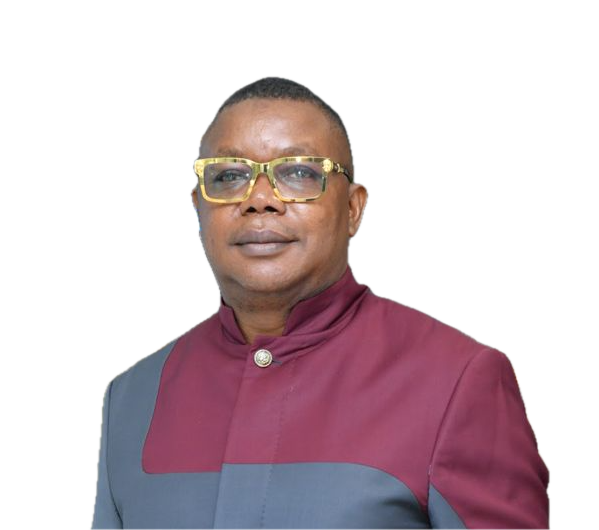
President Bola Tinubu has a clear goal. He wants a Nigeria where everyone has equal chances, economic safety, and a good life. He is not after power for its own sake. He aims to leave a legacy that future generations can admire and build on. Real change takes time. It takes time for the efforts made during hard times to produce results. Giving President Tinubu another term will ensure that progress continues and that the country can fully benefit from his economic policies.
Every country faces important moments that need strong leadership instead of quick political fixes. For Nigeria, that moment came when President Bola Ahmed Tinubu took office in 2023. He inherited an economy close to collapse. Instead of ignoring the problems, President Tinubu chose the hard path of real reform. He did not want to push the growing debt problem to the side.
Leadership is not about giving easy answers to a troubled nation. It is about understanding the deep-rooted issues and providing the right solutions to restore health to the system.
President Tinubu has shown the strength, clear thinking, and commitment needed to rebuild Nigeria's economy. He has made a strong case for why he should be re-elected to finish what he started.
A key part of President Tinubu's agenda was ending the fuel subsidy. For many years, this subsidy caused serious economic problems. It wasted a lot of money that could have been used for essential services. It was a major source of corruption, with funds going to a small group of people instead of the people who needed it. Funds were often taken from public services, and while schools suffered and roads fell apart, millions of litres of subsidised fuel were smuggled out of Nigeria.
Ending this subsidy was painful but needed to save Nigeria from financial disaster. It was necessary to stop smuggling, fix market issues, and make sure national wealth is used wisely.
The results of this reform are already clear across the country. Money shared through the Federation Account Allocation Committee (FAAC) has reached record levels. States that struggled to pay salaries now have more resources. Governors can now pay salaries, pensions, and local projects without depending on loans. The challenge now is to make sure that this money reaches the people who need it the most.
Alongside financial reform, President Tinubu’s government has finally unified and floated the naira exchange rate. The old system let a few people profit by getting cheap dollars and selling them at high prices. Floating the naira has helped end this unfair practice. Though it caused some temporary issues, this policy aims to restore investor trust and control the foreign exchange market based on real demand. As stability improves, foreign investment is returning, and prices in key sectors are starting to settle.
These tough decisions were not meant to hurt Nigerians. They were made to help the country after years of bad economic choices.
History shows that strong economic reforms, even when they face public backlash, can lead to long-term success.
In 1991, India had heavy state subsidies and strict controls on foreign investments. Prime Minister Narasimha Rao cut these subsidies and opened the economy to private and foreign investments. This changed India from a stagnant economy to one of the fastest-growing markets in the world.
Indonesia faced years of spending on fuel subsidies. In 2014, reforms led to unpopular price hikes. But these savings funded cash transfers to poor families, healthcare, and infrastructure. This made Indonesia South-East Asia’s largest economy.
In late 2016, Egypt dealt with currency shortages and a black market. President Abdel Fattah El-Sisi floated the pound, causing a 50 percent devaluation and ending energy subsidies. Despite inflation, these moves restored confidence, built foreign reserves, and led to high growth rates. Today, Egypt ranks among Africa’s top economies.
Ghana had similar issues in 2005. President John Kufuor faced hyperinflation and a collapsing cedi. He reformed the petroleum sector and floating the exchange rate which helped stabilize the economy and reduce debt.
In addition to economic changes, President Tinubu's government has focused on developing people and investing in society. A key initiative is the Nigerian Education Loan Fund (NELFUND). Many talented Nigerian students have had to drop out of school due to money issues. NELFUND provides interest-free loans to students, making higher education more accessible and helping families in need.
His administration has also launched credit schemes, agricultural support for food security, and cash transfers for vulnerable families. Major transport routes and stalled projects are being completed. National security is also a priority, with the military receiving new equipment and support to fight banditry and restore calm to farming areas.
President Bola Tinubu aims for a Nigeria where everyone has equal chances and economic security. He is not just after power but wants to leave a legacy for future generations. Real change takes time, and giving him another term will help Nigeria fully benefit from these economic reforms, leading to job creation and lasting development.
Comments
No comments yet.