2027 Elections: 84% Say They Will Vote, But Only 41% Sure
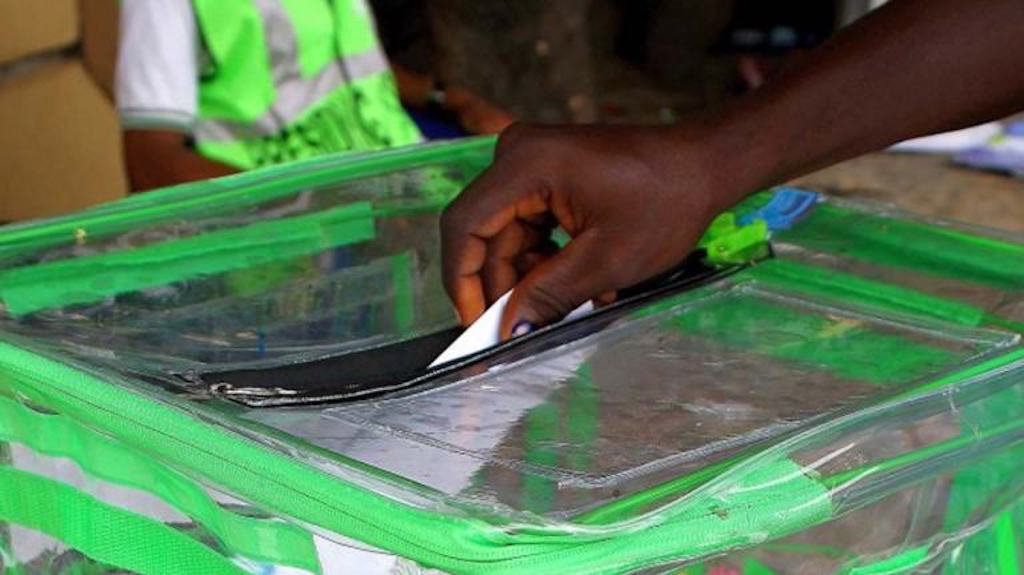
A new survey reveals a gap between the number of Nigerians who plan to vote in the 2027 elections and those who are committed to doing so. Only 41% of those intending to vote are certain.

A new survey by Yiaga Africa shows a big difference between how many Nigerians say they will vote in the 2027 elections and how many are truly committed to it.
The survey found that 84 percent of people said they are likely or very likely to vote in the 2027 elections. But only 41 percent of that group said they are certain and committed to voting.
These findings were shared during the third edition of Yiaga Africa's National Voter Intention Survey (NVIS 3.0) at a meeting in Abuja on Wednesday. The survey looks at voter interest and participation and checks what could encourage or discourage Nigerians from voting.
Yiaga Africa surveyed 2,470 Nigerians who are 18 years or older across the 36 states and the Federal Capital Territory in September 2026. Of these, 2,066 were interviewed by phone, while 404 were interviewed in person, especially in rural areas.
Safiya Bichi, the Senior Manager and Head of Knowledge Management and Learning at Yiaga Africa, explained that this mixed approach ensured that people without phones, especially in rural areas, were included. "Over 2,400 people were surveyed. We used a mixed method where we used telephone lines and traditional surveys to reach out to people and administer the survey questions," Ms Bichi said.
She mentioned that the survey aims to provide a wider view of Nigerians' feelings about the 2027 elections. Ms Bichi said the 84 percent intending to vote does not mean they are firmly committed. "84 percent of citizens said they intended to vote, but only 41 percent are committed to vote in this election," she said.
Many of those who said they will vote have not decided on a candidate yet. According to her, 44 percent of the 84 percent who said they intend to vote have not settled on their preferred candidates. This means political parties and candidates have a lot of potential voters who might change their minds before the election.
The survey also found that between 6 percent and 10 percent of people were either not interested or undecided about voting. The latest numbers show an increase in overall voter intention compared to the first two surveys. Yiaga Africa reported that 77 percent of respondents said they were likely to vote in the first NVIS in December. This dropped to 73 percent in the second survey before rising to 84 percent in the third.
Yet, the survey showed that fewer respondents are "very likely" to vote. In the first survey, 52 percent said they were very likely to vote. That number fell to 48 percent in the second round and 47 percent in the third. Ms Bichi said this shows that while more Nigerians want to vote, their certainty about doing so remains worrying.
Insecurity is seen as a major threat to voter participation. The survey found that 61 percent of respondents fear violence could stop them from voting, especially in the North-East. Here, 78 percent of respondents identified violence as a barrier to voting. Also, 82 percent of respondents were very worried that insecurity could affect the elections.
This highlights two big worries among voters: fear of violence and doubts about whether security agencies can protect them. Only 48 percent of respondents said they trust security agencies to protect their votes during the elections. Ms Bichi noted that better security is the strongest factor likely to encourage Nigerians to vote in the 2027 elections.
According to the survey, 83 percent of respondents said improved security would motivate them to vote. Another factor, 38 percent of respondents mentioned, is better logistics, while 20 percent pointed to stronger candidates. Ms Bichi said security and candidate quality have been key factors influencing voter participation in all three rounds of the survey.
The survey also showed that confidence in the Independent National Electoral Commission (INEC) is declining. Only 34 percent of respondents said they trust INEC ahead of the 2027 elections. This is down from 45 percent in the first two rounds of the NVIS. Confidence in INEC is particularly low in some areas. Yiaga Africa said 62 percent of respondents in the South-east lack confidence in the electoral commission, while the North-East recorded 62 percent in another measure.
The survey found that Nigerians trust some election technology more than the institution running the elections. Forty-nine percent of respondents said they trust election technology, like accreditation and the IReV results system, compared to the 34 percent who trust INEC.
Ms Bichi said this shows that Nigerians are putting more trust in election technology than in the bodies that conduct elections. Yiaga Africa also found a link between how people see the government's performance and their confidence in INEC. The survey found that 54 percent of respondents approve of the current government's performance, while 71 percent rated the economy as poor or very poor.

Ms Bichi explained that confidence in INEC seems to be influenced by political views. Respondents who rated the government highly were more likely to trust INEC. Those unhappy with the government's performance showed less confidence in the electoral body. This suggests that trust in the electoral process is not just about institutions but is also shaped by political opinions.
The judiciary also has low public confidence in handling electoral disputes. The survey showed that 63 percent of respondents do not trust the judiciary to resolve electoral disputes fairly and effectively. The South-South recorded the highest distrust, with 81 percent of respondents in that region lacking confidence in the judiciary's handling of these issues.
This finding adds to the worries about public trust in Nigeria's electoral process, which includes voting, security, the electoral commission, and how disputes are resolved after elections. The survey also looked at why Nigerians want to vote.
The wish for change in leadership was the top reason, with 49 percent of respondents saying it was their main motivation. Only 20 percent said civic duty was their reason, while 16 percent pointed to specific candidates. Ms Bichi said this means that candidates themselves are not the main drive for participation. Instead, the desire for a change in leadership seems to be the key reason influencing voter intention.
The survey also highlighted that vote buying is still a problem in Nigeria. Nineteen percent of respondents, about one in five, said they received money to vote for a specific candidate. This was higher in some areas, with 32 percent of respondents in the North-West saying they had received money to vote for a candidate. Young people also had a notable presence in these findings, with 24 percent of young respondents saying they got money to vote.
These results suggest that despite efforts to reform elections and reduce inducement, financial incentives remain a common part of voters' experiences. The survey noted a significant rise in public awareness of electoral reforms. In the first NVIS in December, only 24 percent of respondents were aware of the electoral reform process. This rose to 37 percent in the second survey and jumped to 62 percent in the third.
Yiaga Africa attributed this increase to growing public knowledge following the 2026 Electoral Act. Respondents were aware of changes related to accreditation and electronic transmission of election results. Despite young Nigerians being a large part of the electorate, the survey found that younger respondents showed lower intentions to vote than older ones. Only 40 percent of respondents in the younger age group said they were likely to vote.
In contrast, 64 percent of respondents aged 61 and above said they are likely to participate. This shows a big gap in participation between younger and older voters and raises concerns about whether political parties and electoral stakeholders can engage young Nigerians before 2027. The survey also found a gender gap in voter intention, with 65 percent of men likely to vote compared to 57 percent of women.
During a panel session, Victoria Eta-Messi, director of the Voter Education and Publicity Department at INEC, recognized the worries about public trust and voter participation but defended the commission's efforts to improve the electoral process. Ms Eta-Messi said it is worrying that people focus only on the 2023 elections instead of seeing the improvements since then. "The fact that people just keep holding on to 2023 rather than seeing the small steps that we’re making is a bit worrisome," she said.
She acknowledged that INEC still has a lot of work to do to increase participation and rebuild public trust. She pointed to the recently finished Osun election as an example of improvements the commission is trying to build on. According to her, INEC was concerned about the Osun election because of the attention it would attract as a test of the commission’s preparations ahead of 2027.
She said the commission was encouraged by how the election was conducted, especially improvements in how personnel and materials were deployed. Ms Eta-Messi said INEC is also working to enhance its infrastructure and logistics while engaging transport unions, like the National Union of Road Transport Workers and the National Association of Road Transport Owners, to tackle issues faced in past elections.
She added that training of INEC staff and ad hoc personnel is being improved to make sure officials know the electoral process and can do their jobs well at polling units. The INEC official said the commission is also focused on using technology correctly during elections while maintaining human oversight. She stressed that human checks will remain part of the electoral process.
Ms Eta-Messi also said logistics need continuous attention. According to her, lessons learned from the Osun election show that better planning can help with moving personnel and electoral materials and ensure polling units open on time. She said enhancing voter participation will need better engagement with Nigerians at the grassroots level.
She noted that many voters live outside major cities and that electoral stakeholders must use available platforms to reach citizens in local communities. She said INEC is working with organizations and institutions that can help with voter education and mobilization, including the National Orientation Agency (NOA).
Comments
No comments yet.