Adeleke's Win Sparks Criticism of Eno's Leadership in Akwa Ibom
Adeleke's win in Osun raises questions about Eno's performance in Akwa Ibom. Residents are evaluating the effectiveness of Eno's administration with upcoming elections in mind.
The recent Osun State governorship election has opened a new discussion in Akwa Ibom State about Governor Umo Eno’s performance. Some residents and commentators are questioning if the administration has done enough with the large resources the state has received since he took office.
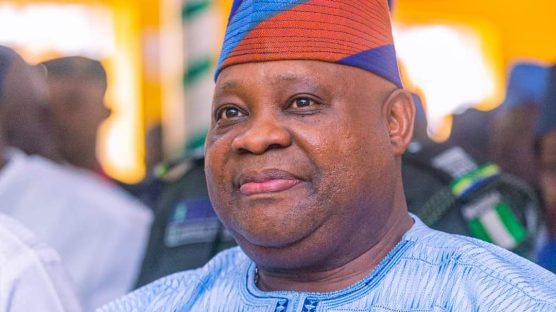
This debate started right after the Independent National Electoral Commission announced that Governor Ademola Adeleke won Saturday’s governorship election in Osun, securing another four-year term.
Mr Adeleke got 511,067 votes, while his closest rival, Bola Oyebamiji from the All Progressives Congress (APC), received 444,815 votes.
Even though the Osun election does not directly concern Akwa Ibom, its timing is significant. It comes less than a year before the 2027 general elections, giving Akwa Ibom residents a fresh angle to evaluate their own government.
The Osun election caught national attention as it was the last major off-cycle governorship race before 2027. It may also show how voters feel, political alliances, and the strength of current administrations.
For some commentators in Akwa Ibom, Mr Adeleke’s win raises a key question. How much does visible performance matter for an incumbent governor trying to keep political support? This is especially true when voters can point to what they think are real results.
This question now shifts focus to Mr Eno. His administration has received at least N2.934 trillion in public resources from May 2023 to June 2026, according to PREMIUM TIMES’ analysis of the state’s financial documents.
The discussion goes beyond saying that the Eno administration has done nothing. PREMIUM TIMES has confirmed several projects completed or started by the government. These include roads, healthcare centers, model schools, housing for the less privileged, and other initiatives.
The main concern is whether the size, speed, and quality of these projects match the money available to the government. Citizens also want to know if they have enough information about what each project costs and how contracts were awarded.
Just hours after Mr Adeleke’s victory, social media discussions in Akwa Ibom shifted from the Osun result to how well the Eno administration is performing.
Herbert Batta, a professor of communication at the University of Uyo, posted on Facebook that the Osun result is a lesson for Akwa Ibom.
“Who says dancing does not pay? This man has danced his way back to power!” Mr Batta said. He then questioned how much Akwa Ibom has gained from being aligned with the APC, the ruling party at the national level.
The Peoples Democratic Party ruled Akwa Ibom for 26 years, starting from 1999, until Governor Eno switched to the APC on June 6, 2025.
Mr Batta pointed out several federal projects in Akwa Ibom that are either stalled or moving slowly. These include parts of the East-West Road, the planned Ibom Deep Seaport, the Aluminium Smelting Company of Nigeria in Ikot Abasi, the Nigeria Maritime University in Oron, the Aba-Ikot Ekpene Road, the Calabar-Itu Road, and the Uyo-Port Harcourt Road.
He then turned his focus to the Eno administration, saying, “All Governor Umo Eno needed and still needs to do is to stupefy the people of Akwa Ibom with programmes, projects, and products in the 10 federal constituencies and three senatorial districts to the extent that the people have no choice but to vote massively for him and his party.”
Mr Batta added, “But with what we see on the ground: the dead slow pace of contract/project delivery, the LGA-grade bungalow projects, the abandonment or non-funding of signature projects four years down the road; it appears the state simply wants to take undue advantage of federal might and return itself to power.”
The professor argues that loyalty to a party may not be enough if voters feel that government performance is lacking.
Reactions in the Facebook comment section showed that many residents agreed with this view. Journalist Emem Nkereuwem wrote, “Prof, our people have been stripped of their tongues. Our hearts are heavy and bleeding within. Our frail humanity is slowly becoming the norm.”
Another commenter, Chris Essang, said the Eno administration was “very busy doing nothing.” Courage Nda questioned why local governments with large allocations could not properly grade rural roads.
“The governor has to sit up. It is going to be hot. Mark my words,” Edemson Anwana said. Eyo Udoh added that Mr Eno was “very slow in some critical sectors, especially education.”
The criticism goes beyond whether Akwa Ibom and Osun share the same political or economic situations. The Osun election shows a current trend of how voters are increasingly valuing real government performance in Nigeria.
Mr Adeleke’s Accord Party has far less political strength across the country compared to the APC, which controls 31 of Nigeria’s 36 states. Yet, the governor beat the APC candidate by over 66,000 votes.
For critics in Akwa Ibom, this outcome sharpens the argument that an incumbent cannot rely solely on party structure, political alliances, or weak opposition without showing real improvements in citizens’ lives.
This argument now influences the debate on Mr Eno’s leadership.
In a separate Facebook post on Sunday, Bobby Bassey, who describes himself as a tailor, software engineer, and social media writer, challenged Mr Eno’s supporters to name “one befitting completed project” executed by the administration.
By 10 a.m. on Monday, the post had 147 comments, mostly expressing dissatisfaction with how public resources are used in Akwa Ibom.
“Sometimes we need to tell our leaders that we need more,” Mr Bassey wrote.
One commenter, Wisdom Enang, asked for the repair of Tabernacle Road, a concern that PREMIUM TIMES reported earlier about flooding and the road’s poor condition.
Charles Ufot mocked the administration’s frequent rice distribution, while Etiene David said Mr Eno’s predecessor, Udom Emmanuel, did better.
“I know his (Eno’s) supporters will not like this post, but the truth must be told. I wish there were a strong opposition in the state,” Idorenyin Udoh said.
The call for a stronger opposition is important. The criticism is not only about specific projects anymore. Some commenters are starting to see the 2027 election as a race that needs a real alternative to the current political setup in Akwa Ibom.
The criticisms are also about the needs of young people looking for economic chances from the government.
A former youth leader in the state, Akan Etteudo, posted on Facebook on Sunday, directly addressing Mr Eno. He mentioned that some youth groups are growing unhappy with the administration.
He urged the governor to “show love” to the youths, release jobs and contracts, and send young people for training.
“Release money for your commissioner; they complain more than the youths on the streets,” he added.
His post sparked more comments, with some saying that getting access to government opportunities was becoming frustrating, even for those close to the administration.
Some commenters claimed that even people near the government were secretly complaining about poverty and a lack of chances in Akwa Ibom.
These reactions are important. They show that the dissatisfaction expressed online is not just about physical infrastructure. It also concerns unemployment and poverty.
Leo Umana, who served in Mr Eno’s administration and his predecessor’s as a board member of the Akwa Ibom State Internal Revenue Service, posted on Facebook on Monday morning. He mentioned that complaints are heard everywhere in the state.
“Every corner in the state is saturated with so many complaints. How is it on your side? The Authority should take note and action, please,” he said. Many comments on the post supported his point.
Mr Eno’s media aide, Samuel Ayara, dismissed the idea that the administration has little to show for its time in office.
“Befitting is relative. What counts as befitting for one may not be for another,” Mr Ayara said in response to Mr Bassey’s post on Facebook.
He listed roads, health centers, model schools, general hospitals, the ARISE Palm Resort, aviation projects, housing developments, public service reforms, and more as achievements.
“There is much to cheer about,” he stated.
He admitted that citizens can always ask for more but argued that the administration has worked across different sectors.
Yet, this response drew more criticism. Some commenters questioned if the projects mentioned were worth the funds available to the government. Others asked about the actual functioning of some health facilities.
PREMIUM TIMES has looked into this issue and found that building health facilities does not always mean they provide good healthcare. This is often due to not having enough staff or equipment.
PREMIUM TIMES has confirmed that the Eno administration has completed and started some projects, including the Ukanafun General Hospital, ARISE Compassionate Homes for vulnerable residents, health centers, model schools, and some road projects.
The administration has also continued or finished some projects from the previous government.
The government claims it has done work in road construction, healthcare, education, housing, aviation, and tourism. However, PREMIUM TIMES found that many of these projects are still incomplete or have been abandoned.
The evidence does not support the claim that the administration has done nothing. However, the existence of some projects raises another crucial question: how much did they cost, how were the contractors chosen, how much has been spent, and are the projects in line with the funds available?
This area has been where PREMIUM TIMES has often found gaps.
For major projects like the ARISE Palm Resort, the N15.47 billion rehabilitation of the State House of Assembly complex, and the N42.04 billion CNG bus program, PREMIUM TIMES reported major gaps in public procurement details, such as contract amounts and bidding records.
The newspaper has also reported that getting detailed capital expenditure information from the state’s financial reports has become harder.
PREMIUM TIMES has also said that under Mr Eno’s administration, Akwa Ibom state has become less open about its finances.
This makes it tough for citizens to check if the government is getting value for their money, even if a project exists.
This debate is crucial, especially given the large amount of money available to the state.
PREMIUM TIMES analysis showed that Akwa Ibom received at least N2.934 trillion from May 2023 to June 2026.
This includes federal allocations and other funds but does not count the state’s own generated income for May and June 2023.
This financial backdrop is key to understanding the latest criticism.
The timing of this discussion, right after the Osun election, adds a political angle.
In Akwa Ibom, the judgment of the Adeleke administration in Osun State is already being debated just seven months before the next governorship election.
For Mr Eno, the focus may increasingly shift from whether his administration has projects to show to whether the people think the projects, programs, and spending are enough for N2.934 trillion and if the government has been open about its spending.
Get more stories like this on your home page
How this story developed
Adeleke's Win Sparks Criticism of Eno's Leadership in Akwa Ibom (this story)
- Adeleke's Win Sparks Criticism of Eno's Leadership in Akwa Ibom

Comments
No comments yet.