Can Tinubu Change the Game for Women in Politics?
Nigerian women have long fought for political power. The Reserved Seats for Women Bill faces delays as the 2027 elections near, leaving many concerned.
Nigerian women have been fighting for a fair share of political power for years. The push for reserved legislative seats has turned into a cycle of hope, lobbying, and disappointment.
Bills come up, civil society groups lobby lawmakers, political leaders make promises, and public hearings take place. At times, it seems like the bill might pass, but then legislative business shifts, and the proposal is left hanging.
For nearly twenty years, efforts to get legal protections for women’s political representation have followed this pattern. Similar proposals have either failed during votes to amend the constitution or stalled without becoming law. After several years and elections, women are still greatly underrepresented in Nigeria's parliament.
The latest effort, the Reserved Seats for Women Bill, has experienced the same fate. Despite strong support and advocacy from some lawmakers, the bill has not moved forward in the National Assembly’s review process.
The bill reached the third-reading stage along with 43 other constitutional amendment proposals but has yet to get the attention it needs.
With the 2027 general elections on the horizon, another electoral cycle could start without the proposed arrangement in place.
For women who have spent years fighting for this cause, another delay means watching the 2027 elections come and go without the representation they have been working hard to secure.
However, this new proposal has something different from earlier ones: a new electoral arrangement that may lessen the need for a separate nationwide election to select women representatives.
There is also a new political twist. President Bola Tinubu has said he will sponsor the bill as an executive proposal, which advocates believe will give it the presidential support that past administrations did not provide.
Whether these changes will be enough to avoid another disappointment is now key to the future of this legislation.
A Long History of Failed Gender Reforms
Nigeria's battle for better women’s political representation didn’t start with the current National Assembly.
In 2006, the Gender Equality and Opportunity Bill tried to tackle discrimination and boost women’s participation in public life. However, it faced pushback, including from some groups who objected to the term equality and some provisions they thought clashed with their religious beliefs.
This debate highlighted how tough it is to get legislative support for gender reforms in a nation where religious and cultural views often come into play when discussing women's rights.
Later efforts also struggled to gain ground.
During the Sixth National Assembly, the Gender and Equal Opportunities Bill aimed to fight discrimination against women and ensure equal opportunities across different areas. It was reintroduced in later assemblies but failed to pass.
The campaign for reserved legislative seats gained new life in the Ninth National Assembly.
Former lawmaker Nkeiruka Onyejeocha sponsored a constitutional amendment to create 111 extra seats for women in the National Assembly. The proposal had 85 co-sponsors, including former Speaker Femi Gbajabiamila.
But during the constitutional amendment vote in March 2022, it didn’t get the two-thirds majority needed.
Other gender-related proposals, like citizenship rights for foreign spouses of Nigerian women and married women's rights, also faced challenges.
The current proposal, led by Deputy Speaker Benjamin Kalu and 12 other lawmakers, aims to address the issue through a constitutional guarantee, rather than relying on political parties to increase the number of women they nominate.
Yet, the delays faced by this proposal show that the problems with gender reforms go beyond the wording of the bills.
What the Current Bill Aims For
The Reserved Seats for Women Bill, HB 1349, aims to change the 1999 Constitution to create extra legislative positions just for women.
The goal is to boost women’s presence in the National Assembly and State Houses of Assembly without affecting existing constituencies or lawmakers.
In December 2025, the bill proposed one extra Senate seat and one additional House of Representatives seat for each state and the Federal Capital Territory, plus three more seats in every State House of Assembly.
This setup would create a total of 182 new seats in federal and state legislatures.
However, the proposal has changed, especially in how Senate seats are allocated and how candidates are chosen.
Under the new electoral college model, the proposal allows for 12 additional women senators, with two seats for each of the six geopolitical zones. The seats would rotate among the states in those zones.
The House of Representatives would have 37 additional seats, one for each state and the FCT, while each of the 36 State Houses of Assembly would get three more seats, one for each senatorial district.
This brings the total proposed seats to 157.
This plan is meant to be a temporary measure that would last for 16 years, covering four general election cycles, after which it will be reviewed.
Women elected to these reserved positions would have the same powers as other lawmakers. They would also still be able to contest regular constituencies.
The proposal aims to provide women a guaranteed path into legislative bodies where their representation has been low for years.
Currently, women hold only four of the 109 seats in Nigeria’s Senate, which is about 3.7 percent.
In the House of Representatives, women hold 16 of the 360 seats, or about 4.4 percent.
These numbers put Nigeria among countries with very low female representation in parliament.
The lack of women is also seen in state assemblies, where some have no elected female members at all.
The proposed seats would give chances to women who might struggle to get party nominations or compete in costly constituency elections.
Why the New Proposal Could Work
Austine Aigbe, a gender rights advocate and member of the Nigerian Civil Society Situation Room, believes the current proposal is structured differently from earlier ones, especially in how women would be selected for the special seats.
He told PREMIUM TIMES that past proposals struggled partly due to disagreements over how elections would be held.
Earlier models planned for universal suffrage, meaning voters would directly elect candidates for reserved positions.
This raised worries about constituency boundaries, election logistics, and the need for voters to cast extra ballots alongside regular elections.
Mr Aigbe said the new proposal tries to resolve some of those issues by cutting down on the number of seats and introducing an electoral college system.
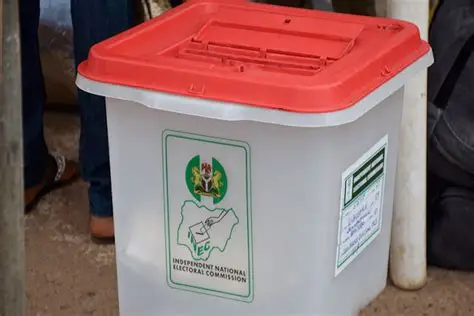
In this new setup, women won’t be elected through a separate nationwide vote. Instead, an electoral college made up of elected officials would pick the representatives.
The college would include governors, senators, members of the House of Representatives, state lawmakers, and elected local government officials from the relevant areas, with the Independent National Electoral Commission (INEC) expected to oversee the process.
This model aims to lessen the logistical and financial burden of organizing separate elections while providing a way for women to enter legislative bodies.
Mr Aigbe added that the new arrangement means the bill could still go ahead even if the constitutional amendment is completed after the 2027 elections.
He believes newly elected lawmakers could help select the women representatives before the next National Assembly starts in June 2027, as long as the amendment passes the necessary legislative and state approval processes on time.
He said, “The advantage of this current proposal is that you don’t need universal suffrage. You don’t need everybody to vote. Even if the current bill comes back after the election, those who return may come back to support the bill, and once it is passed, the process can continue.”
He believes the new arrangement takes away some of the complications that caused previous proposals to fail, especially the need for a separate election with the general electorate.
But the electoral college model also has its drawbacks.
Some civil society groups worry that letting elected officials choose women representatives could lead to political party control and influence from powerful political figures.
At a roundtable organized by the Policy and Legal Advocacy Centre (PLAC) in July 2026, stakeholders urged for measures to ensure the electoral college does not become a means for dominant parties or influential office holders to decide who gets the reserved seats.
Tinubu’s Promise and a New Political Opening
While Mr Aigbe thinks the revised electoral setup could make things easier, Osasu Igbinedion, a gender advocate and leader of the campaign for the Reserved Seats for Women Bill, believes President Tinubu’s decision to support the proposal as an executive bill could change the tide.
She told PREMIUM TIMES that the president has adopted the proposal and plans to send it to the National Assembly for consideration through the constitutional amendment process.
According to her, this is the first time a Nigerian president has committed to the reserved-seat campaign in this way.
“The president has adopted the bill as an executive bill. So, like the state police, he will send the bill to the National Assembly to go through the Constitution amendment process, then back to him for his approval to become law,” she said.
Ms Igbinedion noted that previous administrations didn’t provide similar executive support, leaving advocates to rely mainly on legislative sponsors and ongoing talks with lawmakers.
She recalled leading advocacy visits to the senate president and other senators, working with her group, TOS Foundation, and the Reserved Seats for Women’s Bill Coalition.
The Deputy Speaker, Mr Kalu, sponsored an earlier proposal that reached the third-reading stage alongside 43 other constitutional amendment bills but was not passed.
She sees the president’s commitment as a major step forward because it brings the executive and legislature together to push a proposal that has struggled to get political backing.
Mr Tinubu made this promise during the APC Presidential Campaign Council inauguration at the State House on 14 October.
His pledge followed Speaker Abbas Tajudeen’s earlier announcement in September that the president agreed to sponsor executive bills for special seats for women and people with disabilities.
Mr Tajudeen said the women’s proposal had been sent to the Ministry of Justice for final adjustments before being sent to the National Assembly.
For Ms Igbinedion, the president’s involvement opens a door to achieving what past administrations couldn’t.
She believes he will keep his promise and that the bill will eventually become law.
But having executive support doesn’t remove the constitutional challenges. Under Section 9 of the Constitution, a constitutional amendment must get a two-thirds majority in both National Assembly chambers and approval from at least 24 of the 36 State Houses of Assembly.
The president’s backing could help gain political support, but lawmakers and state assemblies still need to approve the proposal.
The actual content of the executive bill will also be key. Advocates and lawmakers will need to see if it keeps the new electoral college structure and proposed seat allocations or introduces more changes.
Will Women Benefit Before the 2027 Elections?
The timing of the proposed executive bill is another big issue, especially as political parties gear up for the 2027 general elections.
Ms Igbinedion said women should not expect to run for the reserved seats in the upcoming general elections since the electoral process has already moved forward and INEC has finished the candidate-listing stages.
“The time has passed. INEC has concluded its list of candidates, so we won't see any candidates in the 2027 general elections,” she said.
However, she noted that the legislation could still create chances during by-elections if there are vacancies in the legislature, depending on the final details.
She expects the full implementation of the arrangement during the 2031 general elections.
Comments
No comments yet.