Colonel Ma'aji Reveals Failed Plot Against Tinubu's Government
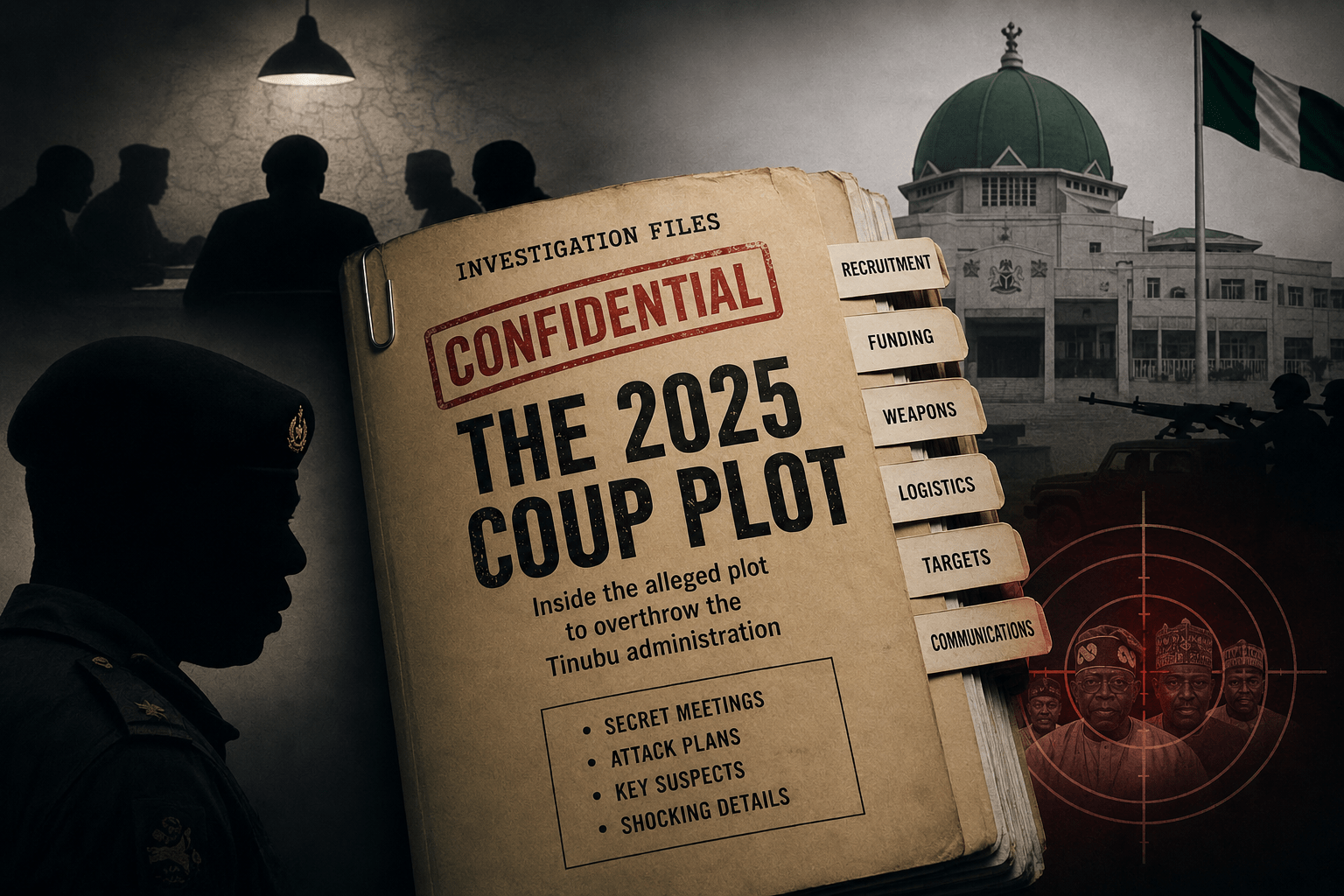
Colonel Mohammed Ma'aji's alleged coup plot against President Tinubu's government fell apart before it was public. The military is investigating the incident.
Nigerian Army colonel Mohammed Ma’aji reportedly led a plan to remove Nigeria’s elected government through a coup last year. This alleged plot, however, fell apart before it became known to the public.
Nigeria has a complicated history with coups, which includes failed plans and six successful takeovers. In 2025, after over thirty years without a coup, another alleged attempt ended with many military officers and civilians arrested for suspected involvement in trying to overthrow President Bola Tinubu.
The Defence Headquarters (DHQ) responded officially to the situation, stating that the ongoing investigation into the arrested officers was a normal internal process to maintain discipline and professionalism. The military did not outright deny the involvement of its officers in the coup plot.
The failed coup was discovered in late September 2025, creating tension within the Tinubu government. As a result, the government canceled the October 1 Independence Day Parade and made changes in the military leadership, including firing Chief of Defence Staff Christopher Musa. Media reports suggested the parade was canceled due to the alleged coup, but the DHQ clarified it was to allow the President to attend an important meeting abroad.
The DHQ later confirmed there was indeed a coup plan to oust Mr. Tinubu, and the implicated officers would face military judicial panels. PREMIUM TIMES has reported on the conspiracy through interviews with intelligence sources. This began with the arrest of 16 active military officers in September. By February, 40 individuals, including senior military officers and a police officer, were arrested for various roles in the plan.
For the first time, this newspaper has access to confidential documents totaling about 7,424 pages. These documents include bank statements, chat logs from encrypted messaging apps, receipts from hotels used for meetings, and statements from people connected to the coup planners.
Colonel Ma’aji, a 50-year-old from Niger State, shared how he came up with the coup plan and his reasons for it. He was arrested on September 29, 2025, the same day the government canceled the Independence Day parade. He was interrogated from October 18, 2025, to February 19, according to signed statements from him and a military investigator at the Nigerian Army Corps of Military Police headquarters.
In April, the federal government charged six people linked to the coup plot. They include Mohammed Ibrahim Gana, a retired major-general; Erasmus Ochegobia Victor, a retired navy captain; Ahmed Ibrahim, a police inspector; and Zekeri Umoru, an electrician at the Presidential Villa. Others are Bukar Kashim Goni and Abdulkadir Sani, an Islamic cleric based in Zaria.
While the retired military officers and civilians are being tried in a civil court, the active military personnel, including Colonel Ma’aji, are facing trial in a court-martial. More than 30 officers and civilians were questioned by military investigators, and their statements are part of the prosecution's case. But some defendants argued that their statements were not given voluntarily, leading the court to order a trial-within-trial to verify their admissibility.
In his statement, Colonel Ma’aji said the idea for the coup started in 2023, near the end of President Muhammadu Buhari’s term. He described a worsening situation of corruption and insecurity across the country, especially in the North. He noted that the military leadership did not take action to address the issues, which led him to consider military intervention.
Colonel Ma’aji said he began by finding officers who shared his concerns about the country’s problems. He mentioned that many involved were motivated by patriotism and a desire for positive change. However, he admitted that a lack of funds and resources forced them to put their plans on hold.

He said he used his own money to fund the movement, selling personal properties to support the cause. Among his sales were three houses in Kaduna and a students’ hostel in Zaria. They revived the plan after Colonel Ma’aji’s second failed promotion attempt in 2024.
He explained that some officers urged him to restart the movement, fearing he might be retired soon. One key officer, Lieutenant Colonel Shamsuddeen Bappah, traveled from his base in Ibadan to Abuja to convince Colonel Ma’aji to revive the plan. Bappah even offered to sell his land to support the cause, but later said he could not find a buyer.
Colonel Ma’aji confirmed that the first meeting for the revived plan took place in late 2024 or early 2025. They held meetings at various locations in Abuja, including Brookville Hotel and Greenland Hotel, with mostly the same officers attending.
He acknowledged that his failed promotions were not the main motivation for the coup. He expressed that conditions worsened under President Tinubu compared to Buhari's time. Issues like fuel subsidy removal and electricity tariff hikes were major concerns for the movement.
He lamented that the youth felt unheard and frustrated, especially after security forces used excessive force during protests like #EndSARS. Colonel Ma’aji stated that many young people today are jobless and hopeless. He also highlighted the struggles of military veterans who have had to protest to receive their benefits and pensions.
Colonel Ma’aji and the others facing charges at the General Court Martial have denied any wrongdoing. Six retired military officers facing charges at the Federal High Court have also proclaimed their innocence and challenged the admissibility of their statements and footage from their interrogations. The prosecution insists that proper procedures were followed.
Former Bayelsa State Governor Timipre Sylva, thought to be a key financier of the coup, strongly denied any involvement. His spokesperson issued a statement in October, declaring him a democrat who could not be part of such a plot. Sylva was reportedly in the UK for medical reasons at the time of the allegations, and five associates have faced charges for hiding his location. Nine properties associated with him are under interim forfeiture.
The claims made by Colonel Ma’aji and others under investigation do not prove guilt. The courts will ultimately determine the innocence or guilt of those charged, based on all evidence presented.
Colonel Ma’aji’s full statement reflects his deep concern for Nigeria. He apologized for the situation, explaining that their actions stemmed from a desire for a better country. He expressed worry about the struggles he faces to raise five children on his salary. He pointed out that many leaders have foreign citizenship and do not understand the common man’s plight. He urged for better treatment of soldiers and called for actions to improve the country's welfare. He emphasized that their actions were driven by a genuine love for Nigeria.
Colonel Ma’aji's statement reflects a desire for a prosperous Nigeria, highlighting the challenges faced by military personnel and the frustrations of citizens. He urged authorities to address these issues, appealing for understanding and a chance to mend their ways.



Comments
No comments yet.