Concerns Grow Over Workers and Communities in Nigeria's Energy Shift
A new report warns that Nigeria's energy transition may leave workers and communities vulnerable due to poor planning and lack of support.
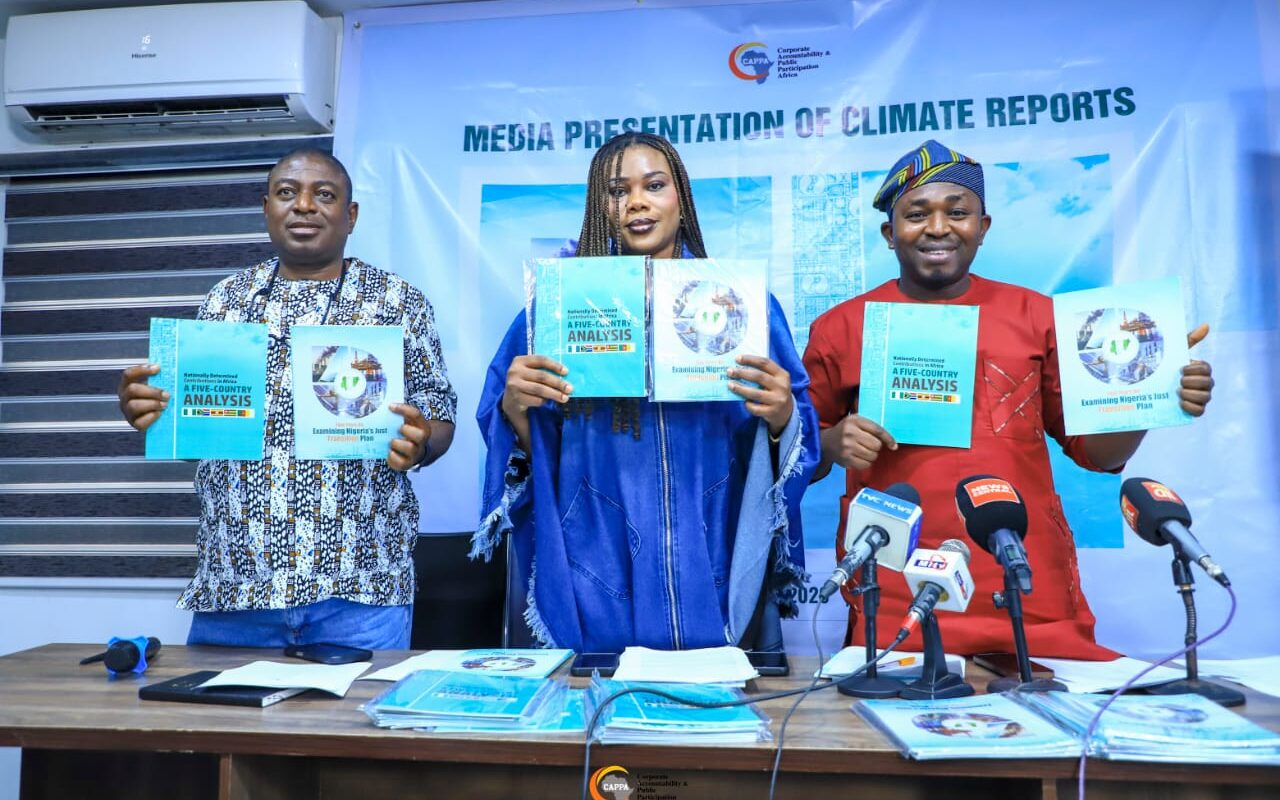
A report by Corporate Accountability and Public Participation Africa (CAPPA) has raised alarms over the future of workers and communities that rely on Nigeria’s oil and gas sector as the country moves towards an energy transition.
The report, titled Four Years On: Examining Nigeria’s Just Transition Plan, states that workers and affected communities are not getting enough protection. It points to a lack of coordination among government agencies, uncertain funding, and no solid guarantees on retraining, income security, and restoring the environment.
It highlighted poor coordination among government bodies and funding uncertainty as key challenges in carrying out the plan. There are also no enforceable guarantees on retraining, income security, and environmental restoration for the workers and communities impacted.
CAPPA insists that measuring progress should not only focus on emissions targets and investment in renewable energy. “Responsibilities are dispersed across institutions, financing relies heavily on anticipated investment, and workers and affected communities lack sufficiently enforceable guarantees of income security, retraining, and environmental repair,” said CAPPA Executive Director Akinbode Oluwafermi during the report's launch in Lagos on Tuesday.
The report emphasized that the transition should ensure affordable and reliable electricity and create sustainable jobs for those affected by changes in the energy industry.
These concerns echo the calls from the Nigeria Labour Congress (NLC) and energy transition experts for workers and host communities to have more input in the nation’s energy policies. At a discussion on equitable transition in October, Chukwumerije Okereke, head of the British Research Academy, pointed out that climate change is also a workplace issue because workers face pollution and environmental hazards.
Mr Okereke, who is a professor, called for training and skill development to prepare affected workers for jobs in the emerging low-carbon economy. He urged the government to offer social protection, including fair compensation, early retirement benefits, and timely pension payments to those who may lose their jobs.
The NLC’s Head of Climate Change, Eche Asuzu, stated that a just transition requires fair governance and an even distribution of the benefits and costs of energy projects. He called for more research into the issues faced by communities affected by mining and energy projects, noting that many have complained about displacement, inadequate compensation, and poor responses from companies and authorities.
While Nigeria has policies to safeguard affected communities, Mr Asuzu pointed out that poor implementation and monitoring remain significant challenges. He urged federal, state, and local governments to work alongside companies and host communities to solve these issues.
Nigeria launched its Energy Transition Plan in 2022, targeting net-zero emissions by 2060. The plan covers five areas: power, cooking, transport, industry, and oil and gas. The government claims it aims to tackle energy poverty, cut emissions, and support economic growth. It includes managing expected job losses in the oil sector as the global demand for fossil fuels decreases while generating jobs in power, cooking, and transport sectors.
In September 2025, Nigeria submitted its third Nationally Determined Contribution (NDC 3.0) to the United Nations Framework Convention on Climate Change, updating its climate commitments. Under this pledge, Nigeria agreed to cut emissions by 32.2 percent by 2030, achieve universal electricity access, and increase renewable energy’s share of the power mix to 50 percent. It also aims for a nine percent annual increase in new electricity connections.
The updated contribution includes economy-wide emissions reduction targets of 168.2 million tonnes of carbon dioxide equivalent by 2030 and 184.9 million tonnes by 2035, compared to 2018 levels. The government estimates that fulfilling these commitments will cost around $337 billion between 2026 and 2035. Out of this, $195 billion is allocated for emissions reduction and about $141.5 billion for climate adaptation. An additional $500 million is set aside for climate empowerment activities.
Nigeria hopes to raise $67 billion domestically, with the remaining $270 billion, roughly 80 percent of the total, expected from international sources through grants, concessional finance, and technology support. PREMIUM TIMES has looked into the funding needs and challenges Nigeria faces in raising the funds to meet its climate commitments.
Nigeria is not alone in facing a funding gap for climate initiatives. Many developing countries struggle to find the money required to prepare for and respond to climate change. In its 2026 Adaptation Gap Report, the United Nations Environment Programme (UNEP) estimated that developing countries will need about $305 billion yearly by 2035 to adapt to climate change.
International public finance for adaptation stood between $28.2 billion and $31.7 billion in 2024, which is only about $1 billion more than the previous year. UNEP mentioned that even if international public adaptation finance tripled, as planned in a previous climate conference agreement, it would only cover 20 to 29 percent of developing countries’ needs by 2035.
The report identified institutional barriers to implementing adaptation measures and warned that losses and damage linked to climate change continue to rise. UNEP Executive Director Inger Andersen stated that the world is not ready for current climate conditions, let alone the effects of global warming surpassing 1.5 degrees Celsius.
A separate assessment by the Climate Policy Initiative (CPI) offers a look at Nigeria’s climate finance before its latest commitments were submitted. In its May 2025 report, Landscape of Climate Finance in Nigeria 2025, CPI estimated that $2.5 billion in public and private finance was directed towards climate action in 2021 and 2022. This is a 32 percent increase from the $1.9 billion recorded in 2019 and 2020.
Despite the rise, CPI indicated that Nigeria’s annual climate finance gap stands at $27.2 billion. The $2.5 billion recorded over two years is less than one percent of the country’s gross domestic product. CPI also pointed out that this amount is significantly lower than the $9.3 billion the government spent on fossil fuel subsidies in 2022.
Public institutions provided 70 percent of the climate finance tracked by the organization, while private entities accounted for 30 percent. Multilateral development finance institutions alone contributed 48 percent of the total.
Corporations made up over three-fifths of private climate finance, with much of their investment focused on small-scale solar projects. CPI found that projects aimed at reducing emissions received more funding than those helping communities adapt to climate change. Mitigation attracted $1.2 billion, compared to $740 million for adaptation. The latter covered only six percent of Nigeria’s estimated adaptation financing needs.
About half of the adaptation funding went into agriculture, forestry, land use, and fisheries. The report noted a lack of funding for climate-resilient infrastructure in areas like energy, transport, and industry. Concessional loans accounted for 54 percent of the tracked international public climate finance, while non-concessional loans made up another 35 percent.
The organization warned that relying on loans could increase Nigeria’s debt burden and reduce the government’s capacity to fund public services and development. It also pointed out that high capital costs, a lack of bankable projects, limited technical capacity, data gaps, and poor access to affordable green technology are hurdles to attracting investment.
CPI recommended more support for project preparation from government institutions and development finance organizations. It also suggested creating costed climate action plans that are ready for investment and that align with Nigeria’s economic and social development priorities.
Other recommendations included making the National Climate Change Fund operational, expanding the use of guarantees and green bonds, and investing in local green industries. CPI mentioned that developing local technology and financing could create jobs and lessen Nigeria’s reliance on imported equipment.
Nigeria’s ongoing dependence on oil and gas revenues adds to the challenge. President Bola Tinubu’s administration has supported increased production for local consumption and export, even as the country promises to cut emissions.
Nigeria's electricity shortfall adds to the difficulty. PREMIUM TIMES reported that about 86.8 million Nigerians did not have access to electricity in 2023, while unreliable grid supply has left many households and businesses relying on petrol-powered generators.
The second CAPPA report, Nationally Determined Contributions in Africa: A Five-Country Policy Analysis, examined climate policies in Cameroon, Nigeria, South Africa, Togo, and Uganda. It questioned the growing reliance on carbon markets and offset schemes in national climate plans, arguing they could allow companies and countries to keep emitting greenhouse gases while claiming to offset pollution through actions like tree planting and forest conservation.
The report warned that carbon stored in forests and plantations could be lost due to fires, land conversion, and other issues. It argued that such projects should not replace direct cuts in greenhouse gas emissions. It cited Uganda’s climate plan, which assigns a large share of projected emissions reductions to commercial plantations, compared to two measures focused on restoring natural forests.
The report also referred to claims of forced evictions linked to Uganda’s Kachung forestry carbon-credit project, where villagers claimed they were displaced from land used for farming to make space for a tree plantation tied to carbon-credit trading.
CAPPA stressed that climate policies should focus on real emissions reductions while protecting the rights and livelihoods of people affected by climate projects. Mr Oluwafermi questioned whether Africa’s climate policies reflect the needs of local communities or corporate interests.
He pointed out that international oil companies continue to invest in fossil fuel projects across Africa while also announcing investments in renewable energy. Mr Oluwafermi mentioned TotalEnergies’ renewable energy investments alongside its involvement in the East African Crude Oil Pipeline project connecting Uganda and Tanzania, along with the Tilenga oil project in Uganda.
He also expressed worries about oil exploration in Cameroon and carbon-credit schemes in Nigeria, including the REDD+ project in Cross River State. He warned that rural communities could lose ancestral lands to climate projects if their rights are not protected.
“A just transition must mean more than changing energy sources or announcing ambitious targets. It must improve people’s lives, protect livelihoods, respect community land rights, and ensure that those responsible for the climate crisis meet their obligations,” he said.
In a statement read at the event by CAPPA’s Assistant Executive Director, Zikorah Ibeh, the organizations behind the reports urged African governments not to use carbon offsetting as a substitute for cutting emissions. They called for climate finance to be provided through grants, not loans that could worsen the debt of developing countries.
The statement urged governments to safeguard communal land rights, include workers and affected communities in energy policy decisions, and create well-funded plans to phase down fossil fuels while protecting those whose livelihoods depend on the sector.
The coalition also called for investments in renewable energy and ecological restoration in communities impacted by oil and gas extraction. They argued that African countries, which have contributed relatively little to global emissions, should not bear an unfair share of the financial burden in addressing climate change.
Representatives from partner organizations in South Africa, Uganda, and Togo also called for climate policies that respond to the needs of affected communities over commercial interests. They urged governments to go beyond climate promises and ensure their commitments lead to real improvements in people’s lives.
Comments
No comments yet.