Conflict and Climate Change: A Growing Problem for Great Lakes Residents
The Great Lakes region faces a dual crisis of conflict and climate change, displacing millions. Urgent action is needed to address these intertwined issues.
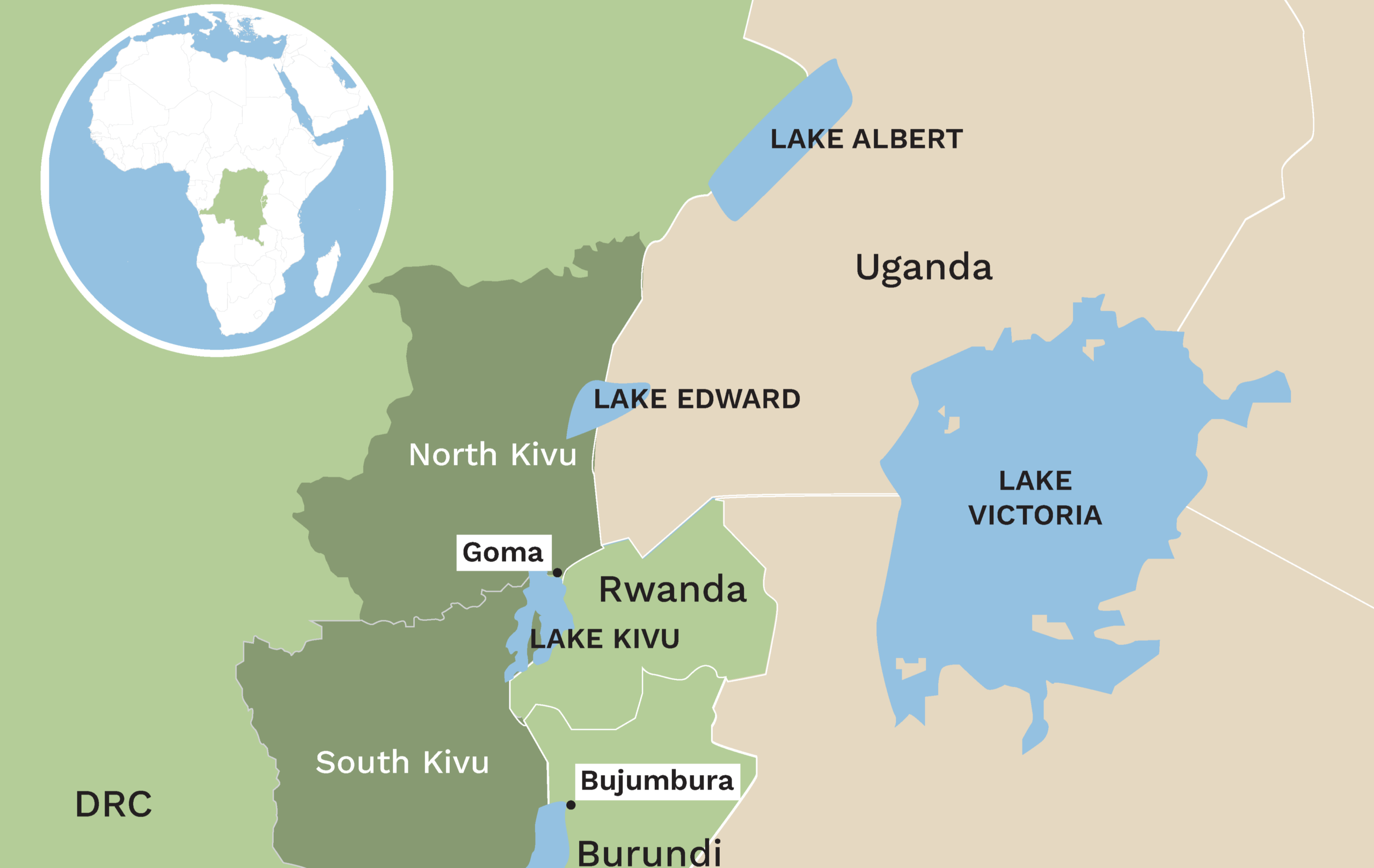
Millions of people in the Great Lakes region have been displaced by conflict for decades. Now, climate change is making things worse. Floods, landslides, and rising lake levels are uprooting communities. Many people who already fled violence are being displaced again. This shows that the ways we deal with conflict and climate issues separately are not working.
In May, at the 61st meeting of the United Nations (UN) Standing Advisory Committee on security in Central Africa, members promised to prevent internal displacement and protect displaced people. Similar promises have been made before. Civil wars and armed conflicts have scattered many people within their countries and beyond. After three decades, there are still no lasting solutions for internal displacement.
By the end of 2025, the Democratic Republic of the Congo (DRC) is expected to have 4.93 million internally displaced persons (IDPs). This is the second-largest IDP population in Africa, after Sudan. Burundi has about 88,800 IDPs. This number includes around 100,000 displaced since the 1993 civil war who do not want to return home and have not been counted in official statistics since the 2010s.
Conflict is still the main reason for internal displacement in the region. The DRC alone saw over a million new IDPs in territories controlled by the Alliance Fleuve Congo (AFC) and M23 during the first quarter of 2025.
But climate-related events are now becoming a second major cause of displacement. By the end of 2025, climate factors caused about 13 percent of IDPs (630,000) in the DRC and 92.3 percent (82,800) in Burundi. Floods and landslides have displaced tens of thousands in Burundi and DRC in recent years. Many had settled by the lake, ignoring rules about building near water.
Rwanda is different. There has been little conflict-induced displacement in recent years. Most internal displacement now is due to climate issues, especially in the Western and Northern provinces along Lake Kivu.
Conflict and climate issues do not just happen side by side; they make each other worse. Poor conditions in IDP camps put displaced people at risk from climate events. In 2025, flooding destroyed the shelters of around 50,000 people who fled violence in South Kivu. Many of these people had settled in homes, churches, and schools in Tanganyika Province, and they were displaced again after heavy rains.
In a region with long-standing conflict-driven displacement, climate IDPs put even more pressure on scarce resources like land. Burundi and Rwanda have high population density, leading to conflicts over land.
In Burundi, fights over land set aside by the government for humanitarian needs have created tensions between IDPs and host communities. This has often turned violent. This shows that years of unresolved displacement have become a source of conflict, needing solutions beyond just humanitarian aid.
The UN's Guiding Principles on Internal Displacement have been made into two binding agreements. These are the African Union’s (AU) Kampala Convention and the International Conference on the Great Lakes Region’s (ICGLR) Protocol on the Protection and Assistance to IDPs. But no country in the region has created a national law to enforce these agreements.
While these agreements suggest many measures, in reality, protection and support get more focus than prevention and long-term solutions. The UN Office for Disaster Risk Reduction’s Global Assessment Report 2025 states that only 3.3 percent of humanitarian aid went to prevention and preparedness from 2019 to 2023.

Across the region, progress on internal displacement often appears misleading. In Burundi, the 2000 Arusha Peace and Reconciliation Agreement did not return all those displaced by the 1993 civil war. Instead of fixing the problems that stopped returns, the government just renamed the camps to ‘peace villages.’
In the DRC, ongoing armed conflict makes it impossible for people to return home voluntarily. The drop in displacement numbers since 2025 was not due to lasting solutions but because of the AFC and M23 dismantling IDP camps near Goma in early 2025.
Unlike Burundi and the DRC, Rwanda’s government has started large-scale relocation programs for families living in disaster-prone areas as a preventive measure. But this raises concerns about whether these moves are truly voluntary. Moves made under pressure can feel like another form of displacement.
The Great Lakes region is also struggling to build resilience against climate hazards. Like many parts of Africa, it lacks working weather stations that can give weather data. This makes it hard to respond to climate risks in a timely way. Also, there is weak coordination between the two issues. There is no regional system that monitors or responds to displacement caused by both conflict and climate.
As a result, finding lasting solutions for IDPs is hard because the reasons for displacement continue. As climate change grows and conflicts stay unresolved, this gap will only get bigger.
An integrated approach is now more urgent as donors reduce aid budgets, making IDPs even more vulnerable. The first step to a clear response is gathering better evidence. National bodies need to collect data on climate-induced displacement and its links to conflict.
Second, current regional early warning systems should be changed to track both conflict and climate factors. This should help create preventive measures, as mentioned in the 2004 Dar Es Salaam Declaration, which has not yet been achieved.
Third, as international aid decreases, countries need strong national IDP laws that make existing UN, AU, and ICGLR legal agreements effective. Laws that address both causes of displacement should have the political support to be put into action.
Finally, IDPs and host communities must be included in peace talks and climate policy discussions. They should not just be considered subjects of decisions made for them.




Comments
No comments yet.