Corrupt Politicians Can't Fix Nigeria or End Corruption
Corruption in Nigeria has a long history, dating back to colonial times. Former military leaders like Babangida emphasize the challenges in addressing this issue.
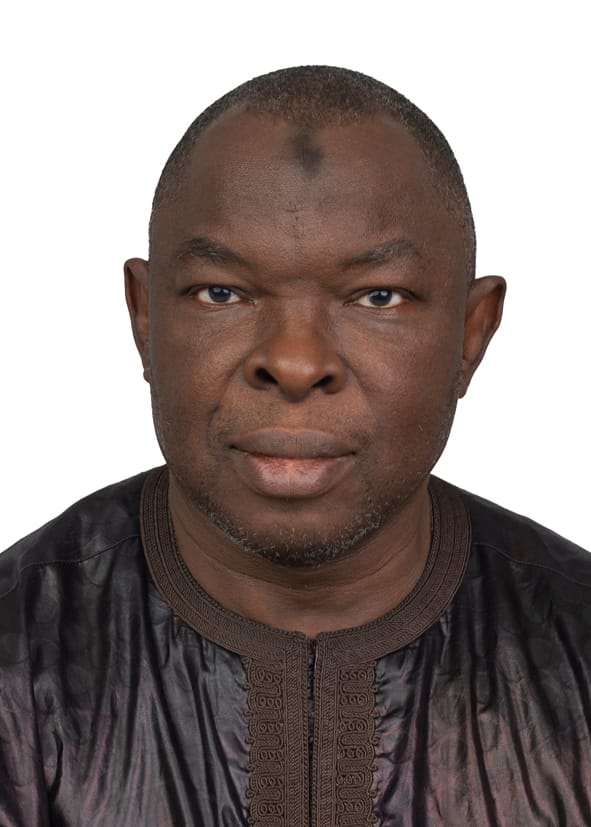
The huge corruption from military governments in Nigeria is back in the spotlight. An interview from August 2021 with former military Head of State, retired General Ibrahim Badamasi Babangida, aired on Nigeria Television Authority (NTA) and is trending now.
In the interview, reported by the Nigerian Tribune on August 20, 2021, Babangida claimed, "We [the military] are not corrupt. I will proudly say it because what I read in the papers, if it is true, then I think I used to say we are saints." He went on, "I keep giving example. I sacked a governor for ₦300,000. Today, there are ₦300,000 billion, still not issued, not solved."
Corruption at high levels did not start in 1999. It has been around since the colonial period. The Lagos-based The Guardian reported on December 16, 2025, that over $400 billion was stolen by top Nigerian officials from 1960 to 1999. Meanwhile, the London-based The Economist put the figure at about $582 billion on October 10, 2019.
The Guardian added that Switzerland returned over $1 billion to Nigeria in several phases. The United States returned $311 million of Abacha's stolen funds in 2020, along with an additional $23 million. The United Kingdom also sent back $23 million in looted Nigerian funds.
Babangida's rule made corruption official and entrenched it deeply in Nigeria. State resources, oil allocations, special import licenses, and shady contract awards were used to win loyalty from military officers, political leaders, traditional rulers, and academics.
The Pius Okigbo Panel found in 1994 that out of the $12.4 billion generated from oil windfalls between 1988 and 1994, $12.2 billion was spent without the national budget framework, without legislative approval, and went unaccounted for.
During the regimes of Generals Babangida, Sani Abacha, and Abdulsalam Abubakar, Nigeria became known as a symbol of corruption. But this does not change the fact that corruption has skyrocketed since 1999. Former UK Prime Minister David Cameron even called Nigeria "fantastically corrupt."
The British International Corruption unit reported that it seized £76 million, while Steve Goodrich said another £791 million of Nigerian loot has been frozen worldwide since 2006. The Nigerian government confirmed in 2023 and 2024 that it recovered tens of millions of dollars tied to former Petroleum Minister Diezani Alison-Madueke.
Yet, recovery is not the main issue. The sad truth is that the returned loots are often stolen again. The same edition of The Economist reported, "When Switzerland returned $500 million of Mr. Abacha’s money, most of it disappeared again."
Babangida only stated the obvious. He was diplomatic with the truth. Professor Jibrin Ibrahim, formerly of the Centre for Democracy and Development, was not as diplomatic. In his paper on July 28, titled, “Comrade Segun Osoba: The Radical Historian Who Stood with the People,” he said, "Nigerian political space is completely dominated, not by bourgeois forces, but by criminals pretending to be politicians; whose focus is looting the treasury. They have no agenda for the people but are highly skilled in divide-and-rule tactics and continue to divide citizens along primordial lines while they loot."
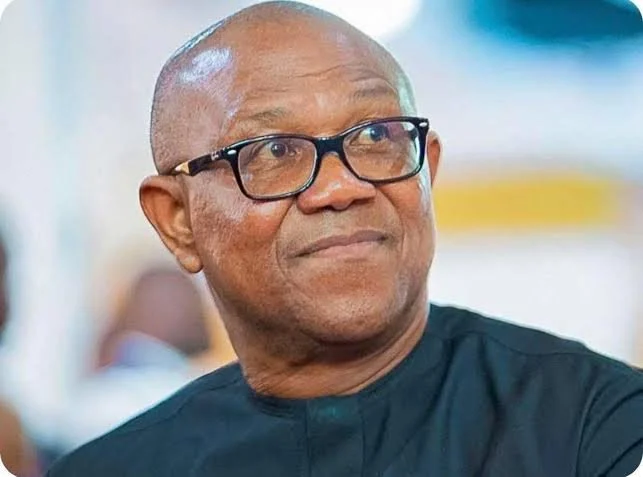
Still, various anti-corruption agencies were set up under the current democracy in Nigeria to tackle high-level corruption. The Independent Corrupt Practices and Other Related Offences Commission (ICPC) was created on September 29, 2000, to fight corruption, bribery, and abuse of office in both public and private sectors. It even has Anti-Corruption and Transparency Units (ACTUs) in government ministries, departments, and agencies.
Likewise, the Economic and Financial Crimes Commission (EFCC) was established on December 12, 2002, to tackle advance fee fraud (“419”), money laundering, and high-profile corruption. The Nigerian Financial Intelligence Unit (NFIU) also works to combat money laundering and terrorism financing. But none of these agencies have made a real difference in the fight against corruption. So, why would Babangida not brag about his administration?
The issue is not whether corruption has flourished since the military era. The real question is why society seems weak in fighting corruption. Back then, journalists from African Concord, The News, Tell, Tempo, National Concord, Nigerian Tribune, and The Guardian openly exposed high-level corruption.
Students from the National Association of Nigerian Students (NANS) regularly took to the streets to confront high-level corruption. They challenged policies that encourage corruption and hunger, and that politically weaken the masses.
Why are we accepting the most backward, selfish, and corrupt leaders since 1960? These leaders shamelessly call themselves “patriots,” “progressives,” and “democrats.”
Professor Ibrahim pointed out that these corrupt politicians succeed because the political Left is weak and poorly organized. The Left has operated in different political platforms without coordination or strategic planning. This has hurt their ability to gain political power and improve Nigeria.
But another question arises: Why have the Left forces failed to unite against today’s corrupt politicians, like they did during military rule? First, when the Left was fighting against the military, they did not plan to take a central role after military rule ended. Those who saw the need to engage went into corrupt parties and got lost in them.
Second, after May 29, 1999, many Left elements joined Non-Governmental Organizations (NGOs) that were driven by foreign donors. These groups did not focus on the Left's independent participation in politics to gain power.
Just like Left elements in political parties got absorbed by corrupt politics, those who turned to NGOs got consumed by donor agendas. These agendas often go against democracy, which means giving power back to the people. They also do not help tackle high-level corruption and crime.
Comments
No comments yet.