Duke compares pro-Tinubu opposition to Abacha's political parties
Donald Duke has drawn parallels between parties supporting Tinubu's re-election and those that backed Abacha's transition plan. He highlights the historical context of opposition in Nigeria.
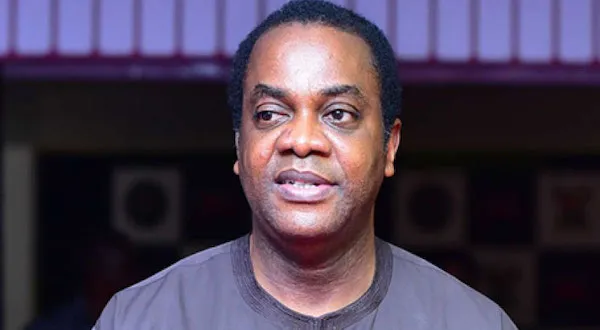
The presidential candidate of the Peoples Redemption Party, Donald Duke, has compared opposition parties supporting President Bola Tinubu’s 2027 re-election to the political parties that backed former military ruler Sani Abacha's transition plan.
Duke, who was once the governor of Cross River State, made this comment during an interview on ARISE News on Thursday. He took aim at some opposition parties for backing Tinubu even though they are supposed to be in opposition.
He brought up the term “five leprous fingers,” which is a phrase from Nigeria’s political history. It refers to the five political parties that were registered during Abacha’s military rule in the 1990s.
“Before I go into that, you know, you talked about the opposition, some of the opposition parties, um, supporting the president. It was reminiscent of what happened in, uh, Abacha’s transition.
“You know the five leper’s fingers? Yes. So you now have four leper’s fingers because one of the fingers has been, has dropped off,” he said.
This phrase was created by the late Chief Bola Ige, who was a former governor of Oyo State and a well-known opposition leader. He used it to criticize the five parties that were formed under Abacha’s transition plan.

The parties included the United Nigeria Congress Party, National Centre Party of Nigeria, Grassroots Democratic Movement, Democratic Party of Nigeria, and Committee for National Consensus.
In 1998, all five parties picked Abacha as their only presidential candidate. This decision faced heavy criticism as many saw it as a way to keep military rule disguised as civilian governance.
Abacha passed away on June 8, 1998, before he could complete this plan. After his death, General Abdulsalami Abubakar took over and dissolved the parties. He then introduced a new transition plan that eventually led to the return of civilian rule in 1999.
Duke’s comments come at a time when political changes are happening ahead of the 2027 general elections. Opposition figures are divided on how to approach the challenge against Tinubu’s re-election.





Comments
No comments yet.