FG gets final report for $500m World Bank AGROW programme
The Federal Government has received the final report for the $500 million AGROW programme from the World Bank, aimed at improving agricultural value chains in Nigeria.

The Federal Government has got the final report from the National Technical Working Group on the $500 million Sustainable Agricultural Value Chains for Growth Programme (AGROW) supported by the World Bank.
Vice President Kashim Shettima shared this news at the Presidential Villa in Abuja on Tuesday.
Mr Shettima said receiving the final report marks the end of the programme's design phase and the start of its implementation.
He added that the AGROW programme will help connect farmers with national planning and policy-making decisions.
The VP pointed out that the agricultural sector has struggled with the gap between farmers who work the land and the systems that determine the value of their work. The government aims to reduce this gap.
AGROW programme
The $500 million World Bank-supported programme was created through seven zonal consultations with 32 states. This shows that local governments are more committed to agricultural development.
It also highlights the states' willingness to take on more responsibility for productivity, infrastructure, extension services, and market development.
Mr Shettima described the AGROW programme report as the end of a design process that puts farmers back at the heart of Nigeria’s economy.
“Today marks the transition of AGROW from programme design to implementation,” he said.
He emphasized that the World Bank's $500 million programme for Nigerian agriculture aims to build a plan based on farmers' real needs. It will be delivered through Nigeria’s states and is expected to attract private investment to grow agriculture beyond mere subsistence.
The Vice President mentioned that agriculture contributes 23 percent to Nigeria’s GDP and supports 34 percent of the country's workforce. He said this sector should not be treated lightly or funded on the sidelines.
He explained that no other sector supports as many livelihoods or affects as many households as agriculture does. Many Nigerians earn a living from farming.
“When yields rise, food prices drop, rural incomes improve, industries get raw materials, and pressure on our cities and foreign reserves eases. When yields fall, the whole economy feels the pain of hunger.
“Farm productivity is about growth, jobs, food security, and reducing poverty. What happens on the farm affects the whole nation,” Mr Shettima stated.
The Vice President expressed happiness with the response from states, saying it shows the opportunity in front of the nation.
He stressed that the involvement of 32 states in shaping AGROW shows both the urgent challenges in agriculture and the growing interest in agricultural development and investment across Nigeria.
Implementation
Regarding how the programme will be implemented, Mr Shettima said that of the $500 million, $355 million, which is 71 percent, will be used through the participating states.
“This rightly positions State Governments at the forefront because agriculture happens in our communities, Local Government Areas, and States.
“However, the participation of 32 States also shows that $500 million is not enough to meet the high demand or close the long-standing gaps in extension services, infrastructure, technology, processing, and market access. The need is clear. The funds are not yet enough,” the Vice President explained.
He praised the National Technical Working Group members for their knowledge, commitment, and discipline in creating the report.
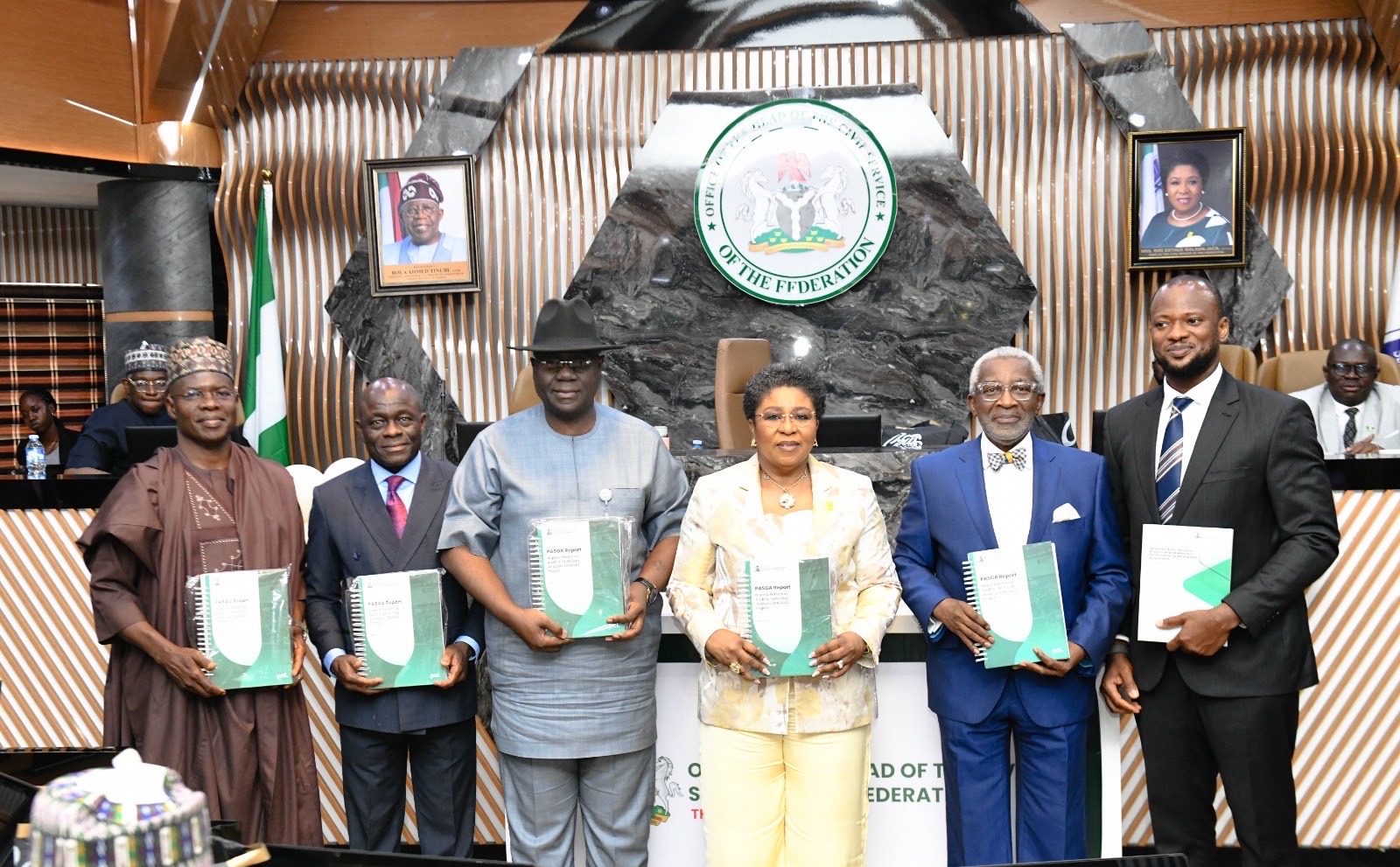
Mr Shettima said that by connecting federal and state institutions, the private sector, and development partners, the programme was inclusive, based on evidence, and technically sound.
“I hereby accept the Final Report and approve the formal end of the National Technical Working Group, as its work has been fully completed. The responsibility now goes to the Federal Ministry of Agriculture and Food Security, which will lead the National Steering Committee and host the Project Coordination Office,” he declared.
He also recognized the Presidential Food Systems Coordinating Unit for managing the design process and acting as the Secretariat for the Technical Working Group.
Finance Minister Taiwo Oyedele praised all partners involved for their dedication.
Mr Oyedele said that presenting the report is a critical step toward implementation. It shows what can be achieved when all parties work together.
Speaking on the importance of AGROW, the minister said the programme is not just about food production. It is a key part of Nigeria’s economic transformation, stability, and job creation.
Agriculture and Food Security Minister Abubakar Kyari commended Mr Shettima for his role in rallying stakeholders for the AGROW programme, seen as a major step forward in Nigeria's agriculture.
He assured everyone that the ministry is committed to implementing the programme successfully, in line with the Tinubu administration's Renewed Hope Agenda.
Mr Kyari said the completion of the programme report by the National Technical Working Group (NTWG) now focuses on the next stage, which includes the borrowing plan, financing agreement, and legal opinions to move from design to implementation.
World Bank support
In her comments, Bertine Kamphuis, the World Bank Programme Leader for AGROW, updated the Vice President on the working group’s national assignment. This was started by President Bola Tinubu and the Vice President.
She assured the Nigerian government of the bank’s ongoing support. With the final report, Nigeria can do more to improve food security and lift people out of poverty.
Ms Kamphuis also noted that the PSFCU played a key role in coordinating the states. She highlighted that stronger private sector involvement is needed throughout Nigeria’s agricultural value chain.
She supported creating the right policies and environment for the private sector to engage and emphasized that critical institutions like the Bank of Agriculture must fulfill their roles in this plan.
Initiative’s objectives
Earlier, Nasarawa State Governor Abdullahi Sule told Mr Shettima about the commitment from local governments. He said that during a Nigerian Governors’ Forum (NGF) meeting, the World Bank had informed the governors about the working group's goals and the initiative.
Mr Sule praised the Vice President for the programme opportunity, which enables states to maximize the initiative. He added that the governors fully support the programme.
Kaduna State Deputy Governor Hadiza Balarabe also expressed the state’s readiness to benefit from the initiative.
Ms Balarabe assured the Vice President that the state government would set up a state-level coordination mechanism for timely implementation of the programme.
Marion Moon, the Technical Advisor to the Vice President on Agriculture and Executive Secretary of the Presidential Food Systems Coordinating Unit (PFSCU), highlighted the key achievements of the National Technical Working Group (NTWG). She said the group created an eight-indicator framework to identify priority agricultural value chains. This was done using an agroecological approach to match crops and investments to Nigeria’s soils, rainfall, and growing conditions.
She added that the group held seven zonal consultations with 32 states and key agricultural stakeholders. The final AGROW programme design was informed by consolidated feedback from these stakeholders.


Comments
No comments yet.