Floods Displace Nearly 72,000 in Katsina, More than Banditry
In Katsina State, floods have displaced almost 72,000 people from January 2025 to January 2026, surpassing the number displaced by banditry.

Almost 72,000 people were displaced by floods, heavy rainfall, and windstorms in Katsina State between January 2025 and January 2026. This is more than the nearly 60,000 people displaced by banditry and kidnapping during the same time, according to the International Organisation for Migration (IOM).
More than 138,000 people were displaced by reported incidents in the state during this one-year period.
Sharon Dimanche, the Chief of Mission of IOM Nigeria, shared these figures on Friday at a media briefing about displacement and peacebuilding in North-west Nigeria, held in Katsina.
“Almost 72,000 of those displacements followed floods, heavy rainfall, or windstorms. Almost 60,000 were linked to armed banditry and kidnapping,” Ms Dimanche said.
She pointed out that insecurity is not the only reason for displacement in Katsina. Families who are forced from their homes due to violence or harsh weather often face similar problems.
These problems include loss of jobs, disrupted schooling, fear, uncertainty, and pressure on host communities.
“A family does not experience displacement in categories,” she said.
737,073 Displaced Across North-west
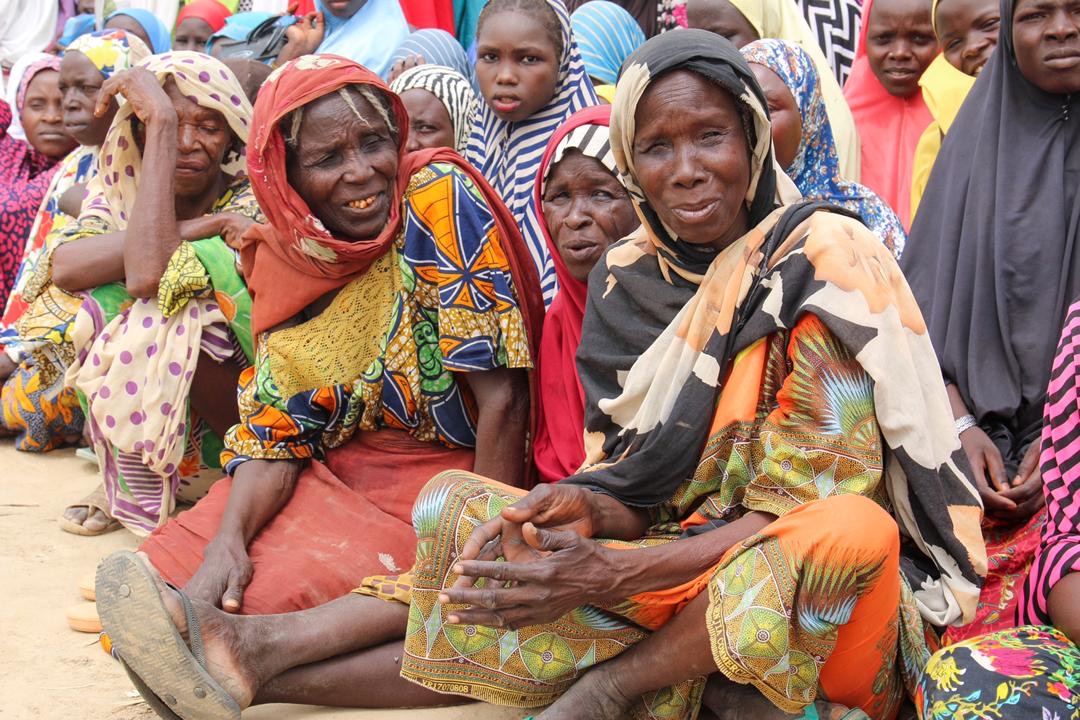
IOM stated that its latest assessment found 737,073 internally displaced people across the North-west states. Almost 181,000 of them are in Katsina, while more than 261,000 are in Zamfara.
The agency also noted nearly 147,000 returnees across the North-west, including more than 37,000 in Katsina.
Among those displaced, banditry and kidnapping made up the largest share. IOM reported that almost 620,000 of the over 737,000 displaced people, around 84 percent, were forced from their homes due to armed banditry and kidnapping.
Ms Dimanche emphasized that the crisis affects more than just the North-west. Insecurity and displacement disrupt food production, education, jobs, local economies, and community bonds.
“What is happening in the North-West is not simply a regional issue. It is a national issue,” she said.
While displacement continues, IOM also noted that some people are returning to their communities. Ms Dimanche mentioned that in the North-west and North-central regions combined, the number of internally displaced people fell by nearly five percent between October 2025 and February 2026, while the number of returnees rose by nearly five percent.
But she cautioned against thinking that every return is a lasting solution. “The question is not simply: Have they returned? The real question is: Can they stay? Can they rebuild their lives? Can they feel safe again?” she said.
She added that returnees need security, jobs, schools, and other basic services. Conditions that forced them to leave must also be tackled.
Early-warning Committees
The briefing also covered the Conflict Prevention, Crisis Response and Resilience (CPCRR) project. This project is being carried out in Katsina and Zamfara with funding from the European Union.
IOM is working with Mercy Corps and the Centre for Democracy and Development on this project. It focuses on conflict prevention, crisis response, resilience, and community stability in selected local government areas in Katsina and Zamfara.
Jean Nahesi Kutumbakana, an IOM programme official, shared details about the project. He said they have completed about 87 percent of their planned activities, with the remaining work expected to finish before the 18-month project ends.
He mentioned that 80 community peace and resilience committees were formed in Katsina and Zamfara. Also, 1,700 community members and other stakeholders were trained in conflict prevention, early warning, and early response.
IOM has also worked with 160 key informants along livestock routes. They monitored 41 movements involving 2,405 herders and 60,044 livestock. Mr Kutumbakana said they produced eleven early-warning and transhumance flow-monitoring reports.
He explained that informants along livestock routes alert communities about approaching herders. If crops have not been harvested, communities can ask herders to wait until the harvest is done. This helps prevent livestock from entering farms and causing disputes between farmers and herders.
The community peace committees also pass information through technical and standing committees. This way, disputes can be resolved before they grow bigger. He noted that incidents have dropped significantly in communities where the peacebuilding and early-warning system works, but there were no specific figures provided to show the reduction.
Psychosocial and Livelihood Support
IOM reported that 50 members of psychosocial mobile teams, made up of 25 men and 25 women, have been trained to offer psychosocial and protection services. These teams have supported 49,316 people.
Additionally, 552 people, including women, men, young people, and persons with disabilities, received help for their livelihoods along with mental health and psychosocial support. The programme also distributed 4,000 economic tree seedlings to 2,000 households and climate-smart agriculture kits to 300 beneficiaries.
Two hundred beneficiaries in Zamfara received livestock kits, and IOM plans a similar distribution for Katsina. Mr Kutumbakana mentioned that the programme has identified 300 at-risk young people and women, mainly in Zamfara, for peacebuilding and skills training. They will receive livelihood kits after completing the training.
Funding Challenges
Ms Dimanche noted that the CPCRR project is nearing the end of its implementation at a time when IOM and other humanitarian organizations are facing funding challenges. She also pointed out that insecurity and limited access make it hard to track or assist displaced people and returnees in some areas.
IOM regularly checks its displacement data because people keep moving between locations. Ms Dimanche warned that the progress made under programs that are ending may be hard to maintain without ongoing support and government involvement.
“If we are serious about reducing displacement, we cannot only become better at responding after people flee,” she said. “We have to become better at preventing the conditions that force them to flee in the first place.”



Comments
No comments yet.