Guinea's Fight Against Terrorism: What Needs to Be Done
Guinea is at risk from terrorism as attacks rise in Mali. The government is taking steps to combat this threat, but internal issues need attention.
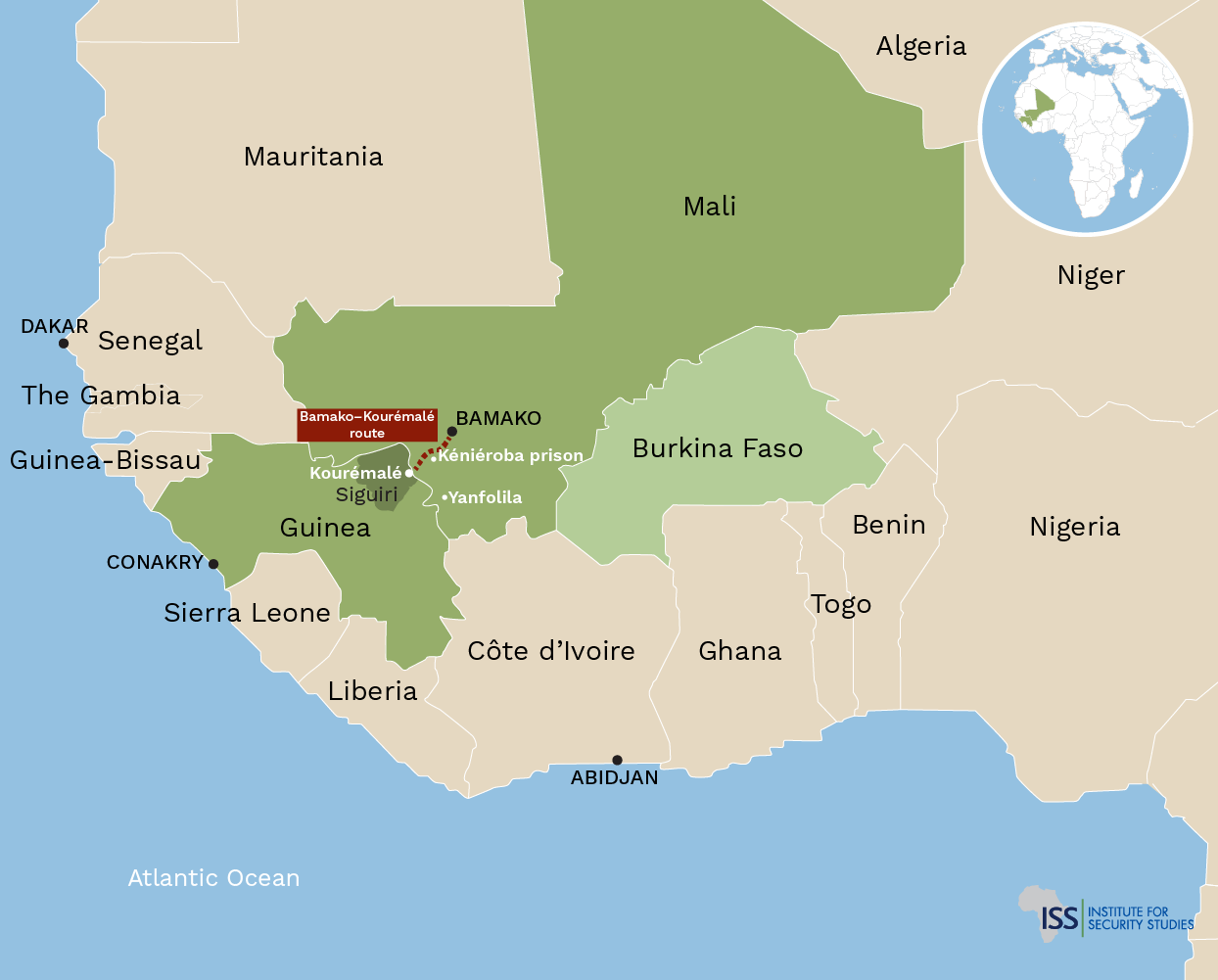
Guinea has not faced violent attacks from extremist groups yet, but the threat from neighboring Mali is increasing. The March indictment of 11 suspected members of Jama’at Nusrat al-Islam wal-Muslimin (JNIM) in Guinea’s gold mining area near Mali shows how exposed the country is to the unrest in the central Sahel.
In the past two years, attacks by militant groups in Mali close to the Guinean border have risen. They have targeted a police checkpoint, a customs post, and Chinese mining sites near Guinea’s border.
This year, the Yanfolila checkpoint in Mali, which is 50 km from the Guinea border, was hit on 16 March. On 4 July, JNIM attacked the Kéniéroba prison, where several suspected terrorists are held. Since early May, JNIM has been disrupting cargo convoys along the Bamako-Kourémalé route to Guinea.
Guinea's Response to Terrorism
Guinean officials are taking the threat of terrorism seriously. On 22 April, President Mamady Doumbouya set up an interagency Special Operations Command centre to stop and fight terrorism. This is part of a strategy that started with the establishment of the Special Forces Group in 2018 and grew to include the Rapid Intervention Forces Group in 2021.
These security measures see the terrorist threat as something from outside that must be dealt with by force once it enters Guinea. This view ignores the internal weaknesses in the country, some of which need non-security measures to stop armed groups from taking root.
Three main issues in northwestern Guinea need attention: ongoing community conflicts, weak regulation of artisanal mining, and strong trafficking networks. Insecurity along the border exposes these weaknesses and could help extremist groups gain a foothold.
Along the poorly marked 858 km Guinea-Mali border, community disputes are fueled by arguments over gold resources. On 12 April, there were clashes between gold miners from the Malian village of Danka and those from Sèkè Kolenda in Guinea’s Siguiri prefecture over a mining site. This fight led to the beheading of a young Guinean hunter and sparked unrest among local women.
Similar incidents have happened before. While not the main way terrorists take root, these events can encourage the spread of violent extremism. This situation reflects findings from the Institute for Security Studies in similar areas.
Another major vulnerability is the weak regulation of artisanal and small-scale mining by the Guinean government. In 2025, artisanal gold made up 69 percent of the country's total exports, amounting to 49.6 tonnes, much of which came from this border area. Many informal miners come to this region, mainly from Burkina Faso and Mali.
Like in Burkina Faso near its borders with Benin, Niger, and Côte d’Ivoire, this area risks becoming a financial center for violent extremists using the illegal gold market and smuggling routes.
Illegal arms trafficking and smuggling networks are common in this border area and pose a real security threat. Extremists could use these illegal markets to support their logistics needs, similar to patterns seen in the wider region.
The supply crisis in Mali has also led to increased fuel smuggling. Since September 2025, JNIM has been blocking traffic on important trade routes linking Mali to Senegal and Côte d’Ivoire, aiming to hurt Bamako economically by cutting off essential goods.
Due to ongoing insecurity along the main Dakar-Bamako and Abidjan-Bamako routes, Malian authorities are now looking at the Conakry-Bamako corridor as an alternative supply route. This change could push JNIM to increase their activities along the Bamako-Kourémalé route.
Considering these internal weaknesses, Guinea needs to rethink its approach to the threat of terrorism. The response should not just be military. It should focus on the underlying issues that can lead to violent extremism. This means first understanding the full scale of these risks.
Guinea needs a national counter-terrorism strategy that combines military actions with governance reforms. Under the new Special Operations Command, this strategy should strengthen border security and increase surveillance to neutralize hidden cells and prevent terrorist entry.
Improving cross-border security also needs to renew military partnerships with Mali, Côte d’Ivoire, and Senegal. Sharing intelligence and expanding joint patrols will be vital to stopping illegal smuggling networks.
One challenge to regional security cooperation is the tension between the Economic Community of West African States and the Alliance of Sahel States. Still, the Senegal River Basin Development Organisation could help spark military cooperation between Guinea, Mali, and Senegal.
Local communities should be actively involved in grassroots surveillance and information-sharing networks. To achieve this, there must be stronger civil-military cooperation that builds trust and involves locals in preventing threats.
In the long run, security measures should be paired with actions that target the root causes extremist groups take advantage of. A good starting point is to formalize and monitor artisanal mining. The ministries of mines, security, civil protection, and defense must work together to tighten regulations and prevent these areas from becoming sources of terrorist funding.
Since these issues cross borders, Guinea should collaborate with Mali to align regulations on informal mining. Better oversight can help reduce chances for extremist financing and ease the community tensions caused by gold mining.


Comments
No comments yet.