How Trump's New Sanctions on Iran Might Affect Nigeria and Other African Nations
The US has imposed new sanctions on Iran, aiming to isolate its economy. This move could have significant implications for Nigeria and other African nations involved in trade.
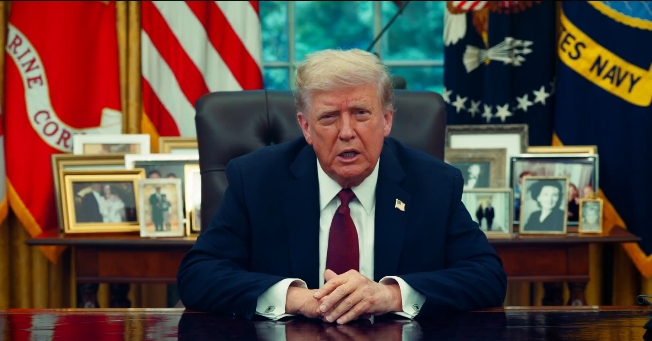
On Monday, the US announced new sanctions against Iran. The aim is to isolate Iran and hurt its already struggling economy.
President Donald Trump wants to increase economic pressure on Tehran to gain an advantage in the ongoing war, which started in February after an unprovoked US and Israeli attack. This attack killed former Supreme Leader Ali Khamenei and 165 schoolgirls and teachers.
On Monday, US Treasury Secretary Scott Bessent warned that the US plans to sever ties with countries that do business with Iran. They will also cut those businesses off from the dollar-based financial system.
He called this “Operation Economic Outcast” and said it is the “greatest financial offensive ever.”
Experts believe this shows Washington’s failure to defeat Iran militarily after six months of war. Owei Lakemfa, president of the Society for International Relations Awareness (SIRA), said the US action is illegal under international law.
“What the US wants is to make its own problem the problem of other states. But it has no right to sanction two states for trading with each other,” he said.
Iran’s biggest trading partners are the main targets of this policy. This includes China, which buys 90 percent of Iranian oil; Iraq, which needs Iranian electricity and gas; India, one of Iran’s top five partners; Turkey, which imports Iranian natural gas and exports goods to countries south; and the UAE. Last week, the UAE announced it would stop all trade and financial transactions with Iran.
Even though they trade less than these countries, African nations also have strong economic and diplomatic ties with Iran. Iran has 24 embassies in Africa, including Nigeria, and 19 African countries have embassies in Iran.
In 2024, Iran reported that trade with African nations reached $1.2 billion, with non-oil exports making up most of that. In 2025, it announced that trade had grown by 85 percent.
For Tehran, ties with Africa help it avoid Western sanctions that have lasted for decades and reduce dependence on major trading partners.
In 2024, Iran exported $680.12 million to 37 African nations, with Ghana, Kenya, and South Africa as the top three partners. Together, they make up almost 63 percent of the total export value.
Exports to Ghana were worth $243.49 million, followed by Kenya at $103.27 million and South Africa at $80.66 million.
Iran imported $107 million from 21 African nations that same year. South Africa led with $22.31 million, then Ghana at $17.74 million, and Seychelles at $13.42 million.
These numbers are low compared to Iran's trade with many other countries but still show its economic presence on the continent.
Years back, Iran set a goal to boost trade with African countries to over $2 billion. Last year, it increased trade with Africa, exporting to 32 nations, up from 27 the previous year.
Iran’s main exports to Africa include steel, iron products, urea, petrochemicals, bitumen, cement, motor oil, and food items.
Iran's relationship with Africa also covers finance, telecommunications, logistics, technology, and investment. For example, MTN Group from South Africa holds a 49 percent stake in Irancell, Tehran’s second-largest mobile network operator. The US has pressured the company to leave Iran.
Tehran also owns a 15 percent stake in the Namibian state uranium mine, Rössing Uranium.
In 2023, Kenya revealed plans for Iran to set up a car manufacturing plant in Mombasa. Similarly, Zimbabwe signed an agreement for Iranian companies to work with a local firm on a tractor manufacturing plant.
Both countries also have cooperation agreements on fisheries, animal health, livestock, and information technology from previous years.

But the small trade between Africa and Iran means it is not a top concern for Trump's sanctions.
The new secondary sanctions likely won't hit African nations hard. No African country is listed among the 12 entities impacted by the US sanctions on 60 groups involved with Iran.
Also, no African nations are in the top 20 countries Iran trades with. Data from the World Trade Organization shows Ghana, the main destination for Iranian exports in Africa, ranks 22nd globally. South Africa, the largest African exporter to Iran, is 41st globally, while Ghana is 43rd.
Nigeria is not in Iran’s top 10 export destinations in Africa and sits 63rd out of 112 trading partners. Official records show Nigeria is not among Iran’s sources of imports, with exports to Nigeria totaling only $2.12.
Yusuf Bako, an International Relations lecturer at Baze University, warned that the low trade between Iran and African nations might not completely shield them from Trump's campaign.
He noted that the US goal is to isolate Iran through economic sanctions that could affect anyone who opposes its plans.
“This scattergun approach is very Trumpian; it is a mob boss mentality in applying pressure, just recall the tariffs episode.
“This economic move shows the US administration is flexing its muscles. It has faced a strategic and military defeat in the Middle East and damaged its reputation among allies in that region,” he said.
Mr Bako pointed out that while smaller states are not primary targets, they could face US backlash by ignoring its demands.
He also suggested Nigeria should take these secondary sanctions seriously, especially after Trump’s recent accusations of Christian genocide against the country.
“This threat of sanctions will have to be taken seriously by Nigeria, given the recent interaction with the US regarding the wrongfully alleged ‘Christian genocide’,” he said.
“There is an organized Shia community in Northern Nigeria with strong ties to Iran. The US might try to connect dots where none exist to support its claims.”
He added that “Nigeria suffers from numerous internal conflicts” and cannot afford “new external pressures.”
Mr Lakemfa, however, argued that these new secondary sanctions won’t have significant effects because sanctions on Iran are not new.
“The thing about the sanctions against Iran is that they have been in place for a long time,” he said, referencing sanctions from the US and other Western countries since the 1979 Islamic revolution.
“Also, the US has always used sanctions. It has done it against Venezuela, Cuba, and several other countries, including Syria. So, it is a regular practice,” he said.
Mr Lakemfa also mentioned that the US cannot afford to push other countries away from using the dollar because of its own domestic issues.
“The US benefits from controlling the global financial system and from other countries using the dollar. It uses monetary policy to manage domestic inflation and the economy, and it is under pressure right now.
“That’s why countries trying to move away from the dollar can be seen as challenging US influence,” he added.
Comments
No comments yet.