Investigation: Health Challenges Persist Despite Huge Spending in Osun's Rural Clinics
Osun's rural clinics struggle with neglect and poor conditions despite funding. Caregiver Rashidat Lamidi highlights the urgent need for improvements.
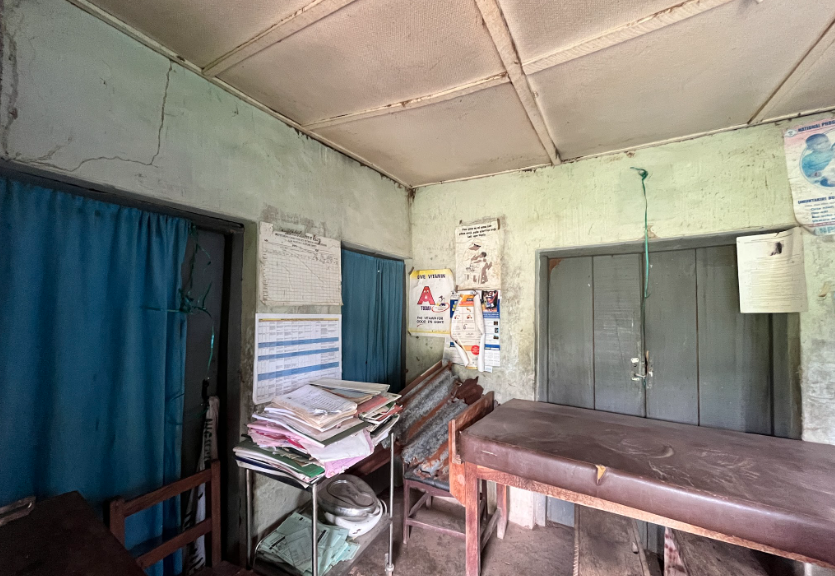
The tall grasses show neglect at Agbinpa Primary Healthcare Centre in Ede South Local Government Area, Osun State. They cover parts of the compound, brushing against walls that have peeling paint and deep cracks. Some parts of the facility are unusable, while others are in bad shape after years without major repairs.
Next to the health centre is staff quarters built in March 1999. This reminds everyone of how long the facility has served the community and how little has changed since then.
Getting to the facility is hard. This reporter spent about an hour on a commercial motorcycle from Osogbo to Agbinpa, travelling along long stretches of bumpy roads.
In late May, Rashidat Lamidi was seeing patients. For years, she has managed the health centre as its only caregiver and administrator. Mrs. Lamidi cares for pregnant women, children, and other patients. She responds to emergency calls even after leaving work, cleans the surroundings, and sometimes buys basic supplies when they run out.
"Even if I’m at home and somebody comes to call me because a child is sick or a woman wants to give birth, I will come," she said.
Mrs. Lamidi said the state government pays her salary regularly. But it does not pay attention to the facility, even with many politicians and officials visiting over the years, especially during election times.
"They come here, but they don’t do anything."
The poor state of the building affects more than just the structure itself.
Since the facility has no working laboratory, patients who need basic blood tests must travel about 26 kilometres to Ede. Although a few delivery tools were available during PREMIUM TIMES’ visit, they were not enough for the number of patients the facility serves. Women in labour must buy gloves for the nurse and purchase methylated spirit and other supplies before getting care.
As the only staff member, Mrs. Lamidi worries about the health centre’s future after she retires.
"I don’t know what will happen to this place," she said.
Residents count the cost
The poor state of the PHC does not lessen its importance for the residents of Agbinpa. It has only made healthcare harder to reach and more expensive.
Iya Beji, a woman who gave birth to all five of her children at the facility, praised the dedication of the lone nurse.
"The nurse is good. It is only because of the condition of the hospital that people do not come here," she said.
According to her, patients needing scans are sent to Ede, where transport costs about N6,000.
"If someone is sick, what can we do? We have to go."
Abdulrahaman Babatunde, another resident, said commercial motorcycles rarely use the route because of its condition.
"If you hire a bike, it can cost N6,000," he said. "If the rider waits for you, they charge as much as N10,000."
Mr. Babatunde said farmers also struggle when taking produce to nearby markets, which limits economic activity in the community.
Electricity is another issue for the locals. Private operators of solar charging points charge between N400 and N700 to charge their phones or power banks.
"There has been no light here for a long time," Mr. Babatunde said. "The poles and wires are still there, but there is no electricity."
Another community, another barrier
About an hour’s ride from Osogbo, Abudo PHC in Egbedore LGA shows a different but equally worrying situation.
Here, the biggest problem to healthcare starts long before patients reach the facility.
The road to the community is so bad that commercial motorcyclists avoid it. When this reporter arrived around 1 p.m., the facility was locked.
Through dusty louvre windows, patient registers and other documents could be seen scattered across the rooms. Cobwebs hung from parts of the building, suggesting that some areas had not been used for a while.
No health worker was on the premises. Instead, phone numbers were written on a wall for anyone needing help to call.
This reporter called the numbers several times, but the calls either did not connect or the phones were off.
Chief Alao, a community leader, said Abudo’s PHC serves both the community and several nearby settlements.
He said years of bad road infrastructure have isolated the area, affecting access to healthcare and the livelihoods of residents.
"This road was not built by the government," he said. "The community did it ourselves, although there are still many potholes."
Kemi Olawole, a palm kernel processor, said the facility sends patients they cannot treat to a health centre in Ede, about 16km from Abudo.
Ms. Olawole added that residents now rely on a vendor who brings orthodox medicines to the community on a motorcycle because there is no pharmacy in Abudo.
Without him, she said, many residents would have to travel outside the community to buy essential medicines.
For another resident, Kehinde Olumide, who also works in the palm kernel oil trade, transportation remains one of the community’s biggest challenges.
"We hardly see motorcycles here," he said. "And when you find one, it is very expensive because of the road."
A renovated facility, familiar problems
About 36 kilometres away, in Ekusa, Odo-Otin LGA, residents said their PHC was renovated in 2020.
An inscription on the building states that the project was carried out by the Odo-Otin Local Government and opened on 15 March 2020.
But years later, many of the issues affecting healthcare delivery still exist in the community.
When PREMIUM TIMES visited, parts of the premises were covered with weeds. The hospital’s borehole was not working.
Unlike Agbinpa, where the lone nurse openly discussed the facility’s challenges, health workers in Ekusa would not speak. One who asked to stay anonymous said they were not allowed to discuss issues about PHCs.
"Many people have come here asking questions," she said. "If it is something I cannot talk about, it is better I don’t say anything. During our meetings, we are always told that if anyone asks questions about PHC, we should refer them to the right authorities."
She directed this reporter to the Osun State Primary Health Care Development Agency, explaining that decisions about the facility are made centrally.
Residents later explained that health workers’ reluctance to talk is common. They said the facility usually closes around 4 p.m. Patients arriving later must wait until the next day or go to another community for treatment.
A woman who introduced herself as Mojisola said residents seek treatment elsewhere when the facility cannot meet their medical needs.
Abdulrahaman Wasiu, a spiritual and youth leader in the community, said nothing has changed since the 2020 renovation.
"People only came to paint the building," he said. "Apart from that, nothing much changed."
Pointing to his hand, which he said had once suffered a dislocation, Mr. Wasiu recalled visiting the health centre for treatment but leaving without care.
According to him, the facility has existed as long as he can remember, but has always been seriously understaffed.
When Mr. Wasiu took this reporter back to the facility, they met another man wearing an "Imole cap" who said he supported Governor Ademola Adeleke. He confirmed the health workers’ silence and that inquiries should go to the Osun State PHCDB.
While he agreed that the facility needs attention, he said Governor Adeleke would step in if he knew about its condition.
Following the money
The problems seen during PREMIUM TIMES’ visits suggest that, despite years of government investment and previous reports pointing out similar issues, many challenges in health facilities remain unsolved.
The conditions at Agbinpa PHC sharply contrast with the Osun State government’s increasing financial commitment to healthcare.
From 2020 to 2026, the state budgeted about N157.74 billion for health, based on an analysis of approved budget documents by PREMIUM TIMES.
In 2020, the state approved N7.2 billion for health, making up 6.02 percent of the N119.55 billion budget. The allocation increased to N9.8 billion (8.93 percent) in 2021 and N12.4 billion (9.56 percent) in 2022.
Health spending peaked at N17.92 billion, representing 12.96 percent of the state’s N138.27 billion budget in 2023, the highest proportion recorded during that period.
Although the percentage later dropped, the actual amount for health allocations kept rising. The state budgeted N18.6 billion for health in 2024, N32.58 billion in 2025, and N59.24 billion in the approved 2026 budget.
Budget implementation data reviewed by PREMIUM TIMES also shows similar trends.
According to BudgIT’s State of States reports, Osun’s capital expenditure rose from N18.7 billion in 2020 to N118.4 billion in 2024. The reports also show that actual health spending increased from N10.6 billion to N17.7 billion over the same period, while the Ministry of Health and Human Services recorded better performance ratings.
On paper, these figures suggest an increase in public investment in healthcare. The question is how these investments have affected services at the community level.
To find out, PREMIUM TIMES looked at procurement records published by the state government.
Procurement records
The records show that between 2020 and 2024, the Ministry of Health awarded contracts worth hundreds of millions of naira for renovating health facilities, buying medical equipment, installing solar power systems, repairing boreholes, and other primary healthcare projects.
In 2020, the ministry awarded a N35.7 million contract to Olupopson Nigeria Limited for rehabilitating and upgrading General Hospital, Ifetedo. It also approved N6.8 million for purchasing 4,000 cartons of noodles, and both projects were marked as completed on the state’s procurement portal.
The following years saw continued spending on medical equipment, including surgical lamps, X-ray machines, emergency stretchers, ultrasound scanners, and other supplies.
Most contracts reviewed by PREMIUM TIMES were marked as completed, while a few remained active or had no completion status.
The largest investments reviewed during this investigation occurred in 2024.
Procurement records show that the state awarded multiple contracts valued between N426 million and N592 million for renovating PHCs across the state’s three senatorial districts.
Separate contracts worth over N188 million each were also awarded for supplying and installing solar power and inverter systems across the three districts, while additional contracts ranging from N119 million to N556 million were approved for drilling and repairing boreholes.
At the time PREMIUM TIMES reviewed the records, many of the 2024 projects were still listed as "Active" on the state’s procurement portal.
However, the procurement documents do not specify which individual PHCs are included in the various phases of the projects.
As a result, PREMIUM TIMES could not confirm if Agbinpa PHC in Ede South, Abudo PHC in Egbedore, or Ekusa PHC in Odo-Otin were among the facilities chosen for renovation, solar installations, or borehole projects.
Statements by government
Throughout this investigation, the state government has insisted that strengthening primary healthcare is one of its main goals.
During an inspection of renovated PHCs in Telemu, Ola-Oluwa LGA, and Ido-Osun, Egbedore LGA, in March 2025, Governor Adeleke said his administration was focused on improving healthcare access, especially for rural residents.
According to the governor, the state started rehabilitating and upgrading PHCs to improve healthcare delivery at the grassroots.
"I am glad that our people are now benefiting from the upgrade and renovation of the health centres. I assure Osun people that we will not relent on upgrading our health facilities," Mr. Adeleke said.
He added that the government is focusing on improvements at the primary healthcare level before extending help to secondary and tertiary facilities. He argued that stronger primary healthcare would help in early detection and treatment of illnesses.
In his third anniversary broadcast in November 2025, the governor also mentioned that his administration had rehabilitated more than 200 PHCs across the state.
According to him, the projects included structural repairs, clean water systems, fencing, roof repairs, furniture, sanitation facilities, and solar power. He added that another phase covering nearly 200 additional facilities was already in progress.
The governor also highlighted the revitalisation of the Osun Health Insurance Scheme, increased insurance coverage, free surgical interventions across the state’s nine federal constituencies, and a $500,000 performance award for the state’s progress on universal health coverage indicators.
Yet, in the three communities visited, this reporter found crumbling health infrastructure, limited services, staffing shortages, and difficult access to healthcare, suggesting that for some rural communities, the benefits of the state’s healthcare investments are hard to see.
Government cites funding constraints, ongoing reforms
PREMIUM TIMES contacted the Osun State Primary Health Care Development Agency regarding the findings.
In a phone interview, the agency’s Executive Secretary, Adesina Igbalaye, repeated that the state had invested a lot in primary healthcare.
He said the agency does monthly and quarterly assessments of health facilities to check infrastructure, staffing, equipment, and service delivery. The reports help identify facilities needing help.
According to him, the government chose a strategy of upgrading one main PHC in each ward.
The selected facilities, he said, receive renovations, solar power systems, boreholes, medical equipment, and other improvements aimed at strengthening healthcare delivery.
Mr. Igbalaye also said the government introduced stipends for volunteer health workers who previously worked without pay and provided counterpart funding for health programmes with development partners.
In response to PREMIUM TIMES’ findings that the facilities visited lacked basic services, he said the ongoing revitalisation programme prioritises one main facility in each ward while other centres continue to provide routine services.
He attributed delays in extending improvements to all facilities to funding issues.
According to him, implementing parts of the programme slowed after disputes over local government administration affected access to local government funds starting in February last year.
He said the funding problem slowed the pace of ongoing projects, although work has continued in some facilities through other government interventions, including drug supply and regular support for primary healthcare services.
Mr. Igbalaye added that the agency’s assessments have helped identify infrastructure and service gaps across facilities, insisting that the government is committed to improving access to primary healthcare across the state.
Agency report echoes field findings
PREMIUM TIMES requested records of the PHCs revitalised under the state’s programme, the criteria used to select focal facilities, and the agency’s most recent assessment reports.
Mr. Igbalaye provided a copy of the board’s “5-Day Routine Quarterly Quantitative Integrated Supportive Supervision at PHCs in 15 Selected LGAs” report for the second quarter of 2026.
The report, prepared by the board’s Directorate of Planning, Research and Statistics, said supervision teams visited at least 150 PHC facilities across 15 selected LGAs between 1 and 5 June 2026.
The exercise assessed health facility infrastructure, staffing, service delivery, medicine availability, immunisation performance, maternal and child health indicators, and data quality.
However, the report did not mention which 15 LGAs were assessed or list the facilities visited.
It also did not provide facility-level findings, making it impossible to independently determine if Agbinpa, Abudo, and Ekusa were included in the assessment or how each performed during the exercise.
Even so, the report acknowledged many of the issues residents described during this investigation.
It identified shortages of health workers, stock-outs of essential medicines and consumables, absenteeism among some health workers, poor record-keeping, and difficult road conditions affecting access to some rural facilities.
The report stated that stock-outs of malaria medicines were found at 50 facilities, while 20 facilities lacked oral rehydration salts (ORS), which are basic for treating diarrhoea.
It also noted that bad road conditions during the rainy season made it hard to reach some rural PHCs, while shortages of human resources remained a problem across the system.
Among its recommendations, the board called for buying essential medicines and consumables, converting ad hoc and volunteer health workers to permanent staff, better monitoring of staff attendance, and increased funding for supervision activities.
‘Buildings alone do not make PHCs functional’
The conditions seen by PREMIUM TIMES highlight serious weaknesses in Nigeria’s primary healthcare system. Investments in infrastructure do not always lead to accessible, quality healthcare, according to Sheriff Gbadamosi, Advocacy and Community Engagement Manager at Nigeria Health Watch.
Mr. Gbadamosi said PHC should be the first point of contact with the health system. When residents travel long distances for services that should be available in their communities, he said it raises questions about whether public investments are giving the expected results.
"Access should not be measured by the presence of a building alone," he said. "It should be measured by whether facilities are adequately staffed, stocked with essential medicines, and equipped to provide basic services."
He noted that while renovating health facilities is essential, infrastructure alone cannot improve health outcomes.
According to him, the experiences seen in Agbinpa, Abudo, and Ekusa show wider challenges facing Nigeria’s PHCs, including workforce shortages, weak supply chains, funding gaps, and governance problems.
Mr. Gbadamosi also expressed concern about the pressure put on lone health workers, like the nurse at Agbinpa PHC, who attends deliveries, responds to emergencies after hours, and sometimes buys basic supplies for patients.
"No PHC should depend entirely on the extraordinary commitment of one individual. Strong health systems are designed so that quality care does not rely on heroism," he said.
He added that facilities enrolled under the Basic Health Care Provision Fund (BHCPF) are expected to receive quarterly funding to improve infrastructure, reduce medicine shortages, and support more health workers.
The expert also linked the findings to Nigeria’s high out-of-pocket healthcare spending, noting that transportation costs, referrals, and the purchase of medicines and supplies put extra financial pressure on families and often delay treatment.
Commenting on the Osun State Government’s strategy of prioritising selected "focal" PHCs, Mr. Gbadamosi said focusing resources on designated facilities may be necessary where funding is tight, but warned that surrounding communities must not be left without access to essential healthcare.
He said the success of any revitalisation programme should be measured not by the number of renovated facilities but by whether residents have better access to timely, affordable, high-quality healthcare.




Comments
No comments yet.