Keyamo and the Risk of Judicial Decisions in Nigeria
Festus Keyamo discusses the risks of judicial decisions in Nigeria. He emphasizes the connection between judges and politicians, raising concerns about impunity in the system.
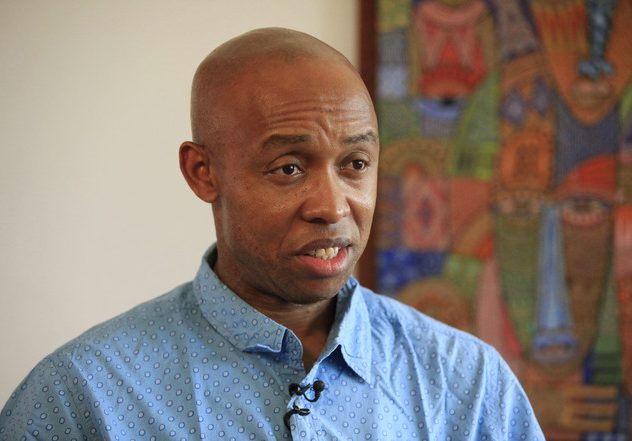

Nigeria’s Minister of Aviation Aerospace Development, Festus Keyamo (SAN).
Those, like Festus Keyamo, living under the false assurance that the heavens will not fall, stare in the wrong direction. They should fear instead for what may happen to the ground underneath them when some judges and their political patrons finally achieve the goal of rendering the courts irrelevant with a succession of noxious decisions. The final moments as the earth satiates its anger and the skies recede in one terminal ‘woosh!’ could be worse than a collapse of the heavens.
Right now, two phrases show how closely linked courts, judges, and politicians are in Nigeria. When politicians want to show their control over the courts, they say, "go to court!" When they celebrate a surprising win from a judge, they boast, "heavens will not fall!"
These phrases are part of Nigeria’s problem with impunity. This issue spreads across all areas, the executive, legislature, judiciary, schools, churches, and even the military. Those who have impunity want to keep it, and those who don’t have it want to get it.
Recently, the talk about impunity in Nigeria focused on the ruling on 5 November 2026 by Peter Lifu, a judge at the Federal High Court. He canceled the candidates of the African Democratic Congress (ADC) for the 2027 elections. This is just the latest of many surprising rulings from a judge known for being the go-to referee in the “endless family quarrels” of Nigeria’s politicians.
Much of the focus has been on what Peter Lifu decided. But the real problem started before this outcome. It shows what happens when the judicial system is taken over.
The case began on 2 September 2025 in the court of Emeka Nwite, another judge at the same Federal High Court. Nafiu Bala Gombe wanted the court to recognize him as the rightful national chairman of the ADC. He asked the court to remove David Mark and Rauf Aregbesola from their positions as chairman and secretary.
The party raised a procedural objection that went all the way to the Supreme Court. On 30 April, the Supreme Court returned the case to Justice Emeka Nwite for proper hearing.
Just four days later, on 4 May, Nafiu Bala Gombe wrote a letter to Chief Judge John Tsoho, claiming the case before Emeka Nwite was delayed and asking for a transfer to another judge. Oddly, the letter was dated 4 April, almost a month before the Supreme Court's decision. This did not make sense.
The day after getting Nafiu Bala's request, on 5 May, Chief Judge Tsoho forwarded it to the ADC's lawyer, Luka Musa Haruna, a Senior Advocate of Nigeria (SAN). Luka responded on 11 May, saying Nafiu Bala’s request was “an odious effort” to damage the trial judge's reputation. He asked for the case to return to Emeka Nwite for a speedy hearing.
On 8 May, after being informed of the transfer request, Emeka Nwite adjourned the matter indefinitely to wait for the Chief Judge's decision. Amid all this, on 14 May 2024, the National Judicial Council (NJC) recommended 12 judges to the president for elevation to the Court of Appeal, including Emeka Nwite. Six months later, the president still had not acted, and Emeka Nwite remained a High Court judge.
On 19 May, Chief Judge John Tsoho sent a new letter to Luka Musa Haruna (SAN), noting that the recommendation of Emeka Nwite made the reassignment of the case necessary. He informed the lawyer that he had “therefore, reassigned this suit to Hon. Justice P.O. Lifu for accelerated hearing.” There was no reason given for this choice.
At that time, Peter Lifu was already handling another case that sought to de-register the ADC. On 22 May, the Court of Appeal ordered “staying further proceedings” in that case. Just three days later, the Chief Judge sent another case to the same judge seeking a similar outcome. He ignored the prior order.

On 15 June, despite the Court of Appeal's directive, Peter Lifu ruled to de-register the ADC. Why would he then also decide on the leadership of a party he had just ordered de-registered?
Two weeks before this, on 1 June, ADC National Secretary Rauf Aregbesola wrote a four-page letter to Chief Judge John Tsoho. He protested the case reassignment, expressing “serious concerns.” He accused the Chief Judge of “administrative interference” and undermining the Supreme Court’s decision. The Chief Judge hardly reacted.
The ADC wasn’t the only one noticing the pattern. Law Akhigbe, who studied the trend, publicly questioned how so many politically sensitive cases keep ending up with the same judge. He worries about the implications of a judge repeatedly being in the spotlight of political disputes.
On 28 July 2026, the Court of Appeal overturned Peter Lifu’s decision to de-register the ADC. They accused him of “judicial impertinence” and called him a “misfit on the bench.” The NJC met after that but seemed unconcerned, as did Chief Judge John Tsoho.
In response to Peter Lifu’s latest ruling, Aviation Minister Festus Keyamo (SAN) joined the “heavens will not fall” crowd, using capital letters. Babafemi Ojudu, a former senator, responded thoughtfully, urging him to care about the country.
In another response, Olusegun Adeniyi pointed out that “when a minister of the Federal Republic, and a respected SAN, tells critics to keep quiet about a judgment with this history, he is not defending the judiciary.”
Everyone knows the political power of the judiciary is serious. That is why it needs to be protected carefully, not abused carelessly. Ignoring this can have serious consequences.
A clear example is Nazi Germany. Ernst Fraenkel reminds us in The Dual State that “administrative and general courts aided in the achievement of this condition…. the purpose being the achievement of a political aim.”
In Kenya, after the presidential election at the end of 2007, the judiciary was widely seen as “designed to serve the interest of the president and could not be trusted to pass impartial judgments.” This led to violence.
When pushed to the edge, they finally agreed to change their judiciary. In 2010, they began a reset under a new Chief Justice who had previously faced political detention and exile. He had never been a judge before.
Those, like Festus Keyamo, living under the false assurance that the heavens will not fall, stare in the wrong direction. They should fear instead for what may happen to the ground underneath them when some judges and their political patrons finally achieve the goal of rendering the courts irrelevant with a succession of noxious decisions. The final moments as the earth satiates its anger and the skies recede in one terminal ‘woosh!’ could be worse than a collapse of the heavens.


Comments
No comments yet.