Kogi LGAs paid back N2.1 billion loan for Yahaya Bello's children's school fees, EFCC witness tells court
An EFCC investigator testified that Kogi LGAs repaid a N2.1 billion loan for former Governor Yahaya Bello's children's school fees, linked to a larger corruption case.

An investigator from the Economic and Financial Crimes Commission (EFCC) on Tuesday continued to explain the commission’s investigation into the alleged diversion of N110.4 billion from Kogi State by former Governor Yahaya Bello and his co-defendants.
John Justice, the 20th witness for the prosecution, told the Federal Capital Territory (FCT) High Court that Keyless Nature Limited, a company mentioned in earlier proceedings, received N2.1 billion to pay school fees for Mr Bello’s children and his nephew’s son at the American International School, Abuja (AISA).
Mr Justice said the local government accounts in Kogi State repaid the loan between 2021 and 2024 while he was being led in evidence by Kemi Pinheiro, a Senior Advocate of Nigeria (SAN).
The EFCC suspects that this money was part of the funds Mr Bello allegedly diverted from Kogi State alongside his co-defendants, Umar Shuaibu Oricha and Abdulsalami Hudu, during his time as governor from January 2016 to January 2024.
The three men face 16 charges of criminal breach of trust involving the alleged diversion of N110.4 billion from the state treasury.
The EFCC claims that some of this money was used to buy properties in wealthy parts of Abuja.
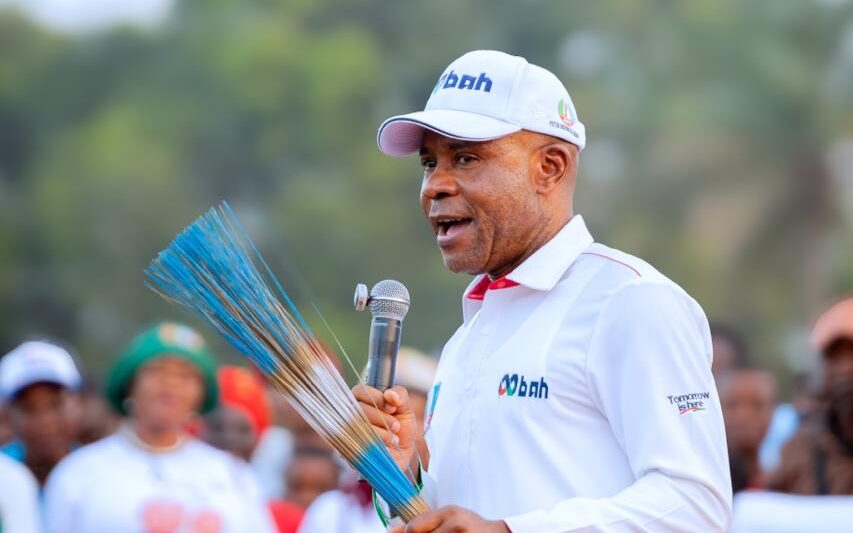
The agency also accused Mr Bello, who is running for the Kogi Central Senatorial District seat in 2027 on the All Progressives Congress platform, of using part of the diverted funds to pay for his children's school fees upfront.
But Mr Bello and his co-defendants have denied all the allegations against them.
Mr Justice shared that Keyless Nature Limited got the loan through an account linked to Abba Adaudu. The funds were handled by Bureau de Change (BDC) operators, including Jamilu Abdullahi, who testified as the 19th prosecution witness.
Some local governments that sent money to Keyless include Ajaokuta, Ankpa, Ibaji, Omala, Ogori-Magongo, Ofu, Olamaboro, Okehi, Kogi, Kabba-Bunu, Ijumu, and Igalamela-Odolu.
In February, an official from Access Bank revealed how Keyless received funds from local governments.
The EFCC investigator confirmed that the local government funds came in regularly.
"These inflows come monthly and regularly into the Keyless Nature account. When added up, it shows principal repayments," he said.
He explained that the transactions looked like a proper business deal, while the local governments later took on the responsibility to repay the loan.
The EFCC wrote to the local governments asking for details about the monthly payments but did not get any replies, the witness said.
Similarly, Abba Adaudu, the managing director of Keyless Nature, who is seen as a close associate of Mr Bello, could not show any contract his company had with the local governments.
The investigator said the EFCC's findings could not confirm contracts awarded to Keyless Nature, Hayzma, and Forza Oil and Gas by the local governments.
These companies have also appeared in earlier court proceedings.

Hayzma claimed to provide medical services to the local governments but could not show the names of its suppliers or a license from the National Agency for Food and Drug Administration and Control (NAFDAC), the witness noted.
He insisted that Siyaka Adebenege, a business associate, was an accountant, not a pharmacist.
The investigation revealed that part of the loan went to BDC operators, Kunfayakun Global Limited, E-traders International Limited, and Mr Abdullahi’s personal account. The banks provided CCTV footage to support the EFCC’s findings, the witness said.
Cash withdrawals were later put back into "the accounts of the companies to hide the identities of the final recipients," the investigator said.
He also explained how payments were made for Mr Bello’s children at AISA.
The investigator mentioned that the EFCC invited all the beneficiaries during the investigation.
His testimony supported earlier accounts presented in court, including those reported here, here, and here.
Mr Justice also explained how school fees were prepaid for Mr Bello’s children, Na’ima Bello, Farid Bello, Fatima Bello, and Zahra Bello, as well as Zayyan Ali Bello, the son of Mr Bello’s nephew, Mr Ali.
He said the fees were paid in advance through offshore accounts until the children graduated.
To back this up, the investigator pointed out an agreement for the advance payment of the fees until graduation. The head of the school signed the document, and Mr Ali signed on behalf of Mr Bello on August 21, 2021.
The school confirmed the payments in emails with Mr Bello’s nephew.
In one email, the school asked Mr Ali to "specify how the amount should be shared between the two children to enable the school to issue the right receipts."
Although Mr Ali did not pay the money directly, the investigator insisted that the "email confirms that the money came from him."
On October 15, a BDC operator explained his role in the payment of school fees. He said Mr Adaudu transferred N1.4 billion to buy US dollars and pay for Mr Bello’s children at AISA.
The investigator said AISA refunded the money during the EFCC’s investigation, but no one from Mr Bello’s family claimed it.
The trial judge, Maryann Anenih, adjourned the case until December 2.

Comments
No comments yet.