Lagos Floods Hit Communities and Airport Operations
Lagos experienced heavy rainfall that flooded many areas, causing traffic chaos and closing a terminal at Murtala Muhammed International Airport.
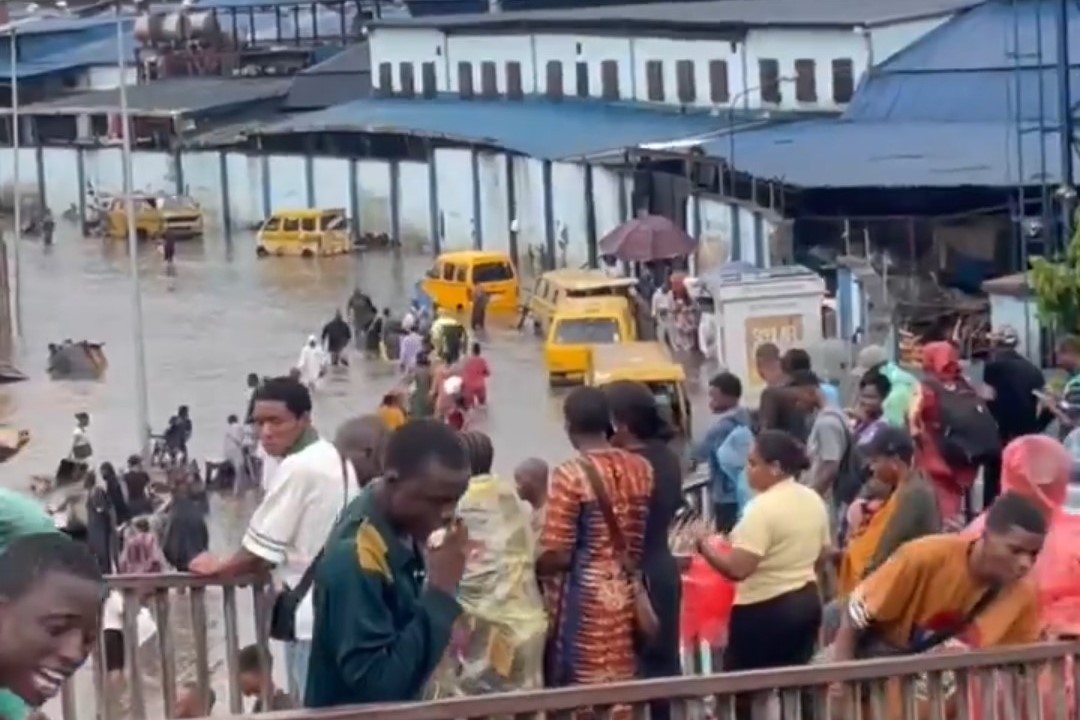
Heavy rainfall on Sunday flooded many areas in Lagos. Major roads and residential areas were under water, causing traffic issues and leading to the temporary closure of a terminal at Murtala Muhammed International Airport (MMIA).
Videos seen by PREMIUM TIMES showed floodwaters covering several roads. Canals in various parts of the state were filled with plastic waste, old tyres, and other rubbish, blocking the flow of water.
Some of the hardest-hit areas included Oshodi, Opeki Road in Mosan-Okunola Local Council Development Area (LCDA), Abesan Estate, Ilupeju Road, Mushin, Fashoro Street in Surulere, Akowonjo Road in Egbeda, Gbagada Expressway, and Idi-Oro.
In Mushin, floodwaters carried uncollected rubbish onto the roads, making life harder for residents. At Akowonjo, a vehicle fell into a drainage channel as the road was submerged. Parts of Gbagada Expressway became impassable, causing motorists to be stuck for hours.
The rain lasted several hours, halting business activities in many areas. Commuters struggled to reach their destinations. Some abandoned commercial buses and continued on foot after their vehicles got trapped in the flood.
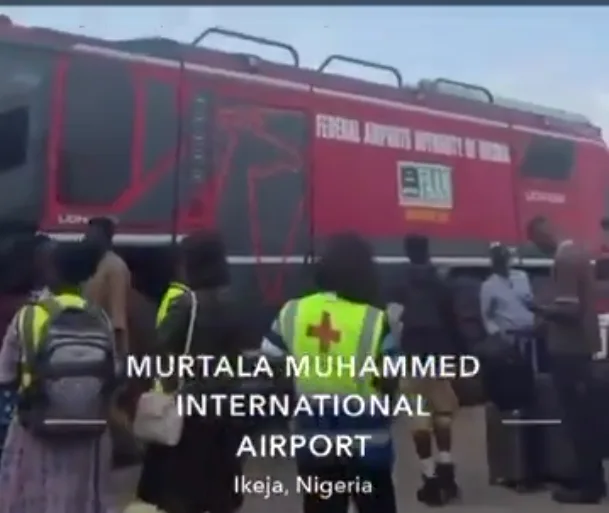
The flooding also affected the operations at the temporary international terminal of Murtala Muhammed International Airport. Water filled the departure hall, boarding gates, airline offices, and other parts of the terminal, forcing the Federal Airports Authority of Nigeria (FAAN) to suspend operations there.
Airlines like Air France-KLM, Ethiopian Airlines, and Fly Gabon were moved to Terminal Two after floodwaters reportedly reached the terminal’s powerhouse. This prompted airport officials to cut off electricity for safety.
This disruption happened just months after FAAN closed the old international terminal for a reconstruction project costing over N600 billion. Earlier this year, a fire damaged parts of that same terminal.
FAAN spokesperson Henry Agbebire said Sunday’s flooding was due to the ongoing construction work around the airport. He said, "It was the construction works that affected the drainage. For operational reasons, we have moved airlines operating from that terminal to Terminal 2, and the development has not really affected their operations."
He added, "There were no cancellations at all. We have taken immediate action to fix that problem to the extent that it doesn’t happen again. You can rest assured of that."
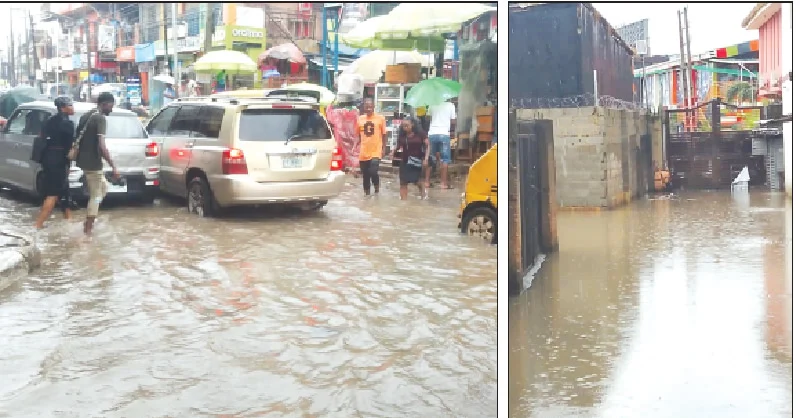
Residents and business owners in Oshodi spoke to PREMIUM TIMES on Monday about how the heavy rainfall disrupted business and made movement difficult. Titilope Adebayo, a businesswoman, said the flooding scared away many customers until the water went down.
Wahab Adebola, a taxi driver, mentioned that many roads became hard to drive on during the rain, forcing drivers to slow down or find other routes. He said the flooding made travel longer and left many passengers stuck in different areas.
Lagos State Commissioner for the Environment and Water Resources, Tokunbo Wahab, reacted to the flooding. He said there was no need to panic, calling it flash flooding that would go down after the rain.
He explained that such flooding is normal in coastal cities during heavy rainfall. He noted that high lagoon water levels can stop stormwater from flowing into the lagoon until the tide goes down.
Mr Wahab said the state has been keeping up with drainage maintenance and flood control efforts. He added that residents should not dump rubbish in drains or do illegal building on drainage paths and wetlands.
He also said that investments in drainage systems and stricter environmental rules have helped lessen flooding's severity in recent years, despite the rising rainfall.
Sunday’s flooding came about two weeks after the Lagos State Government warned residents of heavy rainfall, flash floods, and rising water levels in several areas. The warning, based on flood predictions by the Federal Ministry of Environment, listed Apapa, Badagry, Epe, Eti-Osa, Ikeja, Ikorodu, Ikoyi, Lagos Island, Lekki, Ojo, Orile-Agege, Surulere, Agege, Alimosho, and Kosofe as areas at risk.
Residents in at-risk communities were advised to stay alert, find safe evacuation routes, and avoid actions that could block drainage channels.
The flooding on Sunday has raised questions again about the effectiveness of drainage maintenance and waste management in Nigeria's largest city as the peak of the rainy season approaches.



Comments
No comments yet.