Nigeria pushes for local cocoa processing to boost exports
President Bola Tinubu urges Nigeria to stop exporting raw cocoa beans and focus on local processing to maximize profits from the chocolate industry.
President Bola Tinubu has said Nigeria should stop exporting raw cocoa beans. Instead, the focus should be on processing cocoa locally to earn more from the global chocolate market.
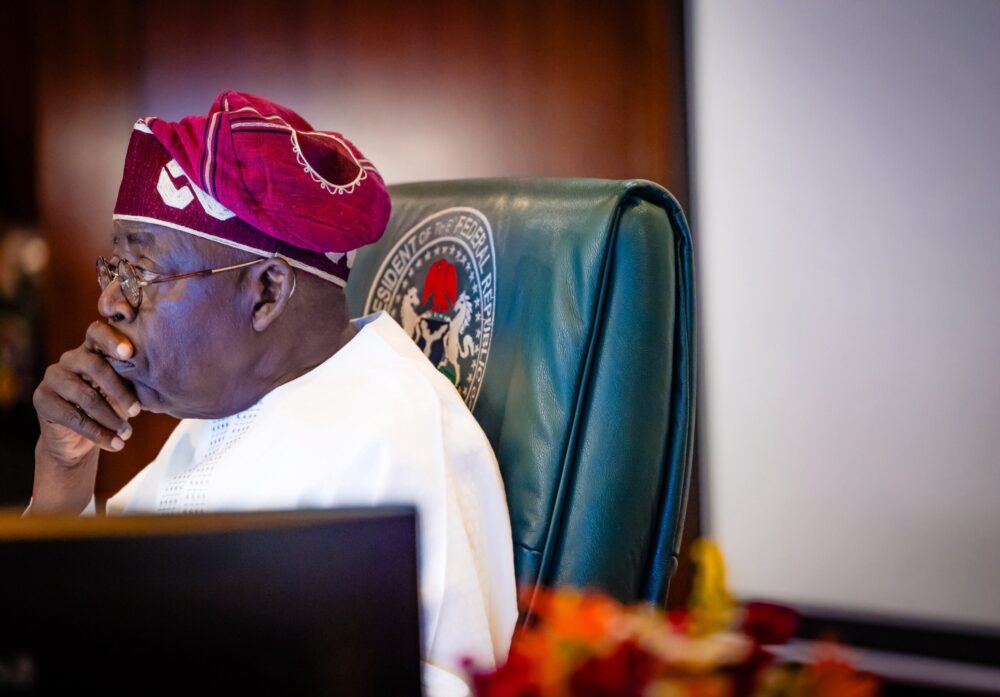
The president, represented by the Minister of Agriculture and Food Security, Abubakar Kyari, shared this on Tuesday at the Cocoa Value Addition Summit 2026 in Abuja.
The summit, themed “From Bean to Brand: The Bean in My Hand, The Brand in Our Future,” gathered government officials, cocoa-producing countries, investors, development partners, and industry players. They discussed ways to expand cocoa processing and manufacturing across Africa.
President Tinubu stated that Nigeria cannot keep depending on exporting raw agricultural products while other countries enjoy the profits from processing and branding. “Nigeria will no longer export raw beans while importing finished value. We will grind our beans at home, we will press our butter at home, we will make our chocolate at home, brand it at home, and sell it to the world on our own terms,” he said.
He pointed out that over 300,000 Nigerian farming households grow cocoa on more than 1.4 million hectares. This makes Nigeria one of the top cocoa producers globally, contributing about six to seven percent of the world's cocoa output.
According to him, cocoa earned Nigeria over N3 trillion during the recent rise in global prices. But by exporting raw beans, Nigeria only captures a small part of the industry's economic value.
The president mentioned that there are ongoing investments in local processing. This includes a 70,000-metric-tonne cocoa processing facility being built in Sagamu, Ogun State. He added that Nigeria's annual cocoa grinding capacity has now surpassed 120,000 metric tonnes.
The Minister of State for Industry, John Owan Enoh, said this initiative fits Nigeria’s industrial policy. This policy aims to reduce the dependence on raw commodity exports and boost local manufacturing. “We are not interested in exporting anonymous sacks anymore. We are interested in exporting value. If Nigeria truly wants to build a one-trillion-dollar economy, it cannot continue exporting raw materials while other countries earn the real wealth from processing and branding them,” he said.
Mr Enoh also revealed that Nigeria is collaborating with Ghana, Côte d’Ivoire, and Cameroon to form an African cocoa alliance. This alliance aims to strengthen Africa's bargaining power in the global cocoa market.

He explained that the proposed alliance would coordinate policies on cocoa processing, value addition, and trade among countries that produce most of the world’s cocoa.
The Managing Director of the Bank of Industry (BOI), Olasupo Olusi, said the bank is ready to provide long-term financing for cocoa value chain investments. He noted that the bank gave out over N164 billion to more than 3,500 agro-processing and food businesses in 2025. The bank also recently secured a €60 million credit facility from the European Investment Bank for cocoa processing projects.
“Our goal is to finance everything from nurseries and cooperatives to grinding plants, ingredient factories, packaging lines, and chocolate manufacturers,” Mr Olusi said.
Ransford Abbey, the Chief Executive of the Ghana Cocoa Board, also spoke at the summit. He called for better cooperation among Africa’s leading cocoa-producing countries. He noted that while Africa produces between 75 and 77 percent of the world’s cocoa, it earns less than 10 percent of the value from the global chocolate industry.
“We do not need charity. We deserve equity. The time has come for Africa to process its own wealth, protect its farmers and negotiate with one voice in the global cocoa market,” he said.
The renewed focus on local processing comes as Nigeria aims to diversify its export earnings away from crude oil. It also seeks to boost agriculture's contribution to industrial growth. Although Africa produces about 70 percent of the world’s cocoa, most of the profits from chocolate manufacturing go to Europe and North America, where cocoa beans are processed into butter, powder, and finished products.
For years, industry players have claimed that expanding domestic processing would create jobs, increase foreign exchange earnings, and strengthen Nigeria’s position in global agricultural value chains. Recent investments in cocoa processing facilities and financing plans are part of a broader effort to shift the country from exporting raw commodities to higher-value manufactured products.
The summit wrapped up with the Cocoa Value Addition Accord and the proposed Abuja Declaration. These aim to speed up domestic cocoa processing, attract investments, improve farmers’ incomes, and strengthen cooperation among Africa’s major cocoa-producing countries.





Comments
No comments yet.