Nigeria's New Plan for Lasting Peace and Security
The National Peace Framework seeks to reshape Nigeria's approach to security by focusing on prevention rather than just management of violence.
If put into action, the National Peace Framework can be more than just another government plan. It can shape a new way for Nigeria to handle security. In this new approach, the government stays in charge, communities gain more power, and institutions work together. This way, Nigeria can shift from just managing insecurity to actually preventing it.
Nigeria’s security issues have changed a lot in recent times. We now face terrorism, violent extremism, banditry, kidnapping, communal clashes, separatist movements, organized crime, and new digital threats. Insecurity has turned into a complex problem that affects national development deeply.
The new idea is that insecurity is not just a problem for the military or police. It is also about national development and the safety of people.
Because of this, the Office of the National Security Adviser (ONSA) is working on the National Framework for Non-Kinetic Approaches to Addressing Insecurity in Nigeria, known as the National Peace Framework.
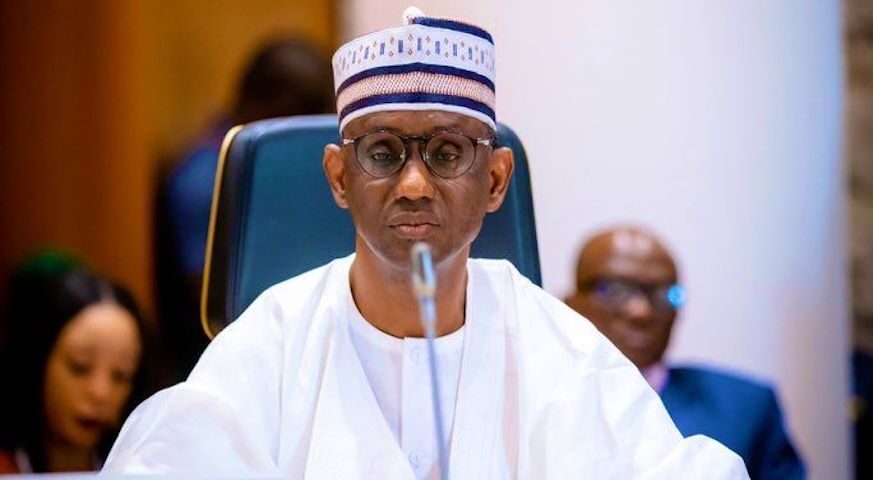
When he launched the Expert Review Team (ERT) on 5 August 2026, the National Security Adviser, Nuhu Ribadu, explained the main idea behind it. He said while military actions are necessary for immediate threats, “the use of force alone cannot deliver lasting peace.”
The Framework does not lessen the role of Nigeria’s Armed Forces, Police, and other security services. Instead, it aims to build on their work by tackling the reasons why violence happens. As the NSA highlighted, real security means Nigeria must deal with the root causes of conflict, strengthen institutions, rebuild trust between citizens and the government, and empower communities.
From Managing Conflict to Preventing It
The Framework states that military actions can weaken armed groups, reclaim territory, and restore order. But military force alone cannot eliminate issues like poverty, social exclusion, unresolved grievances, weak justice systems, community mistrust, trauma, environmental pressures, or extremist ideas.
Therefore, the National Peace Framework marks a significant shift in Nigeria’s security approach. It moves from mainly reacting to insecurity to anticipating and addressing the root causes.
The NSA explained that the goal is to strengthen Nigeria’s ability to “anticipate, prevent and resolve insecurity through an inclusive non-kinetic peace architecture.”
The Framework’s main idea is that prevention is key. Violent conflicts usually have warning signs. Communities often see these signs first. Traditional and religious leaders notice bad relationships, women see changes in families, and young people notice shifts in community behavior. But these signals are often ignored or not acted upon until it is too late.
Lami Chinade, Director of State Liaison at ONSA and coordinator of the National Peace Framework, highlighted this need during the ERT launch. She pointed out that the challenge is to spot and act on warning signs before they lead to violence.
A National Architecture, Not Another Initiative
Chinade rightly said Nigeria has many peacebuilding initiatives already. Federal and state agencies, development partners, civil society, and communities run various programs aimed at peace and security.
The problem is often a lack of coordination.
The NSA made it clear that the Framework “is not starting from a blank page.” He acknowledged the ongoing efforts of national and local actors. The aim is not to recreate or replace these efforts but to bring them together in a unified national structure.
Chinade also noted that fragmentation is a big issue in current peacebuilding efforts. Many initiatives work separately, sometimes duplicating efforts or working against each other. The Framework aims to fill this gap for better coordination.
ONSA’s role in coordinating these efforts will help bring everything together while allowing agencies to keep their specific roles.
A Whole-of-Government, Whole-of-Society Approach
The Framework understands that the government cannot achieve peace alone.
Its key areas include governance and accountability, education, civic engagement, justice access, livelihoods, community peacebuilding, deradicalization, rehabilitation, trauma support, early warning systems, and cooperation between different groups.
The NSA said the goal is to unite all stakeholders under “a shared national vision for peace.” This includes federal, state, and local governments, security agencies, traditional and religious leaders, women, youth, civil society, businesses, and affected communities.
He added that this approach aligns with President Bola Ahmed Tinubu’s Renewed Hope Agenda, especially its focus on inclusive governance and long-term growth.
Putting Communities at the Centre
One main idea of the Framework is that communities should not just be passive recipients of security efforts. They need to be active partners in preventing conflicts.
Communities often have information that official institutions lack. Their networks can serve as an important early warning system and support peaceful conflict resolution.
The Framework is a policy that “places communities at the centre of prevention while keeping government firmly at the centre of responsibility.”
This distinction is key. A whole-of-society approach does not shift the government’s responsibility for security to citizens. It recognizes that the government is more effective when it works closely with communities.
Community involvement is also vital for rehabilitation and reintegration. Former combatants cannot return to communities that have not been properly engaged. Justice, healing, accountability, and reconciliation are also essential for a credible peace effort.
Trust, Information and Strategic Communication
At the core of nearly every area is one important element: trust.
The NSA pointed out that rebuilding trust between citizens and the government is crucial for lasting security. When communities trust public institutions, they are more likely to share information, report threats, and reject extremist ideas. When trust breaks down, misinformation can spread, and bad actors can take advantage of grievances.
This is especially important now. A local dispute can be twisted through ethnic or political narratives and spread quickly.
Chinade summed up the issue well: “Information now travels faster than our response mechanisms.” She argued that managing information and communication should be seen as “core security assets, not peripheral concerns.”
Strategic communication must be part of Nigeria’s non-kinetic security plan. The government should communicate openly, respond to misinformation swiftly, listen to communities, and strengthen media literacy.
From Policy to Action
The real test of the National Peace Framework will not be the quality of the plan but how well it is carried out.
The NSA made this clear when he spoke to the Expert Review Team: “The final document must not be merely academic. It must be realistic, implementable, and capable of guiding concrete action.”
The Framework should outline responsibilities, coordination methods, implementation timelines, and measurable results. The ERT’s job goes beyond refining the draft; it needs to create a practical model that can guide actions at all levels.
Broad involvement is also important. Women, youth, traditional leaders, civil society, and affected communities should help shape the Framework, not just see it after it is done. As the Director of State Liaison said: “We are not asking anyone to implement a policy they did not help shape.”
Building the Peace We Seek
Clearly, there is no purely military solution to insecurity. Also, non-kinetic methods cannot work without strong security institutions, justice, and rule of law.
The challenge is how to bring everything together.
Military actions must create room for peace. Good governance must build legitimacy. Development must create opportunities. Justice must address grievances. Dialogue must rebuild relationships. Communication must enhance trust. Communities must be partners in prevention.
The National Peace Framework gives Nigeria a chance to go from scattered efforts to coordinated national action and from reacting to conflict to preventing it.
Military actions can secure areas. Development can create chances. Justice can restore faith. Communication can build trust. But true peace will be achieved when all these efforts come together.






Comments
No comments yet.