Nigeria's Struggle with Sustainable Development Goals in a Changing World
Nigeria faces significant challenges in achieving sustainable development goals due to political struggles and rising inequality. The future depends on empathy and collective action.

Today, we see the result of what history has brought us, a world shaped by centuries of wars, slavery, conquests, imperialism, and colonialism. This has led to huge wealth for some while many others live in poverty, facing inequality and hardship. The MDGs and the SDGs were created to offer some solutions to this injustice. Technology and improved production methods have made it possible to fix some of these problems. But politics and power struggles have created many obstacles. Right now, the global situation is getting worse. Wealth is increasingly in the hands of a few. The world is changing fast as old powers weaken and new ones rise. Tensions are growing as established powers ignore international rules and return to a might-is-right approach. Violence and destruction are spreading as AI technology in warfare takes over, leading to greater potential for devastation.
In this situation, the future of the SDGs might rely on what Elon Musk said: "the fundamental weakness of Western civilisation is empathy" during an episode of The Joe Rogan Experience podcast. Caring for the poor, the hungry, and victims of violence needs empathy. Many rich and powerful people want to end empathy and ignore the needs of the masses. Trust the capitalists to forget that it was the welfare state that saved their system from upheaval.
At this point, the masses must act to push their countries toward corrective actions. Changes in the global order must lead to a situation where governments and societies focus on the public good. We need to rethink and recreate a government that prioritizes public policies benefiting everyone. The SDGs offer a basic framework for this change. The debate around the SDGs is not about what the international community promises. It is about what each country, like Nigeria, does to address poverty and suffering.
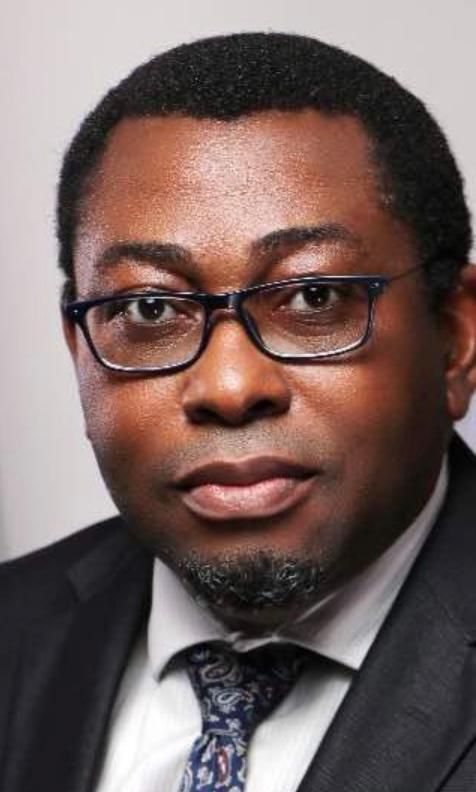
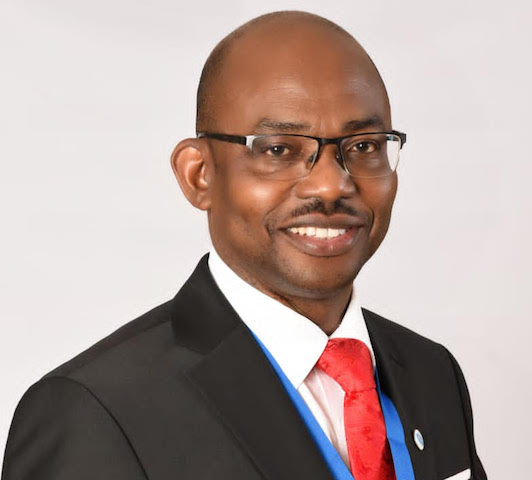
Nigeria ranks 147th out of 167 countries on the global Sustainable Development Report index. Only one goal, Responsible Consumption and Production, shows significant progress. Although there have been some improvements in maternal health and gender equality in education, major issues like poverty reduction, healthcare, and security are still serious problems. Internal challenges make it hard to fully implement the SDGs. The country has not leveraged its large population and rich natural resources to support these goals. Bode Augusto highlights this point:
"Population is only a strength if it is well educated, healthy, the economy has the capacity to provide them with employment and households have enough income to buy goods and services produced by businesses."
A major issue for Nigeria is rapid population growth, according to Augusto:
"Every year, we add 5 million people to our population. This is roughly the size of Liberia or Montenegro. According to www.populationpyramid.net, in 1960, the population of the UK was 52 million while that of Nigeria was 46 million. By 2015, the UK was at 62 million while Nigeria grew to 185 million. By 2070, Nigeria will reach 550 million while the UK will only have 80 million! This means that over 110 years, Nigeria will grow by over 500 million while the UK will add just 30 million. This is frightening!"
This population growth is concerning because Nigeria has become the poverty capital of the world. Extreme poverty is one of Nigeria's biggest challenges. An estimated 130 to 141 million Nigerians, about 62 percent of the population, live in multidimensional poverty. They struggle with serious issues in health, education, and living conditions. Many survive on less than $5 a day as inflation rises and the economy is unstable. No government in Nigeria's history has borrowed as much as the Buhari Administration and the current Tinubu Administration. The country has borrowed heavily to cover ongoing expenses while revenue remains low.
In Nigeria, the public sector is not set up to provide services to the people. Spending on health and education is much lower than in other African nations. Budget figures do not reflect real spending because allocated funds are rarely fully released. This makes it hard to know the actual spending levels. Lack of accountability weakens institutions' ability to deliver services. Policy designs are often influenced by negotiations within a small group rather than by accountability to the public. Limited public information on budgets and development outcomes makes it hard for civil society and media to hold the government accountable for its policies and financial management.
Poverty in Nigeria is not equal across regions. The number of poor people in the North has been rising since 2011, and by 2016, 87 percent of all poor Nigerians were in this region. Inequality has worsened in recent years, as shown by the 2025 Gini coefficient. A critical issue for Nigeria today is the lack of opportunities for the youth. The youth population is growing quickly while formal job opportunities are becoming scarce. The North is the hardest hit, particularly the North-East and North-West, which lag behind in education, health, and economic development.
The Nigerian State is unable to achieve the SDGs because it is controlled by a self-serving political class that is destroying the very foundation of the country. The State is facing a threefold crisis. The first is a political and economic crisis caused by decades of corruption that has drained the treasury at both national and state levels. The second crisis is citizenship, marked by ethnic tensions, Boko Haram violence, ethnic conflicts, farmer-herder clashes, Biafra agitation, Niger Delta militancy, and indigene/settler disputes. The third issue is the frustration of the country’s democratic goals in a situation where citizens believe in true democracy but face a corrupt and manipulative political class.
These problems have broken the trust between citizens and the State. Today, many Nigerians doubt their nationhood. This feeling is similar to what we experienced during the civil war from 1962 to 1970 and in the early 1990s when military rule created new challenges for the country. We survived those tough times, and my message now is that for a better future, Nigerians need to take action to rescue the State and build a new one focused on public service for the common good. In the end, Nigerians should focus less on empathy from abroad and more on how to save their country.
Comments
No comments yet.