Niger's Junta Remains in Charge After Failed Coup Attempt
Niger faced a coup attempt on Saturday, but the junta led by Abdourahamane Tchiani maintained control after hours of fighting. The mutineers took over key military sites.
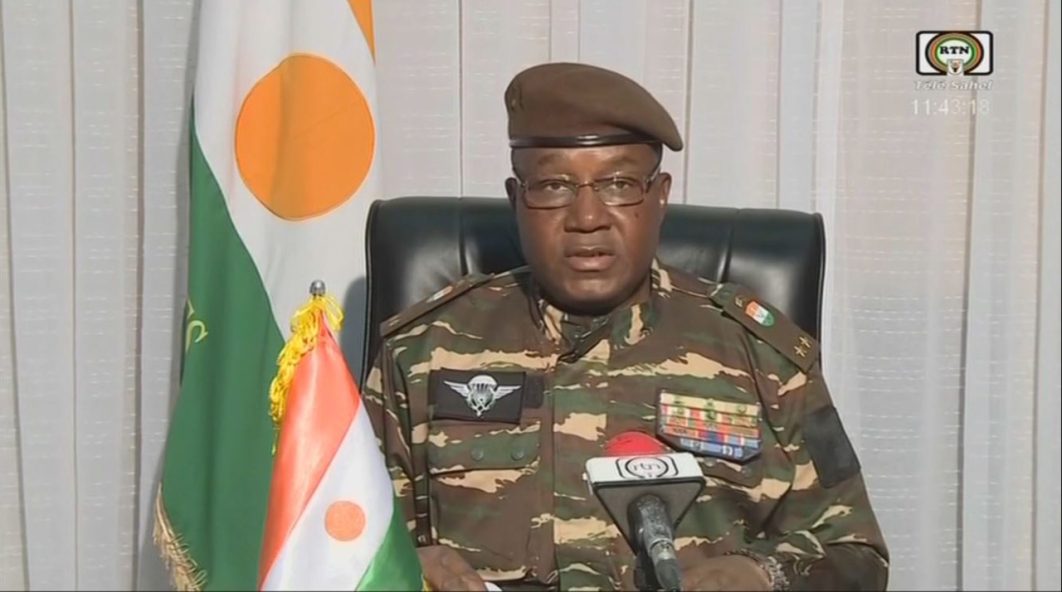
On Saturday, Niger Republic faced an attack from soldiers trying to take power from the junta led by Abdourahamane Tchiani. After several hours of fighting, Mr Tchiani's government stayed in control.
The mutiny caught the government off guard. The soldiers took over the Diori Hamani International Airport and Air Base 101. They also tried to break through the strong defenses of the presidential palace. This attack briefly interrupted broadcasts from state television and radio.
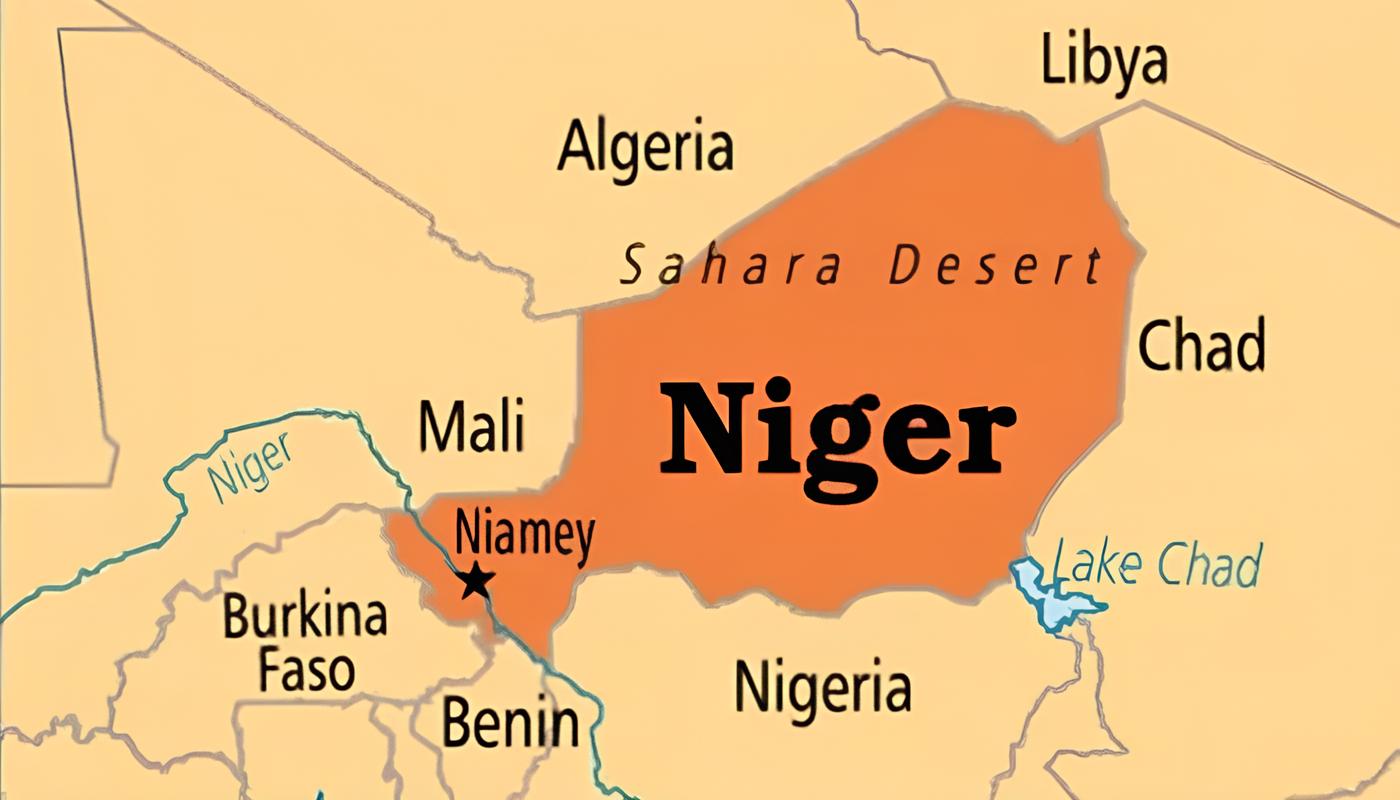
Footage shared with our reporter showed armed soldiers, armored vehicles, and troops securing the streets of Niamey. The mutineers took control of Air Base 101, the paratroopers' camp, and other locations near the international airport.
The mutineers released a statement from the air base, claiming that Mr Tchiani was no longer the head of state. The statement, signed by the Armed Forces for the Restoration of the Fatherland, declared the constitution dissolved, borders closed, and movement restricted.
While the fighting continued, reports indicated that the head of the junta requested help from Africa Corps, a Russian-backed mercenary group active in Sahelian countries led by military governments.
Prior to this, the mercenaries at the air base had come under attack. They defended themselves against the rebellious soldiers. After a formal request to neutralize the mutineers, Africa Corps worked with the Nigerien Presidential Guard. They launched an air and ground offensive, marking their second major operation in the area since their show of force in Bamako in April.
This operation resulted in the deaths and arrests of the mutinous soldiers. The Nigerien government stated it remained in control.
Following the attempted mutiny, several countries expressed support for the junta in Niger. Given tensions with the Economic Community of West African States (ECOWAS), it seems no member of this regional group will back Niger. But Burkina Faso and Mali, its allies and co-founders of the Alliance of Sahel States (AES), showed support for Niger.
The AES, in a statement from Ouagadougou, expressed full commitment to Niger. They shared their determination to continue the fight for sovereignty and peace.
They praised “the loyalty, courage, and sense of duty of the Nigerien Defence and Security Forces who, true to their oath, confronted this mutiny and helped restore order.”
The Turkiye Republic also affirmed its support for Niger and called for “restraint” to maintain security and stability. Algeria assured the Niamey government of its “full solidarity and firm support” to help restore order.
Details about the mutinous soldiers are still unclear. However, videos show that many are young and junior-ranked. Some unverified reports suggest that senior officers may be involved, including Colonel Kimba Tahirou and Captain Abdoulaye Idé, who became a captain in 2021.
Social media claims say Mr Tahirou, the head of the national gendarmerie, is with the mutineers. The government has not confirmed these claims or released the names of the young officers arrested.
Most soldiers involved in the mutiny came from active frontlines around Ouallam, Téra, and Dosso, including Tillabéri, suggesting that rising insecurity may have sparked the action.
A researcher on jihadi groups, Hasret Kargin, noted that the mutiny happened a day after the Nigerien junta freed four al-Qaeda linked jihadists in exchange for 11 soldiers. This was a strategy Mr Tchiani opposed when he took power in 2023.
Former President Mohamed Bazoum had supported dialogue and conditional amnesty as part of counterterrorism efforts. But Mr Tchiani vowed to use only military action.
As soldiers left their posts to join the mutiny, groups like the Islamic State Sahel Province (ISSP) and JNIM might take advantage of this instability to gain more ground.
“The security vacuum in these areas will allow these armed groups to secure further gains in territories where they are already strong,” Mr Kargin warned in a post on X.
He urged the Nigerien government to view the plot as serious since “more crises like this would not be surprising.”
Niger has faced three similar attacks this year, with two carried out by jihadists. As this report was written, Nigeria, Niger's larger neighbor, had not commented on the coup. The relationship between both countries worsened after Mr Bazoum was removed by Mr Tchiani.
Nigeria's President Bola Tinubu, who was the ECOWAS leader at the time, condemned the coup and led the regional group to impose sanctions and blockades on Niger. Even though the sanctions and blockade have been lifted, the two countries have not fully repaired their relationship.
Comments
No comments yet.