Osun 2026: Can Tinubu Secure Victory for APC in His Hometown?
The Osun 2026 election poses a significant challenge for President Tinubu as he navigates party dynamics and personal ties in his hometown.
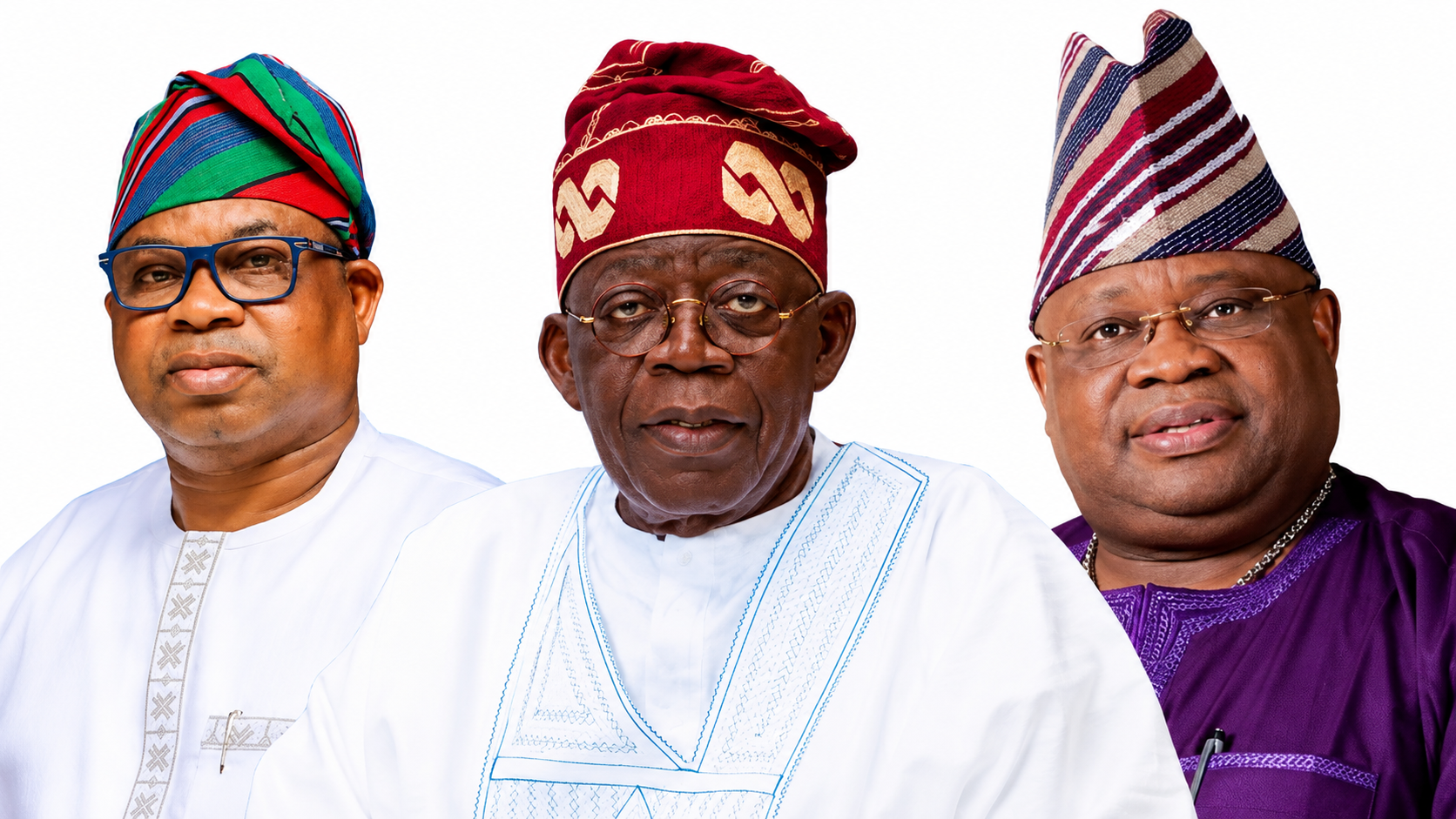
A few days before Saturday’s governorship election, one question keeps coming up in Osun’s political talks: where does President Bola Tinubu really stand?
On the surface, this election looks like just another contest between the ruling All Progressives Congress (APC), Tinubu’s party, and the current governor Ademola Adeleke of the Accord Party, who is aiming for a second term.
But it has turned into something bigger. The election is a test of President Tinubu’s influence within the APC, his personal connections, and his ability to manage different interests in the ruling party.
Unlike past elections, this one in Osun presents Tinubu with a tricky political challenge.
Mr Tinubu’s family roots go back to Iragbiji in Boripe Local Government Area of Osun State, the same hometown as former governor Gboyega Oyetola, who is his cousin and a close political ally. Oyetola is still an important figure in the APC and now works as Minister of Marine and Blue Economy.
Normally, there would be no doubt about where the president stands. The APC has chosen Bola Oyebamiji, a former Commissioner for Finance, to take back the state after Governor Adeleke beat Oyetola in 2022. Party members expect the president to fully support the APC candidate.
But politics in Osun has become more complicated.
A relationship beyond party lines
Governor Adeleke has kept good relations with President Tinubu despite being in the opposition.
This relationship gained attention last year when the Adeleke family met the president in Lagos after the governor considered switching to the APC.
This move sparked intense debate but ultimately fell through due to pushback from key APC leaders in Osun. They argued that letting in a sitting opposition governor would harm loyal party members who have stayed with the APC since 2022.
APC leaders in Osun, led by former Speaker Timothy Owoeye and state chairman Tajudeen Lawal, publicly stated that the governor was trying to join the party and that they would not accept him.
Lawal called him a Trojan horse and said there was no room for him in the APC. By April this year, the Osun APC campaign team claimed that Tinubu himself had rejected attempts to bring Adeleke into the party. It confirmed Oyebamiji as Tinubu’s man.
In June, Oyebamiji felt the need to clarify again, telling supporters in Ifedayo, Ila, and Boluwaduro that he was still Tinubu’s only chosen candidate, and claims of a presidential endorsement for the governor were false.
Governor Adeleke is running for a second term under the Accord Party after leaving the PDP amid uncertainty about his political future and the PDP’s national leadership crisis.
Campaign billboards have paired President Tinubu with the governor, even though the APC has its own candidate. These images have sparked political debate and led to different interpretations.
Adeleke has never claimed the president’s backing. The presidency has also not suggested that Tinubu supports the Accord Party candidate.
But the confusion has become part of the political discussion.
“Adeleke is not just dancing; he is organising. He connects emotionally with people, and that is something the APC has failed to match,” said political analyst Olaniyi Oyekanmi.
Political observers, including journalist Babafemi Ojudu, argue that Tinubu’s public stance towards Adeleke has softened in recent weeks. He pointed to a reported phone call between the two men and said security agencies seemed to ease off the governor as the election nears, seeing it as a subtle message rather than an open one.
EFCC intervention shifted attention
Last week, any lingering questions about the president’s relationship with the Osun governor took a new turn.
The Economic and Financial Crimes Commission (EFCC) froze the Osun State Government’s bank accounts as part of an investigation into how the state handles public funds. The opposition quickly accused federal authorities of using state institutions to weaken Adeleke’s administration just before the election.
“I have endorsed you. That should be enough. Stop the bloodshed in Osun State and call your brother, Oyetola, to order,” Governor Adeleke said in a speech addressing the president.
Tinubu responded to the freezing of the Osun State government’s account within hours.
In a personally signed statement, he directed the EFCC to return to court and lift the freezing order.
The president did not challenge the commission’s legal authority but questioned the timing.
“I must state that I feel deeply embarrassed not by the EFCC’s exercise of its mandate backed by a court order, but by the timing of the agency’s action,” Mr Tinubu said.
He added, “Osun State is only a few days away from its gubernatorial election. Therefore, nothing ought to be done to give an impression that the EFCC or indeed any other agency of the federal government is being used to interfere with the election.”
Presidents rarely publicly question actions supported by a court order.
Tinubu also noted that while anti-corruption agencies should work independently, actions taken close to elections can easily be seen as reflecting the presidency’s wishes.
This statement changed the tone of the debate.
Instead of focusing on claims that the presidency was working against Adeleke, attention turned to Tinubu’s insistence that federal institutions should avoid actions that could shake confidence in the electoral process.
The president later confirmed that position during a phone call with Adeleke, telling him he had directed the EFCC to lift the freezing order.
Presidential spokesperson Bayo Onanuga said the call followed Tinubu’s public order to the agency.
Analysts said this sequence showed the president wanted to avoid any hint that federal power was being used against the Osun governor.
Blocked Osun local councils’ funds
Before the EFCC froze the state’s account, PREMIUM TIMES reported how governance has been stalled in Osun State’s 30 local government areas for over a year due to a political and legal dispute between the APC and PDP over control of the councils and their funds.
The dispute started with the October 2022 local government elections held by former Governor Oyetola’s administration, shortly after he lost the governorship election to Adeleke. The APC won all 30 chairmanship positions and 332 councillorship seats.
But after Adeleke took office on the PDP platform, he dissolved the councils and held new elections in February 2025, where the PDP won all positions.
The two parties have since fought over which officials are legally entitled to run the councils, leading to conflicting judgements from the Osun State High Court, the Federal High Court, and different divisions of the Court of Appeal.
The federal government decided to withhold the councils’ funds, leaving local governance stuck and turning the issue into a battle where party interests seem to matter more than public interest and legal principles.
The matter eventually reached the Supreme Court, which last December strongly criticized the federal government and the Attorney-General of the Federation, Lateef Fagbemi, over withholding the councils’ funds, calling it “a grave breach of the Constitution.”
In a 6-1 judgement delivered by Justice Mohammed Idris, the apex court ordered that the allocations be “directly channelled to the local accounts.”
Even though the judgement did not settle the bigger question of which set of council leaders is the rightful occupants, the court's ruling about funding is clear and should be followed immediately.
The ongoing deadlock has left Osun’s local governments stuck between political rivalry and legal confusion. This situation has not only consumed judicial resources but also deprived the councils of the funds needed to carry out basic governance tasks at the grassroots level.
Many have blamed President Tinubu for the ongoing issue, saying he is trying to weaken Adeleke ahead of the elections. But the president’s friendly tone after the EFCC’s action last week may change the story.
APC enters from a position of strength
Nationwide, the APC heads into the election with strong political momentum.
Since the 2023 general election, the party has increased its control of state governments through elections and defections. It now governs about 31 of Nigeria’s 36 states, boosting its position ahead of the 2027 general election.
By this measure, Osun should be another chance to strengthen the party’s hold.
But instead, it has become one of the most politically charged gubernatorial elections before 2027.
Osun is more than just another state controlled by the opposition.
It is seen as the president’s political backyard. It is the state where two of his closest allies, Rauf Aregbesola and Oyetola, previously served as governor.
Pressure on the APC candidate
For APC candidate Bola Oyebamiji, the challenge goes beyond defeating an incumbent governor.
He must also reassure party supporters that there is no doubt about the president’s commitment to the APC ticket.
Within the party, expectations are clear. The president is expected to campaign for, gather support for, and help ensure victory for the APC candidate.
Anything less could fuel speculation that personal relationships have mixed up party lines.
Adeleke’s political calculation
Governor Adeleke has little reason to discourage those views.
For an incumbent wanting another term, showing a good relationship with a president from another party expands his appeal beyond his party’s usual support.
It also strengthens the message his administration has quietly promoted: that working with the federal government is possible despite party differences. Whether voters will accept that idea remains to be seen.
What is clear is that this has complicated the APC’s efforts to present the election as a simple fight between the ruling party and the opposition.
Tinubu’s defining test
The Osun election has put President Tinubu in a tricky position.
As the leader of the APC, he is expected to do everything politically possible to win for his party’s candidate. As president, he also has to protect the electoral process’s credibility.
His intervention regarding the EFCC’s freezing of the state’s accounts shows this balancing act. By directing the Commission to lift the court order, Tinubu aimed to remove any idea that federal agencies were influencing the election.
At the same time, he has stayed firmly behind the APC’s campaign and has not withdrawn support for his party’s candidate.
That leaves one question hanging over the election. Can President Tinubu deliver victory for the APC in a state many see as his ancestral home? Or will Governor Adeleke prove that a relationship with the president does not guarantee an electoral edge for the ruling party? We will know after Saturday’s poll.
Comments
No comments yet.