Osun 2026 Elections: The Digital Battle for Information
Osun's upcoming elections on August 15 highlight a digital battle for information. Young voters show interest but struggle with trust in the electoral process.
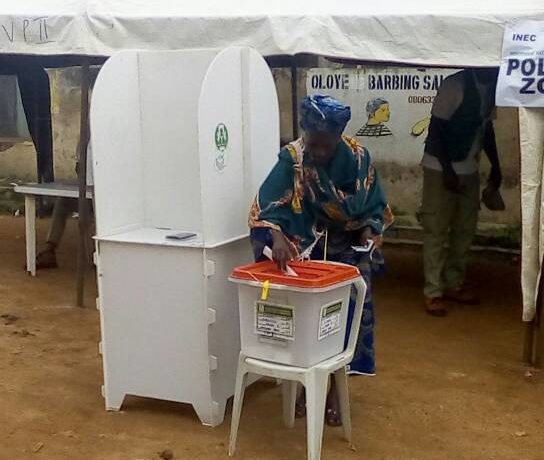
Osun voters will head to the polls on 15 August. Over 2.3 million people are registered to vote. But one of the biggest battles is already happening: the information space. Claims about government performance, election rigging, insecurity, candidates, and the voting process are all over social media, mixing with regular campaign messages.
Young Voters Are Interested, But Trust Is Low
In Osun, 2,461 of the 4,169 young people surveyed by CJID across Osun and Ekiti were from Osun. This is about 59 percent of the respondents. The survey shows that young people's political participation is more complex than just apathy. In both states, 52.1 percent of people said they were very or somewhat interested in politics, even though 54.3 percent were not registered to vote.
There are also signs of a trust gap. More than half, 56.8 percent, feel their voices are not heard in political decisions. About 40.4 percent do not trust the electoral commission to hold free and fair elections. Only 35.5 percent said they do trust the commission, with another 24 percent undecided. These numbers are not just for Osun, so we should be careful interpreting them. But since most respondents are from Osun, they give important context for this election.
The survey highlights a gap between political interest and actual voting among young people. Osun's past elections also show this trend. Voter turnout dropped from 54.4 percent in 2003 to 45.7 percent in 2018 and then to 42.1 percent in the 2022 governorship election, even as more people registered. What could explain this? The survey gives some clues. More than half said they felt unheard in political choices, and four in ten lacked confidence in the electoral commission. With the current Osun campaign, these views are significant, especially with ongoing claims of rigging and violence. The survey cannot say if these worries directly lower participation, but they raise important questions about political interest, trust in institutions, and young people's willingness to vote. This will be important as the election approaches.
How Young People Get Their Political Information
Social media is the main source of political information for many. In the CJID survey, 3,080 respondents, or 73.9 percent, said they rely on digital platforms. X, Facebook, Instagram, TikTok, WhatsApp, and YouTube are now part of the political information landscape. A rally speech can quickly turn into a TikTok clip. An allegation can move from WhatsApp to Facebook and then into mainstream political talk. This makes the state of digital information an election issue by itself. It matters a lot because distrust and fear already lower participation. In the same survey, 44.6 percent said lack of trust in the political system keeps them from voting, and 42.3 percent mentioned violence or intimidation.
What Are We Seeing?
1. The Fight Over Performance
Much of the campaign is about past performance: jobs, teachers, roads, health, and the economy. But claims about performance can also lead to misleading information. A number can be correct but still mislead if important details are missing. According to the Nigerian Democratic Report (NDR), disputes about teacher recruitment, alleged job losses, and education costs have been part of the misinformation during the Osun campaign. This is why election fact-checking cannot just be about TRUE or FALSE. When a candidate promises thousands of jobs, useful questions include how those jobs will be created, their costs, whether they are public or private, and if the state can afford them.
2. Questions About Election Credibility and Security
Concerns about the election's credibility are also common in the campaign. Governor Ademola Adeleke has repeatedly accused the APC of trying to use "federal might" to influence the elections. The APC has made similar claims against the governor, saying he is using his position against the opposition. These are political claims that need evidence to be taken seriously.
Tracking these claims is important because they arise before the voting begins. Ongoing suggestions that the election process may be compromised can affect how supporters view events on election day, especially where there is already little trust in electoral bodies.
Violence has become part of the narrative around the election. APC and Accord have reported deaths among their supporters and blame each other. Independent observers have also noted incidents of election-related violence in the state. However, the numbers from political parties should be separated from independently verified incidents, especially where the responsibility for attacks has not been confirmed.
3. Security Rumours Can Lower Participation
Rumors about security can have a bigger impact than regular campaign attacks because they can change how people behave. NDR recorded false reports of bandit attacks in Inisa and Oyan, which the police later corrected. A voter who thinks their area is unsafe may choose to stay home.
This issue adds to Osun's ongoing problem with participation. A review by Dataphyte shows turnout declined from 54.42 percent in 2003 to 45.74 percent in 2018 and 42.09 percent in 2022, even as more people registered.
4. Confusion About Candidates, Parties, and Endorsements
Some misinformation about the election centers on candidates, party decisions, and endorsements. For example, NDR documented a false claim that Iyiola Omisore had won the APC governorship primary.
Similar cases have appeared in different places. FactCheckHub found that a genuine video from a rally for Mr Oyebamiji was shared with a false caption, claiming the crowd was protesting against President Tinubu. Africa Check also debunked a claim that the SDP had withdrawn from the election and endorsed Mr Oyebamiji.
These examples show how simple manipulations can create confusion. Real videos or events can be taken out of context and shared as something else. So far, some misinformation about the election has not needed much skill to create, even as concerns about AI-generated content and deepfakes keep growing.
5. Economic Issues and Campaign Promises
Economic worries are high on the list in CJID's youth survey report. Unemployment was named by 61.4 percent of respondents, followed by security (44.3 percent), education (42.2 percent), corruption (41.2 percent), and the rising cost of living (36.9 percent). When asked what government should prioritize for young people, 77.2 percent chose job creation.
This context highlights why jobs and economic promises are central in the campaign. It also makes it crucial to detail those promises: how many jobs are proposed, what kinds they are, how they will be created, their costs, and if the state can keep them.
What Does This Mean for Trust and the Electoral Process?
These narratives raise bigger questions about trust in the electoral process. False security information can create fear around voting. Fake results can confuse things during counting. Ongoing claims of rigging can lead to doubts about the process even before votes are cast. Misleading performance claims can also affect how voters view their choices.
The concern goes beyond election day. What people believe about the process can affect how they accept the outcome. If rival political groups spend the time before an election telling supporters that the process is likely to be manipulated, any unfavorable result can be seen in that light. Real problems may strengthen those suspicions, but false or exaggerated claims can have the same effect if they spread widely enough.
This is why the time around voting and counting is so critical. Claims about BVAS failures, voter suppression, security incidents, turnout figures, and early announcements can spread quickly online, sometimes before electoral officials or journalists can confirm what really happened. A misleading take on one incident can also be spun as proof of a statewide pattern.
There is a long-term impact. The credibility of the new government will depend on whether enough citizens see the process that brought it about as trustworthy. A winner may have the legal right to govern once results are announced and disputes are settled. But they may still face a political climate where parts of the electorate question how that right was earned. If distrust becomes deep-rooted, it can affect reactions to the new government long after the election.
This is why the digital information space in Osun matters beyond pinpointing individual false claims. The stories circulating before, during, and right after the election can shape how the process is remembered, how results are understood, and how the new government is welcomed.
Responding to Election Misinformation
Osun is not without its responses. INEC has directly appealed to journalists to fight misinformation and warned that political tensions are rising. The International Press Centre held a fact-checking and digital literacy workshop for INEC officials. Civil society groups have organized a #CheckBeforeYouPost media campaign. PAACA and DigiAfricaLab brought together INEC, police, the National Orientation Agency, traditional leaders, and digital content creators for a policy discussion in Osogbo. These efforts are crucial as the election nears, but voting and counting will create a different information atmosphere. Events will happen quickly, often with incomplete details, allowing false results, misleading security reports, and premature victory claims to spread before they can be checked.
Monitoring and Responding on Election Day
Monitoring on election day will go beyond regular observation. CJID has sent observers, analysts, and fact-checkers to all 30 local government areas in Osun. An additional 40 experts will work from its Election Analysis Centre.
The monitoring will focus on claims about voting procedures, BVAS, result transmission, early declarations, fake result sheets, security incidents, rumors, manipulated media, vote-buying claims, misleading performance statements, impersonation, and false endorsements. They will also look for signs of coordinated efforts to amplify misinformation.
An important part of this work will be assessing claims that are not easily categorized as true or false. Some may have accurate facts but lack context, exaggerate an event's scale, or draw broader conclusions unsupported by evidence. Tracking these narratives along with outright falsehoods gives a clearer view of how information can shape views of the election as it takes place.



Comments
No comments yet.