REPORT: Extra School Charges Add Pressure on Nigerian Parents
Parents in Nigeria are struggling with extra school charges that add financial pressure, especially during graduation seasons. These costs include fees for ceremonies and activities.
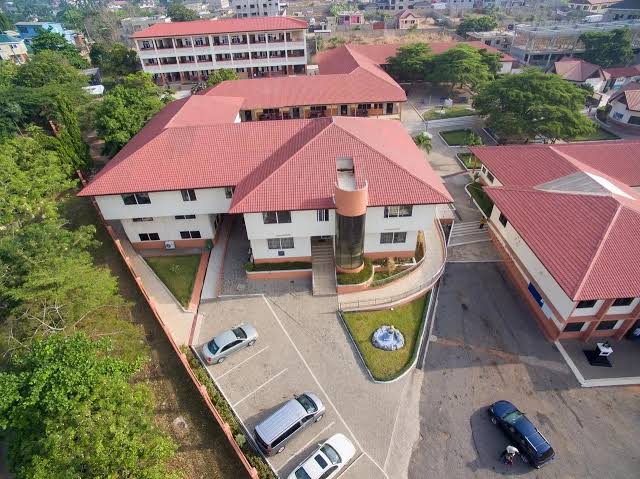
On the last Saturday of July, parents, teachers, and pupils of Megaliy International School came together at the Apo Resettlement Town Hall in Abuja for the school's end-of-session and graduation ceremony.
For Mrs Kuburat, a parent at the school, the celebration brought an extra bill of nearly N100,000. Three of her children were graduating at different levels. She said the school charged N20,000 for the child leaving nursery school, N25,000 for the one finishing Junior Secondary School, and N50,000 for the child completing Senior Secondary School. Even in years when none of her kids graduated, she said she paid N10,000 for each child towards the school's end-of-session ceremony.
The payments highlight a growing worry among parents interviewed by PREMIUM TIMES in various Nigerian states: tuition is just one part of the cost of private education.
From Abuja to Benue, parents shared stories of extra costs for graduation ceremonies, textbooks, costumes, feeding, extra lessons, photographs, parties, and other activities.
When you add these extra costs together, especially with two or more children, parents said the added charges are straining their household budgets.
In some schools, these payments are mandatory. In others, they are said to be optional, but kids whose parents do not pay might miss out on ceremonies, activities, or refreshments.
The complaints arise as federal and state authorities increasingly aim to reduce school practices they believe impose unnecessary costs on families.
In January, the federal government limited graduation ceremonies to pupils finishing Primary Six, JSS3, and SSS3 as part of education reforms meant to ease financial pressure on parents.
Yet interviews by PREMIUM TIMES show that extra school charges are still common, while regulation and enforcement differ greatly across states.
The management of Megaliy International School did not respond to PREMIUM TIMES' request for an interview. Initially, a member of the management who called herself Mrs Udeoka said the principal was unavailable because he lost his father. When contacted again on Tuesday, she said the school management chose not to grant the interview request.
Some school administrators defended the charges, saying they help cater to students and their parents during graduation ceremonies. They added that mandatory textbook purchases maintain uniformity.
In Lagos, Damilola Ojuolape, a caterer and mother living in Ojo, said her nine-year-old daughter's primary school graduation became a major source of financial stress.
The school charged N45,000 for the graduation, she said, while pupils were also expected to take part in dance performances and parents were encouraged to buy commemorative class portraits.
Aside from the school's charge, Ms Ojuolape said she spent N154,000 preparing her daughter for the event, which included buying a green dress to match the color chosen for the day, jewellery, a purse, sunglasses, and a wristwatch.
Another parent in Lagos, Tolulope Eludini, said her children attend Fluorescent Private School, where the bill issued to parents at the start of the academic session includes charges for graduation ceremonies and textbooks.
Mrs Eludini said graduating pupils also pay for graduation clothing, including suits and dresses, in addition to contributing for the end-of-session celebration.
"I think the graduation fee is about N50,000," she said, adding that this amount was different from the cost of clothing and the graduation party.
In Katsina, the amounts can be lower, but parents say these charges still matter when compared to their school fees and other household expenses.
Lawal Bishir said Maryam Majiri Memorial International School charged him N3,000 for his kindergarten daughter’s speech and prize-giving day while he struggled to pay her N27,000 school fee.
Pupils in graduating classes paid N5,000, he said.
The school’s head of quality assurance, Ugwu Chinedu, confirmed that the payment decided who received the school’s refreshment package.
However, Mr Chinedu said the school has since stopped graduation ceremonies for nursery, primary, and junior secondary pupils and now limits them to SS3 students.
Murtala Gidado, whose children are at Ayaks International School, a community-run secondary school in Katsina, said he previously paid N5,000 for an SS3 student. This amount was one-quarter of the child’s N20,000 termly school fee.
But the proprietor, Abubakar Yunus, said the school charges a flat N6,000 per pupil per term plus N500 for examinations.
In Kaduna State, Ifeoma Habila, whose 11-year-old child attends Wusasa Children’s School in Zaria, said she paid N3,500 when her son completed primary school this year.
"My son told me that out of the N3,500 that the school is demanding, N2,000 would be used for speech and prize, graduation gown N1,000, and N500 for group picture," Mrs Habila said.
Her second son, an eight-year-old Primary Four pupil at St Francis Academy in Wusasa, also paid N3,000 towards the school’s graduation activities, she said.
PREMIUM TIMES found that graduating pupils of ECWA Nursery and Primary School, Wusasa, had to pay N8,000, while Rodah Academy in Kamazo GRA charged N5,000.
Some parents said the challenge is not just the amount schools charge, but what happens when they decide not to pay.
Mrs Eludini said the pressure at her children's Lagos school does not always come directly from the administrators.
She said sometimes the pressure comes from the kids, who don’t want to miss out on graduation activities.
"They don’t exactly tell you to come and pay," she said. "But the children are already excited about the graduation and the party, so they begin to pressure you because they don’t want to be left out."
Mrs Kuburat described a similar situation in Abuja, saying children whose parents did not make some payments could be excluded from refreshments and activities.
In Katsina, Mr Bishir said not paying the N3,000 charge at his daughter’s school did not affect the issuance of certificates, but the school used a headcount to determine which children would receive refreshments.
"If you pay, they will give you a refreshment package. If you don’t pay, you will not have a refreshment package," he said.
Mr Gidado said the N5,000 graduation payment at his child’s school was called optional, but a child whose parents did not pay could not attend the programme.
For him, that leaves parents weighing the financial cost against the emotional impact on their children.
"He might be affected emotionally while his contemporaries are celebrating and he is not celebrating," he said.
The proprietor of the school Mr Gidado’s kids attended, Abubakar Yunus, said the graduation fee covered clothing, refreshments, souvenirs, invitations, venue costs, and cultural activities.
He said the school eventually cancelled the ceremony when contributions were not enough.
Graduation ceremonies are just one part of the extra expenses parents mentioned. Several parents said schools also required them to buy textbooks directly from the school.
Lois Ugbede, an assistant editor at DUBAWA whose children attend a Catholic private school in Abuja, said parents are not allowed to buy notebooks or textbooks from other places.
PREMIUM TIMES reached out to the school’s principal, Afoma Chukwu, a reverend sister, several times to get her response to parents' claims about extra charges, including alleged compulsory payments. However, the calls were not answered, and she had not replied by the time of filing this report.
In Lagos, Mrs Eludini said parents at Fluorescent Private School also must buy their children’s textbooks from the school.
"Yes, we are required to buy the children’s textbooks directly from the school, and they don’t give us any options," she said.
Though she had not compared the school's prices with those at independent bookstores, she questioned the quality of some of the books supplied.
Mr Bishir said parents of kindergarten pupils at Maryam Majiri Memorial International School in Katsina also have little flexibility.
"For those in kindergarten, it is compulsory. You must buy the pack book," he said.
He said the school’s explanation was that pupils needed to use identical books with matching content and page numbers to ensure children do not fall behind during lessons.
For pupils in higher classes, he said, parents are encouraged to buy from the school, but some buy elsewhere to save money.
Not all the parents interviewed reported such restrictions. Mr Gidado said neither of the schools he deals with forced him to buy textbooks from them.
He estimated that he spent about N30,000 on books for one of his secondary-school children, which he sourced independently even though the school encouraged parents to buy internally.
The federal government has taken steps to reduce ongoing spending on learning materials.
In January, the government announced the use of reusable textbooks, saying this policy would allow learning materials to be used across multiple academic sessions and passed between siblings.
"This approach is intended to ensure that learning materials can be reused across multiple academic sessions," the Minister of Education, Tunji Alausa, had said.
For some parents, the list of charges extends beyond graduation ceremonies and books.
Emem Paul, whose children attend Ride-On Excellent Ville Nursery and Primary School on Lagos Island, said extra costs included textbooks, a N10,000 December picnic, and a feeding levy. She said pupils were not allowed to bring food from home.
"I had to insist that my children should be exempted from eating the school’s food or I would withdraw them from the school," she said.
The school eventually granted her request and exempted her children from the feeding arrangement.
Messages seen by PREMIUM TIMES show that the school regularly sends parents detailed directives covering payments, pupils’ appearance, and disciplinary requirements.
One notice instructed parents to pay school fees before resumption and said only pupils whose parents had completed the required advance payment would be admitted at the beginning of the term. The same notice said participation in the school’s end-of-session party was mandatory for all learners.
Parents said such expenses make it hard to figure out the true cost of private schooling when looking only at tuition fees.
The proprietress, Latifat Ibrahim, told PREMIUM TIMES that the school combines the sum for textbooks with the school fees.
Ms Ibrahim added that payments for food and after-school lessons are mandatory.
"If children choose to bring food to the school, they won’t eat in the class because I don’t want other children looking at them," she said.
But she stressed that the school’s extra-mural classes are optional. Only pupils whose parents opted for the lessons can participate.

On the December treat, Ms Ibrahim said parents were asked to pay because the event was planned for the pupils. She noted that the payment was not mandatory and only children whose parents approved their participation were included.
Concerns about the financial burden of school ceremonies have led to actions by the federal government and some state governments.
In January, the federal government announced that graduation ceremonies should be limited to pupils finishing Primary Six and students finishing JSS3 and SSS3.
"Under the new guidelines, only pupils and students completing Primary 6, Junior Secondary School 3 (JSS3), and Senior Secondary School 3 (SSS3) are allowed to hold graduation ceremonies," the government said.
This measure was announced along with the reusable textbook policy and other reforms meant to ease the financial load on families.
Some states have gone further.
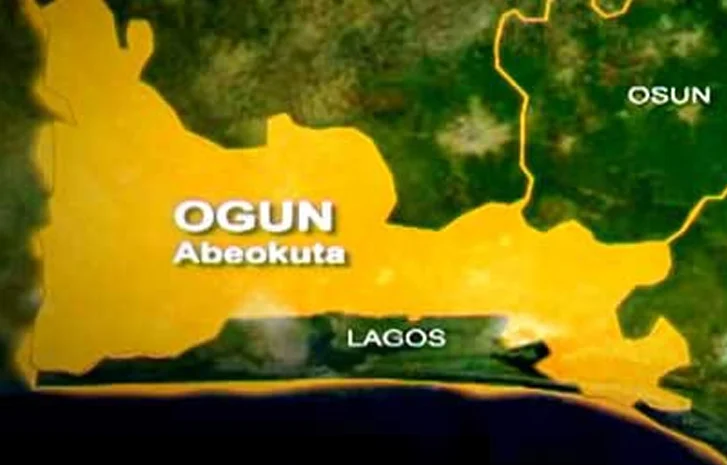
In Ogun State, the government in June banned graduation ceremonies for nursery, kindergarten, and other non-terminal classes in public and private schools.
Graduation ceremonies may be held for Primary Six, JSS3, and SSS3 pupils, but the government directed that such events should be simple and organized at no cost to parents or guardians.
The government also banned extravagant elements, like customized attire and other social displays that could incur extra costs for families.
The Anambra State Government exempted SSS3 students from the ban on graduation ceremonies but stated such ceremonies must remain optional and "must be conducted without any form of levy or financial demand on students and parents."
The directive, issued on July 24, applies to both public and private kindergarten, primary, and secondary schools, including ceremonies referred to as “passing out” or “cross over.”
The government warned that schools that go against this directive could face penalties, including closure. This measure was introduced to lessen the financial burden such ceremonies place on parents.
Benue State introduced similar restrictions in August 2025.
The state banned compulsory graduation ceremonies, especially for kindergarten, nursery, and basic school pupils, and also acted against customized educational materials that cannot be transferred from one pupil to another. The directive also stopped compulsory extended lessons after regular school hours without parental consent.
Yet PREMIUM TIMES found that textbook charges are still part of the bills given by some private schools in Makurdi, the Benue State capital.
One school administrator in Benue, who wished to remain anonymous, worried about the impact of enforcement actions on pupils and their families, especially when schools are shut down for not complying.
The administrator added that some schools are concerned about the financial effects of the policy, especially if they had already bought textbooks for their pupils.
"When you seal a school, you also affect the children who are learning there. So, for us, what is the gap? Sealing a school, would there have been a better sanction for that than leaving the school sealed?" the administrator said.
Visits to Towering Tots School, NADI Schools, Kings Quiver, and Tender Feet School in Markurdi showed that books were still included among the charges presented to parents as the new academic session started. None of the schools responded to PREMIUM TIMES' requests about the continued inclusion of textbook charges.
In Katsina, a senior official of the state Ministry of Education familiar with the rules for private schools said contributions for graduation ceremonies must stay voluntary.
The official requested anonymity because he was not allowed to speak publicly.
"You cannot force it on pupils and say everybody must contribute," he said.
The official stated that the ministry had received verbal complaints from parents about graduation charges and compulsory textbook purchases.
But, according to him, many parents who complain verbally are hesitant to put their complaints in writing due to fear of possible backlash.
He added that state regulations do not permit schools to force parents to buy textbooks solely from them.
The official also mentioned that an inspection team had been sent to check compliance among private and community schools.
PREMIUM TIMES could not independently verify the inspection exercise.
In Lagos and the Federal Capital Territory, officials did not respond to PREMIUM TIMES' findings.
The spokesperson for the Department of Education, Federal Capital Territory Administration, Kabir Musa, directed our reporter to the Director of Quality Assurance, Hajarat Alayande.
Mrs Alayande declined to comment, saying she needed permission from the Education Secretary before she could speak.
The Lagos State Commissioner for Basic and Secondary Education, Jamiu Alli-Balogun, did not answer phone calls and messages seeking his comments.
Private school administrators who spoke to PREMIUM TIMES defended the extra charges, saying they cover the costs of school activities and other operating expenses.
The Vice-Principal, Academics, of St Martin de Porres Schools, Ozochi Anthonia, said graduating pupils paid between N3,000 and N3,500 to cover gowns, certificates, and basic refreshments.
A private school owner in Kaduna, who asked to remain anonymous, said schools largely depend on the money they generate themselves.
"Some private schools operate from rented buildings and have to pay rent. They also pay government taxes which are becoming overwhelming, buy school supplies, and pay staff salaries," the owner said.
"The running cost of a private school in Nigeria is very high. These schools receive no government funding; they fund themselves."
The owner said selling books, uniforms, and writing materials by schools could also make purchases more convenient for parents.
Customized books, the owner argued, could help schools maintain standards and protect parents from buying pirated copies.
The owner called on governments to provide greater support to private schools, including staff training and reductions in taxes and regulatory charges.
Mary Odiba, proprietress of Wusasa Children’s School in Kaduna State, said the charges were necessary to cover the costs of organizing school activities.
She said her school charges N2,500 per child for graduation, speech, and prize-giving activities and uses the money for students' welfare during the events.
"If we want to organize a speech and prize-giving day and graduation, we have to rent chairs and canopies, provide refreshments for the children, and buy prizes for outstanding pupils," she said.
Mrs Odiba also noted that parents were encouraged to buy books from the school for convenience and to lessen the risk of purchasing pirated copies.
Maureen Nwaeke-Egbim, proprietress of JPEC Chimel Academy in GRA, Zaria, Kaduna State, said graduation parties at her school are organized by the pupils and parents.
She said the school forms a committee made up of teachers and parents to plan these events.
"What the school does is to support, while the parents fund the whole thing," she said.
On textbooks, Mrs Nwaeke-Egbim said books are available for sale at the school, but parents can buy from other places, as long as they get the required editions.
"The aim is to avoid pirated copies and ensure pupils have the necessary books, so that in a class of 30 students, at least 20 to 25 have the right textbooks," she said.
The Katsina State chairperson of the National Association of Proprietors of Private Schools (NAPPS), Mansir Sani, said compulsory graduation fees are not standard practice among most member schools.
"I won’t tell you it is 100 percent, but the majority of our schools do not charge anything called a graduation fee," he said.
Mr Sani explained that most schools charge standard examination fees instead of separate and high graduation fees.
"There is no compulsion in making students buy textbooks," he said, describing the association’s official position.
He also argued that private schools have tried to avoid increasing school fees at the same rate as taxes, regulatory charges, and other running costs.
Beyond graduation and textbook charges, some states are also tightening control of private school fees overall.
The Kano State House of Assembly in August passed the Kano State Private and Voluntary Institutions Board (Amendment) Bill, 2026, introducing more requirements for school fee increases.
Among other provisions, the legislation requires consultation with parents through Parent-Teacher Associations before private schools raise their fees.
For many parents interviewed for this report, the debate about what schools need to operate meets a simpler reality: there is only so much money available to pay the bills.
Ms Ugbede said she had never defaulted on her children’s school payments, but for the first time this year, financial constraints made her pay their fees later than usual.
Mrs Eludini said her family has also had to delay some payments.
"We’ve had to delay payment. Sometimes that’s the only option," she said.
She remembered a time when parents at her children's school collectively challenged an attempted tuition increase.
"The parents came together and challenged it," she said. "I think they even petitioned the Lagos State Government, and eventually the school brought the fees back down."
But graduation fees, textbooks, feeding, clothing, parties, and other charges are more scattered and can be tougher for parents to challenge together.
For families with more than one child, these costs add up quickly.
While school owners argue that many of the charges pay for legitimate services and rising operating costs, the experiences of parents interviewed by PREMIUM TIMES show that the financial burden of private education is increasingly more than just the figure next to "school fees" on a child’s bill.




Comments
No comments yet.