Senate Calls for Changes in Aviation Rules for VIP Flights
The Senate has urged aviation agencies to change procedures for VIP flights, suggesting planes be sent to different airports to enhance safety for all passengers.
The Senate on Tuesday urged aviation agencies in Nigeria to change their procedures. They want planes to be sent to different airports when President Bola Tinubu and other Very Important Persons (VIPs) are flying, which causes airspace restrictions.
The Senate believes that sending planes to other airports is safer for passengers than keeping them in the air for long periods while landing is delayed for VIP flights or other security issues.
Lawmakers discussed a motion regarding the dangers of keeping planes in the air due to VIP movements and security activities. The motion was introduced by Isah Jibriin (APC, Kogi East) during the session.
Senator Jibrin asked the Nigerian Civil Aviation Authority (NCAA), Nigerian Airspace Management Agency (NAMA), Federal Airports Authority of Nigeria (FAAN), and Nigerian Safety Investigation Bureau (NSIB) to revise their procedures.
He said that commercial flights often have to stay in the air for more than an hour when landing is paused for VIP movements or security reasons. He added that international flights sometimes have to land at other airports in Nigeria when their intended airports are closed due to VIP activity.
Jibrin recognized that security needs related to VIP movements are important and should be followed. But he stressed that these needs must be handled in a way that does not put commercial flights in danger.
He pointed out that long holding times can lead to higher fuel use and lower fuel reserves for planes, especially when delays last longer than pilots and airlines expect. He also warned that extended waiting can cause more risks, like bad weather, crowded air traffic, less ability to change flight plans, and fuel problems, especially when many planes are waiting to land.
He urged the Senate to tell aviation regulators to set rules that require early coordination and timely information about planned airspace restrictions for airlines. Jibrin suggested that when restrictions are expected, authorities should manage air traffic so that planes do not take off if they will have to wait in the air later.
He also called on the Senate to have its Committee on Aviation work with the NCAA, NAMA, FAAN, and NSIB to ensure the new measures are followed. Many senators who spoke during the debate supported the motion.

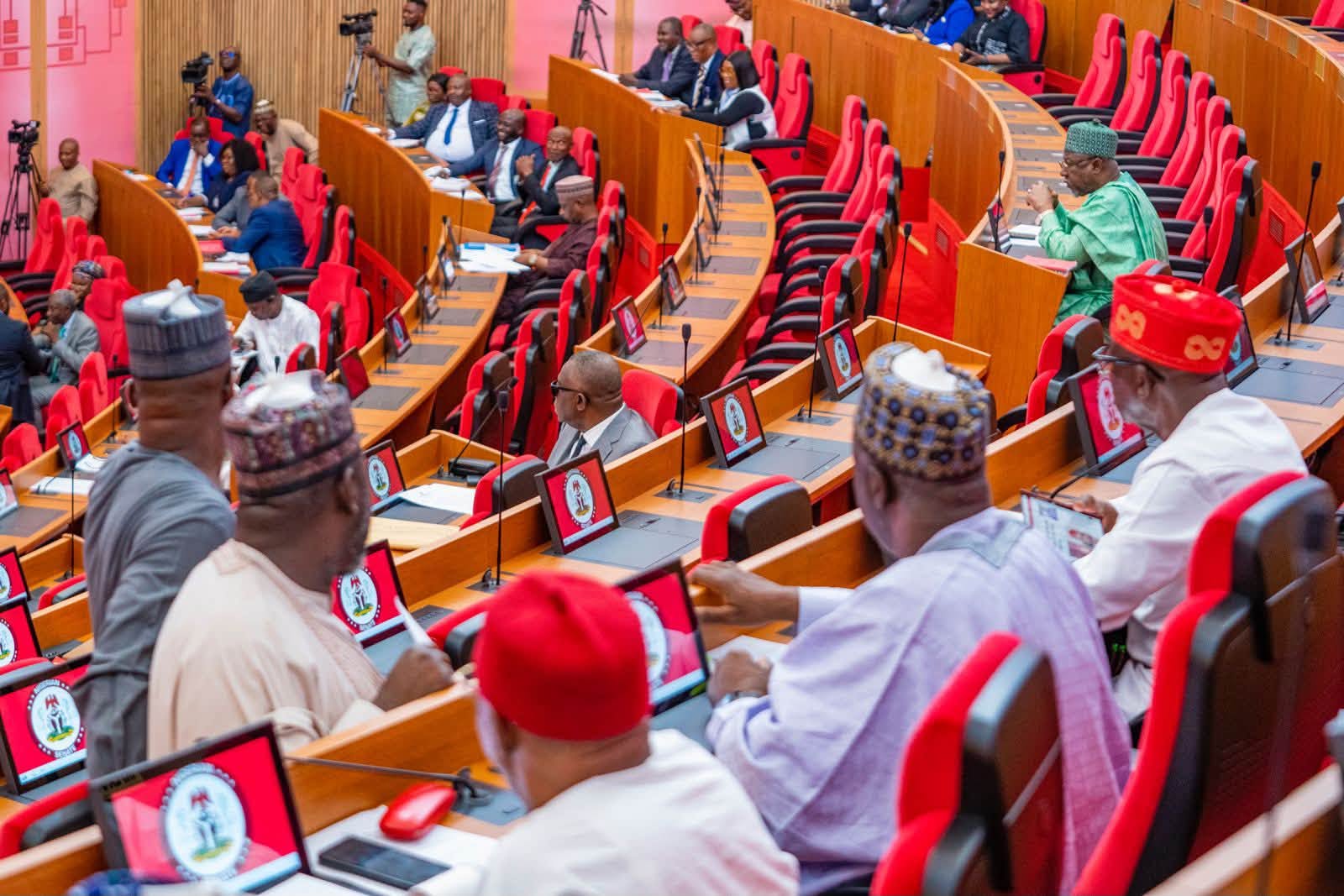
Diket Plang (APC, Plateau Central) asked why regulators let airlines take off when they know VIP flights will affect landings. He warned that not managing airspace properly could lead to serious aviation accidents.
Abdul Ningi (ADC, Bauchi Central) said airlines and regulators act like Nigeria has no laws, pointing out that flight delays and cancellations are common. After the discussion, Senate President Godswill Akpabio put the motion to a voice vote, and most senators agreed with it.
Mr Akpabio then ordered the Senate Committee on Aviation to set up a meeting between lawmakers and aviation regulators to talk about this issue. The flights of the Nigerian president and other top officials often need security arrangements with aviation and security agencies to keep them safe and manage air traffic.
According to Nigeria’s aviation rules, planes carrying a head of state or similar dignitary can be given priority in air traffic management when possible and requested by the pilot. The Nigeria Civil Aviation Regulations (Nig.CARs) 2023 allow for this priority along with emergency services.
But the regulation also states that emergency flights get priority over others, and landing planes take priority over those taking off. Nigerian aviation authorities have also recognized the rules for VIP flights. In a 2021 report to the International Civil Aviation Organisation (ICAO), Nigeria explained that these rules are enforced through coordination between civil and military aviation authorities, depending on the VIP’s rank.
In real life, the security restrictions for these movements can affect flight operations, including when planes can take off and land, based on how long the restrictions last. Airlines may have to hold off on departures until the restrictions are lifted, while planes already flying may be told to stay in holding patterns until they can land.
This practice has faced criticism from those in the aviation industry over how it affects airline operations and passenger safety. In April 2023, airline operators expressed concerns about delays caused by VIP movements, saying that keeping planes waiting in the air can increase fuel use and put passengers at risk.
Roland Iyayi, a former Managing Director of NAMA, suggested creating special air routes for VIP flights to reduce disruptions for commercial aviation. This issue also got attention in December 2017, when the House of Representatives looked at a motion saying VIP flights were stopping commercial planes from landing quickly.




Comments
No comments yet.