The Impact of Poverty on Children's Growth in Abuja
This article highlights the struggles of a family in Abuja facing poverty and how it impacts their children's growth and stability.
Eight-year-old Marvellous held a worn pencil tightly as she wrote on a piece of paper, kneeling on the bare floor of an unfinished building in Karshi, a community on the outskirts of Abuja, Nigeria’s capital.
Around her, four younger siblings sat barefoot, watching her every move. Among them was a two-year-old with mucus running from her nose.
The children hardly noticed the visitor.
Since Marvellous is a minor, this reporter did not interview her directly. When asked if her parents were nearby, she quietly went into the building behind her and returned with her mother, Joy Kelvin.
Mrs Kelvin offered this reporter a wooden chair before sitting on a stone beside the children. Behind her, the family’s home was an unfinished three-bedroom building, with bare concrete walls and parts of the roof already falling apart.
The family does not own the structure.
The owner let them stay temporarily after they could not pay rent at their last place. But this arrangement is uncertain.
“If the man decides to sell this house, we have no choice but to move again,” Mrs Kelvin told PREMIUM TIMES.
For many families, moving is mainly a housing issue. For young children, especially in their early years, it disrupts the stability that supports healthy growth.
Frequent moves upset routines, friendships, schooling, and a child’s sense of security. Child development experts say these factors are crucial during the early years of life.
Mrs Kelvin and her husband are raising five children on unstable incomes. She works as a domestic help while her husband is a tailor. Together, they deal with changing earnings that make it hard to decide what to pay for now and what can wait.
Food is often one of those choices. Some days, the family has two meals. Other days, they eat only once.
Their meals mainly consist of corn-based staples with soup and whatever other food they can afford. Like many low-income families, they plan their diet based on their income, not nutrition.
Despite these challenges, Mrs Kelvin is committed to keeping her children in school.
They attend a nearby private school because the owner allows flexible payment plans.
“The owner of the school understands our situation, so she allows us to pay whatever we have, whenever we have it,” she said.
Without that flexibility, keeping the children in school would be tough.
The family’s situation reflects a larger issue facing many Nigerian households, where poverty affects not just living conditions but also children’s chances to learn, play, and thrive during what experts say are the most important years of development.
The Years That Shape a Child’s Future
Early childhood development is the time when children grow quickly in body, mind, emotions, and social skills.
Although the World Health Organisation (WHO) defines early childhood as from birth to age eight, experts agree that the first five years are the most critical.
During this time, the brain develops rapidly.
According to the United Nations Children’s Fund (UNICEF), more than one million new neural connections form every second during early childhood. These connections are not just about genetics; they also depend on the child’s environment, including nutrition, care, play, learning opportunities, housing conditions, exposure to stress, and access to healthcare.
In practical terms, the environments children grow up in shape how they learn, interact, communicate, and adapt to the world.
For children like Marvellous and her siblings, these formative years are happening in an environment of unstable housing, financial struggles, and ongoing uncertainty.
Inyang Ekan, a family doctor with Nigeria’s Sector-Wide Approach (SWAp) programme, said stability is vital during early childhood. Young children rely heavily on predictable environments to build emotional security and healthy social relationships.
Mr Ekan pointed out that stability goes beyond having a roof over a child’s head. It includes steady relationships, familiar surroundings, and routines that help children feel secure as they grow.
But for families already trying to meet basic needs, achieving this stability can be hard.
When Survival Takes Priority Over Stimulation
Inside Mrs Kelvin’s home, poverty affects more than their living situation. It also shapes how every available naira is spent.
Feeding the children comes first. Other needs are only considered if there is money left.
That reality became clear when Mrs Kelvin was asked if she buys toys for her children.
“Toys?” she said, pausing briefly before answering.
“I can’t remember the last time I got them toys. It is someone who has eaten that can buy toys.”
The response was not dismissive or indifferent. It reflected the hard choices common in low-income homes where every naira is directed toward immediate needs.
Beyond the paper in Marvellous’s hands, there was little to suggest an environment often linked to early childhood learning. Mrs Kelvin explained the children often play with sticks, use their imagination, and create their own forms of entertainment from what they have.
Mr Ekan says that childhood development depends on more than just food and schooling.
He mentioned that play, interaction, storytelling, and exploration are all important parts of early learning. Through play, children learn language, solve problems, express creativity, and build social skills.
He added that children do not need expensive toys for developmental opportunities, but they do need stimulation and interaction.
Mr Ekan noted that siblings can help each other learn.
“Children can learn through teaching, guiding, and playing with siblings. Simple games, storytelling, drawing, and everyday objects can also support development.”
In many ways, Marvellous appeared to be doing that as she worked with her pencil and paper. Her younger siblings watched closely, learning by observing and imitating.
But opportunities for development are also affected by health and access to care.
Mrs Kelvin said she often uses herbal remedies, known as “agbo,” when her children are sick. They only seek formal healthcare when home treatments do not work.
The nearest health facility, Karshi General Hospital, is physically accessible. However, getting healthcare is often financially complicated.
Food Insecurity and Its Developmental Consequences
For Mrs Kelvin’s family, food insecurity is not just about having something to eat. It is also about whether the children get the nutrients they need during these critical years.
Orewole Fisayo, a pediatric nursing specialist at Mercy University Teaching Hospital in Osun State, described the first five years of life as a vital “window of opportunity” for child development.
“By age three, a child’s brain is about 80 per cent of its adult size. Every nutrient a child takes in during this time helps build the brain, immune system, and body,” she said.
Ms Fisayo explained that not getting enough nutrition affects more than just physical growth.
“These children do not underperform because they are less intelligent. Their brains are simply underfuelled.”
Research backs up these worries.
According to a World Bank report on Nigeria’s early childhood development outcomes, only 24.1 per cent of children aged four to six can write a simple word beyond their name.
Just 39 per cent can correctly identify the larger of two single-digit numbers, while only 20.4 per cent show basic planning skills.
Broader indicators also reveal big gaps in children’s access to good nutrition.
Data from the Nigeria Multidimensional Poverty Index shows that food insecurity affects 24.1 per cent of children in Lagos, 34 per cent in Abuja, 49.5 per cent in Enugu, and 38.1 per cent in Kebbi.
Nutrition deprivation is equally concerning. While 11 per cent of children in Lagos face nutrition deprivation, that number goes up to 12.1 per cent in Enugu, 31.5 per cent in Abuja, and 54.4 per cent in Kebbi.
For families like Mrs Kelvin’s, these statistics show up in their daily choices about food and how they share meals among family members.
According to Ms Fisayo, having a variety of foods is key because no single food provides all the nutrients children need for healthy growth.
Another Childhood Shaped by Housing Conditions
A few kilometers away, another family faced a different kind of hardship.
The first time this reporter passed through the area in Karshi, it was already evening.
Beneath a streetlight next to a row of shops sat a small figure, still in the fading light.
From a distance, it was hard to tell if it was a child, a shadow, or just another scene in a busy neighborhood.
There was little reason to stop.
But on another evening, the figure appeared again in the same spot. Still under the same streetlight. Still alone.
Days later, on a Sunday morning, the mystery was solved.
People were coming out of the same row of shops, moving in and out as if it were a home, not just a commercial building. Among them were children.
The shops were not just shops; people were living inside them.

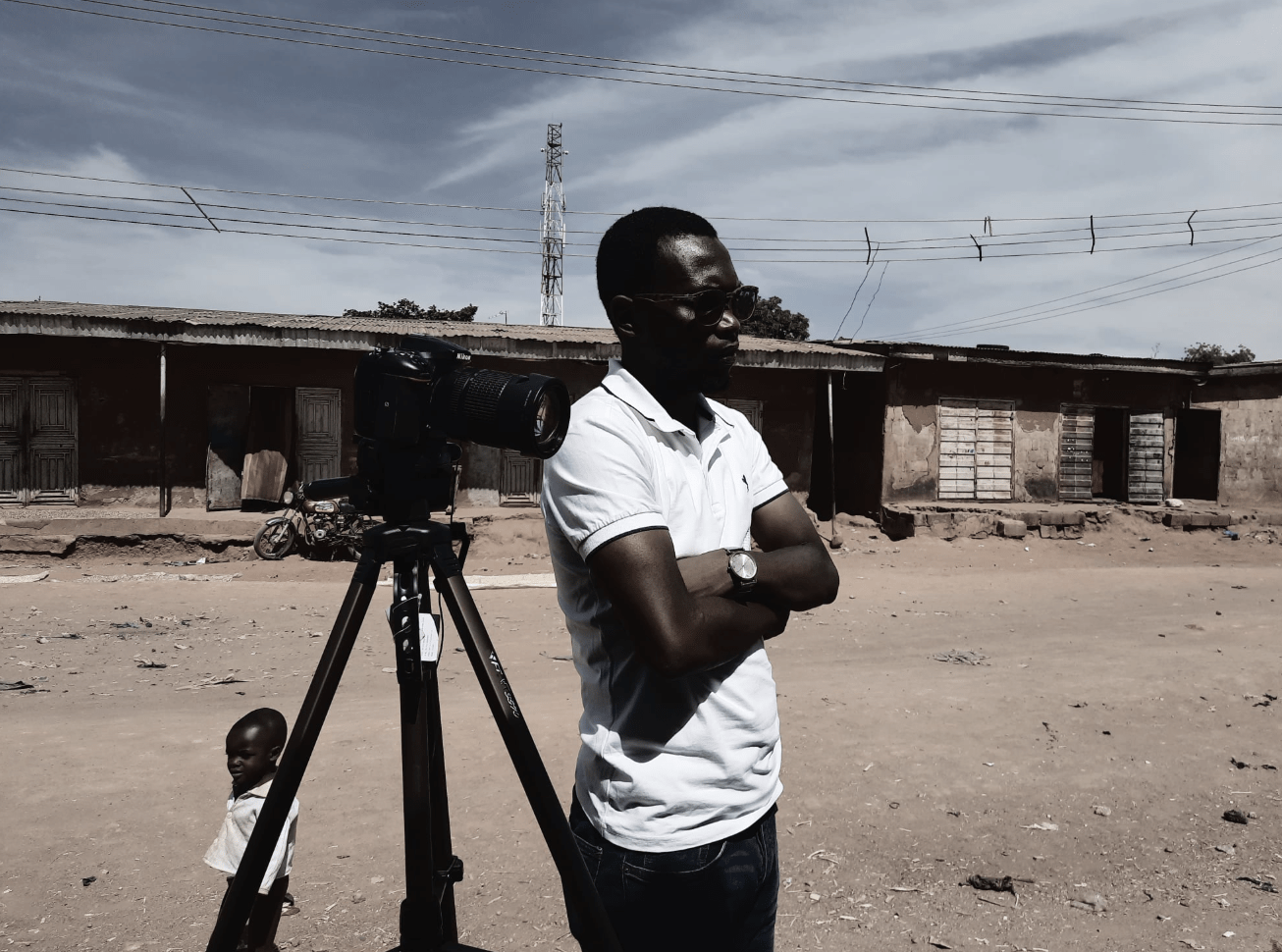
That discovery raised a question this reporter could no longer ignore: What is it like for children to grow up in a place not designed to be a home?
Living in two of the shop compartments was Loryoosu Ignatius, a farmer and occasional construction worker, and father of five.
When this reporter arrived, two of his sons were playing barefoot on a pile of stones beside a small corn farm behind the shops.
The older boy had just returned after calling his father from inside one of the compartments. He is eight years old. His younger brother is six.
Their three sisters, Mr Ignatius said, are in senior secondary school.
Mr Ignatius explained that his family used to live in a rented three-bedroom apartment. Their situation changed after thefts at his employer’s property. To protect the site, someone had to stay there permanently.
He volunteered.
This arrangement removed rent but needed him to move his family into the shop, where they have lived for three years.
“The man said he was going to come and build a proper space for my family and me, but he hasn’t come,” he said.
Inside, the family occupies two compartments. One is for the parents, while the other has the children.
Neither room has windows.
At night, they lay pieces of cloth on the floor to sleep. When it gets too hot, they often sleep outside.
“Sometimes the heat is too much, so we come outside to sleep,” he said.
For Mr Ignatius’ six-year-old son, these conditions have shaped much of his early life. Having spent three of his six years in the shop compartments, he has grown up in a space not meant for family living.
His daily routine involves going to Government Primary School, Karshi, playing outside, and using whatever they find to create games.
Despite these challenges, the family has found ways to adapt.
Unlike Mrs Kelvin’s household, food insecurity is not their main worry.
As a farmer, Mr Ignatius grows rice, beans, yams, and other crops. Most of what the family eats comes from their farm.
“We eat fruits very well. The children eat what we harvest.”
The Health Risks Hidden Within Inadequate Housing
The shop compartments bring more challenges than just overcrowding.
Poor ventilation, exposure to mosquitoes, and environmental dangers affect the children’s daily lives.
“I have killed many snakes here,” Mr Ignatius said.
The same open areas where the children play during the day become dangerous at night.
Health issues have also arisen in their home. Mr Ignatius mentioned recurring skin problems affecting some of the children. Although he could not name the condition, he showed its appearance by drawing circles on his arm. He said he treats it at home with Ampiclox mixed with water.
While Mr Ignatius spoke about these issues casually, child development experts say the effects reach beyond daily discomfort.
In the first five years of life, repeated illness, poor housing, and environmental stress can shape children’s physical, mental, and emotional growth in ways that last into later childhood.
Princess Olatubosun, a psychiatrist with the Ifedoyin and Friends Charity Organisation, said such living conditions can harm children’s health and development in many ways, often beyond what families notice.
Ms Olatubosun explained that bad ventilation and crowded living spaces can increase the risk of respiratory infections, including pneumonia and other illnesses that spread in poorly ventilated areas.
Sleeping outside, she added, exposes children to mosquito bites, raising the chance of malaria and other diseases.
According to her, long exposure to heat and inadequate shelter can lead to dehydration, sleep problems, heat stress, and discomfort. While these problems might seem temporary, they can affect children’s overall health and their ability to learn.
She also noted that the environment around daily activities can create extra health risks. Children who spend a lot of time outdoors may come into contact with smoke, pollutants, dirty water, and poor hygiene, which can lead to infections.
Frequent illness, she said, can have wider developmental effects.
Children who are often sick may eat less, absorb fewer nutrients, and have disruptions in their growth and development.
Beyond physical health, she pointed out that poor sleeping conditions can affect sleep quality, focus, learning ability, and emotional control.
“Inadequate housing and lack of privacy can cause stress, anxiety, and emotional insecurity in children,” she said.
She added that repeated exposure to unstable living conditions may also lead to feelings of insecurity and social stigma, which can affect children’s mental health, confidence, and social skills.
Learning Beneath a Streetlight
Every evening, the streetlight outside the shop compartments serves a purpose beyond lighting the area.
It becomes a classroom.
It was under that same light that this reporter often saw the small figure sitting quietly in the evenings, long before discovering that families lived in the shop structures.
Mr Ignatius explained that his employer installed the light outside. With little electricity in the shops, his children go outside after dark, setting up a small table under the streetlight to finish their homework.
What looks like resilience also shows deprivation.
The children are learning, but in conditions few would choose for them.
A Different Beginning
In the same community, another household paints a different picture.
When this reporter visited Goodness Adaoyiche’s home, signs of childhood were easy to see.
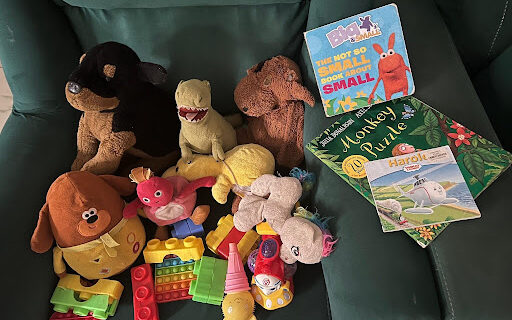
Teddy bears rested on a chair in the sitting room. Children’s books and educational materials were neatly organized. The environment was well-ventilated and clearly designed for young children.
Mrs Adaoyiche and her husband are raising two children, ages six and four.
Unlike the previous households, worries about housing insecurity and food scarcity were not part of the conversation.
Instead, they discussed learning, growth, and development.
Mrs Adaoyiche said they actively encourage educational activities at home. Her younger child, in Nursery One, can already read simple words. She shared certificates that recognized her child’s academic achievements.
Nutrition is also given careful attention.
“My children eat as much as they want, sometimes five times a day,” she said.
Though food is plentiful, she explained that meals are well-balanced and often include fruits and other healthy foods.
The family also provides educational toys and learning materials, replacing them when needed.
The children were not home during this reporter’s visit, but the environment itself spoke volumes.
Unlike the uncertainty surrounding Marvellous’ family or the cramped shop compartments where the Ignatius children grew up, this home offered predictability, stability, and space to learn and play.
What the Data Reveals
The differences seen across the three households reflect broader national trends.
According to the Nigeria General Household Survey-Panel (GHS-Panel) Wave 5 (2023/2024), about 74 per cent of children in urban areas can complete most developmental tasks assessed in the survey, compared to only 42 per cent of children in rural areas.
The gap is especially clear in literacy skills, with urban children outperforming rural children in reading, writing, and letter recognition.
Researchers say these differences come from variations in access to educational resources, household learning environments, caregiver support, and wider socio-economic conditions.
The contrast between Mrs Kelvin’s unfinished home, the Ignatius family’s shop compartments, and Mrs Adaoyiche’s household shows how these national gaps play out in real life.
While one child grows up surrounded by housing uncertainty and food insecurity, another deals with environmental dangers and overcrowded conditions, while others enjoy stable homes, learning materials, and consistent nutrition.
Together, their stories illustrate how living conditions shape developmental chances long before formal schooling starts.
The findings suggest that childhood development is influenced not just by individual ability but also by the environments in which children live.




Comments
No comments yet.