Time to Clean Up the 2026 Budget and Stop the Corruption
Nigeria's 2026 budget is plagued by corruption and questionable spending. Civic tech group Tracka exposes fake projects and misused funds across multiple agencies.
Nigeria’s 2026 budget is a big mess. This became clear in July when people found out that ₦1.3 billion was meant for a fake agency called the Presidential Foreign Intervention Promotion Council. A shocking report also revealed that ₦780 million was spent on musical equipment for churches in Bende Federal Constituency, Abia State. This was absurdly explained as coming from the 2025 budget.
A civic tech group called Tracka looked closely at the budget and found more troubling details. They reported that ₦962.83 billion is set aside for buying Sports Utility Vehicles (SUVs) and other projects that are not national priorities. A total of 78 ministries, departments, and agencies (MDAs) are involved in these questionable expenses. No national budget in the Fourth Republic has been as wasteful and unclear as this year’s.
Tracka also mentioned that only 70 percent of the 2,579 empowerment projects have clear locations. This means the other 30 percent are likely fake projects. Many of the projects listed under the MDAs do not match their real duties. This makes it easy for money to be stolen.
One of the most shocking examples is the use of the National Mathematical Centre in Abuja to supposedly build a Sociology Department at Ahmadu Bello University in Zaria. The National Building and Roads Research Institute in Lagos is also involved. They are meant to build traditional rulers' palaces in Rivers State and refurbish a palace in Kogi State. They are also supposed to build an international market in Birniwa, Jigawa, and a village hall in Akokwa, Anambra State. Additionally, five mosques are set to be remodeled, with locations in Ikole, Ekiti State; Izalla and Zawiya Centre in Kebbi State; and Mangadu and Samani in Jigawa State.
Building churches, mosques, abattoirs, markets, town halls, and palaces with federal funds is against the law, according to the 1999 Constitution. Plus, ₦15.13 billion is planned for 39 SUVs. With the 2027 elections coming up, these expensive vehicles seem to be for political favors.
A budget should focus on economic growth and national priorities. But this budget is full of unclear items, taking away from addressing poor healthcare, education, transportation, and other public services. The total budget this year is ₦68.32 trillion, which has a 46 percent deficit and will need to be financed through borrowing.
The Budget Office made a huge mistake by allowing ₦1.3 billion for a fake agency. This was missed by parliament as well, suggesting they may be involved. Normally, each budget item, especially those in billions, is defended by the responsible MDA in the relevant Appropriation sub-committee before approval.
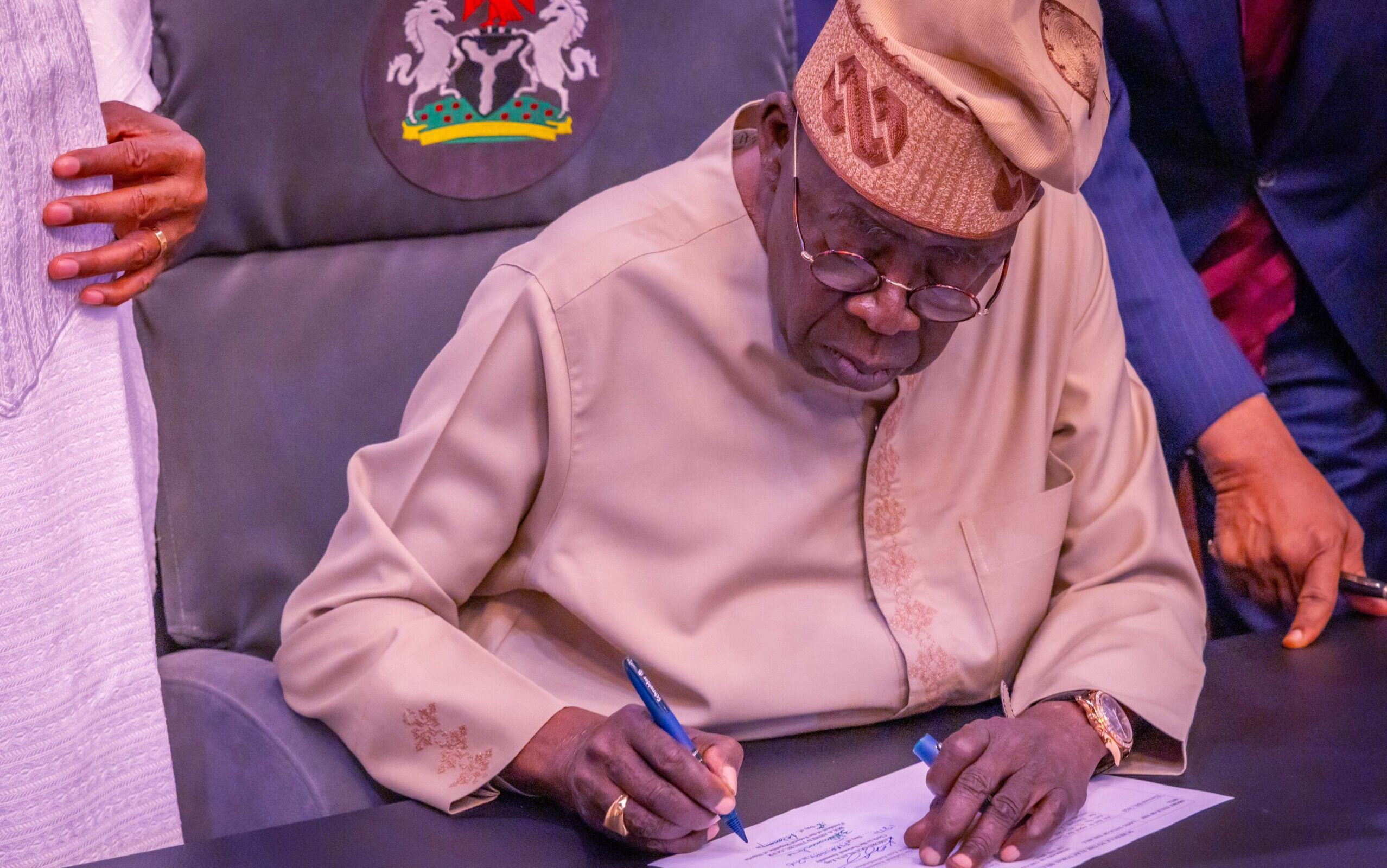
It is also worrying that President Tinubu did not review the budget before signing it into law. This review is usually done by the finance minister and the budget office. Ministers also check the budget to ensure it matches their financial plans. Since 1999, Mr. Tinubu is the only president who has not caught any budget issues in his three years.

Past presidents like Olusegun Obasanjo, Umaru Yar’Adua, Goodluck Jonathan, and Muhammadu Buhari discovered many problems during the budget review. Mr. Obasanjo rejected a ₦2 billion budget padding in 2000. In 2011, Mr. Jonathan withheld his approval due to a ₦40 billion addition for lawmakers' allowances.
In 2016 and 2017, former ministers Isaac Adewole and Babatunde Fashola rejected strange allocations in their budgets. Mr. Fashola found a ₦2 billion addition in his ministry’s budget and said, “That is not what we submitted. We did not submit that proposal.” Mr. Adewole also pulled his ministry’s budget due to a ₦15.7 billion diversion for projects that had not been finalized.
It must be clear that the 2,579 projects in the ₦962.83 billion budget lack designs and real costs. There will be no tenders or bidding processes for the few that may get done, which breaks public procurement rules. This explains why 2,399 of these so-called constituency projects were left unfinished in 2013, according to Minister for Special Duties, Tanimu Turaki. So, billions of naira were stolen!
When lawmakers act like they are stealing from the public fund, Nigerians must speak up. The silence from the Executive makes the situation worse. We hold the President, National Assembly, and Budget Office accountable for this terrible budget.
It raises a serious moral issue when the Federal Government says it is fighting corruption while ignoring a budget that is full of theft. The legislators are among the highest paid in the world with taxpayers’ money, and they must protect the treasury.
Public funds should not be wasted like in the 2026 budget. We believe that a “zero budgeting” system, which addresses needs instead of the “envelope system,” will help stop this yearly budget fraud.
To address the public anger over this, PREMIUM TIMES calls for a serious review of this budget to remove its obvious bad parts. If not, it will stand as a clear sign of careless governance, robbing citizens of their taxes and worsening the problem of stealing from the public treasury.
Comments
No comments yet.